
Filter
1775
Text search:
The
Government
of
Uganda
Featured
Recommendations
133
New Publications
449
Language
Document type
No document type
1003
Studies & Reports
431
Guidelines
136
Manuals
73
Strategic & Response Plan
67
Fact sheets
22
Training Material
21
Situation Updates
16
Infographics
3
Videos
2
Brochures
1
Countries / Regions
Uganda
208
Global
97
Kenya
87
Africa
84
Rwanda
56
Ethiopia
52
Congo, Democratic Republic of
44
South Sudan
43
Tanzania
39
Sierra Leone
38
Zambia
37
Nigeria
36
Malawi
34
Liberia
33
South Africa
27
East and Southern Africa
21
Ghana
20
Bangladesh
17
Zimbabwe
16
Mozambique
16
Namibia
15
India
14
Nepal
13
West and Central Africa
13
Guinea
12
Central African Republic
12
Senegal
11
Haiti
11
Cameroon
10
Syria
10
Lesotho
10
Burkina Faso
8
Botswana
8
Eswatini/ Swaziland
7
Mali
6
Germany
6
Sudan
6
Burundi
6
Myanmar / Burma
6
Philippines
5
Somalia
5
Colombia
5
Yemen
5
Côte d’Ivoire / Ivory Coast
4
Pakistan
4
Jordan
4
Lebanon
4
Thailand
4
China
4
Brazil
4
Angola
4
Venezuela
4
Russia
4
Togo
3
Afghanistan
3
Chad
3
Cambodia
3
Indonesia
3
Ukraine
3
South–East Asia Region
3
Latin America and the Carribbean
3
Southern Africa
3
Iran
3
Morocco
2
Niger
2
Argentina
2
Madagascar
2
Mexico
2
Middle East and North Africa
2
Western and Central Europe
2
Laos
2
Gabon
2
Iraq
1
Gambia
1
Papua New Guinea
1
Benin
1
Vanuatu
1
Peru
1
North Macedonia
1
Switzerland
1
Hungary
1
Ecuador
1
Bolivia
1
Sri Lanka
1
Chile
1
Eastern Europe and Central Asia
1
Solomon Islands
1
Eastern Europe
1
Palestine
1
North Korea
1
Djibouti
1
Congo-Brazzaville
1
Estonia
1
Kyrgyzstan
1
Georgia
1
Vietnam
1
Turkmenistan
1
Jamaica
1
Mauritius
1
Tunisia
1
Norway
1
Portugal
1
Morocco
1
Authors & Publishers
Publication Years
Category
Countries
641
Key Resources
105
Women & Child Health
102
Public Health
99
Clinical Guidelines
82
Capacity Building
27
Pharmacy & Technologies
9
Annual Report MEDBOX
1
Toolboxes
HIV
195
COVID-19
123
Mental Health
114
Disability
107
Ebola & Marburg
75
TB
72
Planetary Health
59
Conflict
55
NTDs
54
AMR
48
Caregiver
46
Refugee
41
Health Financing Toolbox
39
Global Health Education
31
Rapid Response
25
Malaria
23
Pharmacy
21
NCDs
20
Zika
16
2.0 Rapid Response
14
Natural Hazards
10
Specific Hazards
8
Social Ethics
6
Cholera
4
Polio
4
South Sudan
2
Typhoon
1

Ramped-up cancer services could save 7 million lives over the next decade—and addressing huge service gaps between rich and poor countries is key to success, according to this report.
In 2019, over 90%
...

Women and Health Initiative Working Paper No. 1. Women and Health Initiative
Improving maternal health in the context of the sub-Saharan African ...
Improving maternal health in the context of the sub-Saharan African ...
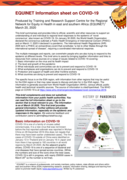
Produced by Training and Research Support Centre for the Regional Network for Equity in Health in east and southern Africa (EQUINET), March 20, 2020.
This brief summarises and provides links to official, scientific and other resources to support a
...

This resulting toolkit is a practical guide intended to assist users to become advocates for palliative care in a practical and effective
way. It is not necessarily a resource to read from cover to cover; rather, it can also be used selectively to each reader’s needs to engage audiences and
...

PLoS Negl Trop Dis 16(10): e0009774. Although the practice of communication is often called upon when intervening asn involgvingcommunties affected by NTD's,
...
Nosocomial or health-facility-acquired infections are a serious issue, representing one of the most significant causes of morbidity and mortality i
...
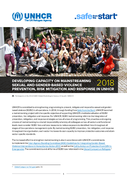
UNHCR is committed to strengthening programming to prevent, mitigate and respond to sexual and genderbased violence (SGBV) in all operations. In 2018, through funding from Safe from the Start, UNHCR launched a mainstreaming project with
...

UNHCR’s Public Health Strategy 2021-2025 is based on the lessons learnt, and builds on the achievements, of
...
Loss and damage is an urgent concern, driven by the increasingly harmful effects of climate change. Communities are experiencing new types and forms of
...
This timely report comes at a decisive moment in history where
we can reshape urban environments and health systems for the
majority of the world
...
Vitamin D deficiency is thought to be common among pregnant women, particularly during the winter months, and has been found to be associated with an increased risk of pre-eclampsia, gestational dia
...
2nd edition - Published in 2003, the first WHO/HAI medicine prices manual Medicine Prices – A
New Approach to Measurement Draft for field-testing provides a draft methodology and tools to conduct national medicine prices and availability surveys
...
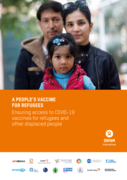
For most people in displacement contexts, there are simply not enough vaccines available in the places where they are hosted: 85% of refugees are hosted in lower- and middle-income countries, while
...
Safe drinking-water management must consider drinking-water quality, acceptability and quantity in the context of public health protection. In this manual,
...
Since 1996, trachoma has been targeted for elimination as a public health problem worldwide. The active trachoma criterion for national elimination as a public health problem is a TF1–9 < 5%, sustained for at least two years in
...

A practical handbook. This Health Cluster Guide (2nd edition, 2020) provides practical advice on how WHO, Health Cluster Coordinators and partners can work together during a humanitarian crisis to achieve the aims
...

Rehabilitation in health systems provides recommendations for Member States and other relevant stakeholders to strengthen and expand the availability of quality rehabilitation services. Currently, t
...

Countries, partners, and donors are committed to the global elimination of blinding trachoma by 2020.
Achieving this public health milestone requires more than funding; it requires health personnel
...

Getting on track to end AIDS as a public health threat by 2030. This new Road Map charts a way forward for country-level actions to achieve an ambitious set of HIV prevention targets by 2025. Those targets emerged from
...
Despite recent global declines, under-five mortality remains high in many of the poorest countries. Barriers to timely
quality care, including user fees, distance to facilities and
...
