
Filter
4094
Text search:
morbidity
Featured
386
1142
Language
3925
107
84
65
40
38
20
13
9
5
4
3
2
2
2
1
1
1
1
1
1
1
1
1
1
1
1
1
1
1
1
Document type
2119
781
577
217
204
63
60
33
14
11
8
5
1
1
Countries
248
191
123
115
98
91
89
87
83
81
75
69
65
62
59
55
55
54
52
48
41
34
34
30
27
26
25
25
24
24
24
24
19
19
18
18
17
17
17
15
14
13
13
12
12
12
12
11
10
10
10
9
9
9
8
8
8
8
8
8
7
7
6
6
5
5
5
5
5
5
5
5
5
5
4
4
4
4
4
4
4
4
3
3
3
3
3
3
3
3
3
2
2
2
2
2
2
2
2
2
1
1
1
1
1
1
1
1
1
1
1
1
1
1
1
1
1
1
1
1
1
1
1
1
1
1
1
1
1
1
1
1
1
1
1
1
1
1
1
1
1
Authors & Publishers
615
204
134
127
92
70
52
51
41
28
25
25
24
24
23
23
22
21
18
18
17
16
15
15
14
13
13
13
13
13
13
13
12
12
11
11
11
11
11
10
10
10
10
10
10
10
10
10
10
9
9
9
9
9
9
8
8
8
8
8
8
8
8
7
7
7
7
7
7
7
7
7
7
7
7
7
7
7
7
7
6
6
6
6
6
6
6
6
6
6
6
6
6
6
6
6
5
5
5
5
5
5
5
5
5
5
5
5
5
5
5
5
5
5
5
5
5
5
5
5
5
5
5
4
4
4
4
4
4
4
4
4
4
4
4
4
4
4
4
4
4
4
4
4
4
4
4
4
4
4
4
4
4
4
4
4
4
4
4
4
4
4
4
4
4
4
4
4
4
4
4
4
3
3
3
3
3
3
3
3
3
3
3
3
3
3
3
3
3
3
3
3
3
3
3
3
3
3
3
3
3
3
3
3
3
3
3
3
3
3
3
3
3
3
3
3
3
3
3
3
3
3
3
3
3
3
3
3
3
3
3
3
3
3
3
3
3
3
3
3
3
3
3
3
3
3
2
2
2
2
2
2
2
2
2
2
2
2
2
2
2
2
2
2
2
2
2
2
2
2
2
2
2
2
2
2
2
2
2
2
2
2
2
2
2
2
2
2
2
2
2
2
2
2
2
2
2
2
2
2
2
2
2
2
2
2
2
2
2
2
2
2
2
2
2
2
2
2
2
2
2
2
2
2
2
2
2
2
2
2
2
2
2
2
2
2
2
2
2
2
2
2
2
2
2
2
2
2
2
2
2
2
2
2
2
2
2
2
2
2
2
2
2
2
2
2
2
2
2
2
2
2
2
2
2
2
2
2
2
2
2
2
2
2
2
2
2
2
2
2
2
2
2
2
2
2
2
2
2
2
2
2
2
2
2
2
2
2
2
2
2
2
2
2
2
2
2
2
2
2
2
2
2
2
2
2
2
2
2
2
2
2
2
2
2
2
2
2
2
2
2
2
2
2
2
2
2
2
2
2
2
2
2
2
2
1
1
1
1
1
1
1
1
1
1
1
1
1
1
1
1
1
1
1
1
1
1
1
1
1
1
1
1
1
1
1
1
1
1
1
1
1
1
1
1
1
1
1
1
1
1
1
1
1
1
1
1
1
1
1
1
1
1
1
1
1
1
1
1
1
1
1
1
1
1
1
1
1
1
1
1
1
1
1
1
1
1
1
1
1
1
1
1
1
1
1
1
1
1
1
1
1
1
1
1
1
1
1
1
1
1
1
1
1
1
1
1
1
1
1
1
1
1
1
1
1
1
1
1
1
1
1
1
1
1
1
1
1
1
1
1
1
1
1
1
1
1
1
1
1
1
1
1
1
1
1
1
1
1
1
1
1
1
1
1
1
1
1
1
1
1
1
1
1
1
1
1
1
1
1
1
1
1
1
1
1
1
1
1
1
1
1
1
1
1
1
1
1
1
1
1
1
1
1
1
1
1
1
1
1
1
1
1
1
1
1
1
1
1
1
1
1
1
1
1
1
1
1
1
1
1
1
1
1
1
1
1
1
1
1
1
1
1
1
1
1
1
1
1
1
1
1
1
1
1
1
1
1
1
1
1
1
1
1
1
1
1
1
1
1
1
1
1
1
1
1
1
1
1
1
1
1
1
1
1
1
1
1
1
1
1
1
1
1
1
1
1
1
1
1
1
1
1
1
1
1
1
1
1
1
1
1
1
1
1
1
1
1
1
1
1
1
1
1
1
1
1
1
1
1
1
1
1
1
1
1
1
1
1
1
1
1
1
1
1
1
1
1
1
1
1
1
1
1
1
1
1
1
1
1
1
1
1
1
1
1
1
1
1
1
1
1
1
1
1
1
1
1
1
1
1
1
1
1
1
1
1
1
1
1
1
1
1
1
1
1
1
1
1
1
1
1
1
1
1
1
1
1
1
1
1
1
1
1
1
1
1
1
1
1
1
1
1
1
1
1
1
1
1
1
1
1
1
1
1
1
1
1
1
1
1
1
1
1
1
1
1
1
1
1
1
1
1
1
1
1
1
1
1
1
1
1
1
1
1
1
1
1
1
1
1
1
1
1
1
1
1
1
1
1
1
1
1
1
1
1
1
1
1
1
1
1
1
1
1
1
1
1
1
1
1
1
1
1
1
1
1
1
1
1
1
1
1
1
1
1
1
1
1
1
1
1
1
1
1
1
1
1
1
1
1
1
1
1
1
1
1
1
1
1
1
1
1
1
1
1
1
1
1
1
1
1
1
1
1
1
1
1
1
1
1
1
1
1
1
1
1
1
1
1
1
1
1
1
1
1
1
1
1
1
1
1
1
1
1
1
1
1
1
1
1
1
1
1
1
1
1
1
1
1
1
1
1
1
1
1
1
1
1
1
1
1
1
1
1
1
1
1
1
1
1
1
1
1
1
1
1
1
1
1
1
1
1
1
1
1
1
1
1
1
1
1
1
1
1
1
1
1
1
1
1
1
1
1
1
1
1
1
1
1
1
1
1
1
1
1
1
1
1
1
1
1
1
1
1
1
1
1
1
1
1
1
1
1
1
1
1
1
1
1
1
1
1
1
1
1
1
1
1
1
1
1
1
1
1
1
1
1
1
1
1
1
1
1
1
1
1
1
1
1
1
1
1
1
1
1
1
1
1
1
1
1
1
1
1
1
1
1
1
1
1
1
1
1
1
1
1
1
1
1
1
1
1
1
1
1
1
1
1
1
1
1
1
1
1
1
1
1
1
1
1
1
1
1
1
1
1
1
1
1
1
1
1
1
1
1
1
1
1
1
1
1
1
1
1
1
1
1
1
1
1
1
1
1
1
1
1
1
1
1
1
1
1
1
1
1
1
1
1
1
1
1
1
1
1
1
1
1
1
1
1
1
1
1
1
1
1
1
1
1
1
1
1
1
1
1
1
1
1
1
1
1
1
1
1
1
1
1
1
1
1
1
1
1
1
1
1
1
1
1
1
1
1
1
1
1
1
1
1
1
1
1
1
1
1
1
1
1
1
1
1
1
1
1
1
1
1
1
1
1
1
1
1
1
1
1
1
1
1
1
1
1
1
1
1
1
1
1
1
1
1
1
1
1
1
1
1
1
1
1
1
1
1
1
1
1
1
1
1
1
1
1
1
1
1
1
1
1
1
1
1
1
1
1
1
1
1
1
1
1
1
1
1
1
1
1
1
1
1
1
1
1
1
1
1
1
1
1
1
1
1
1
1
1
1
1
1
1
1
1
1
1
1
1
1
1
1
1
1
1
1
1
1
1
1
1
1
1
1
1
1
1
1
1
1
1
1
1
1
1
1
1
1
1
1
1
1
1
1
1
1
1
1
1
1
1
1
1
1
1
1
1
1
1
1
1
1
1
1
1
1
1
1
1
1
1
1
1
1
1
1
1
1
1
1
1
1
1
1
1
1
1
1
1
1
1
1
1
1
1
1
1
1
1
1
1
1
1
1
1
1
1
1
1
1
1
1
1
1
1
1
1
1
1
1
1
1
1
1
1
1
1
1
1
1
1
1
1
1
1
1
1
1
1
1
1
1
1
1
1
1
1
1
1
1
1
1
1
1
1
1
1
1
1
1
1
1
1
1
1
1
1
1
1
1
1
1
1
1
1
1
1
1
1
1
1
1
1
1
1
1
1
1
1
1
1
1
1
1
1
1
1
1
1
1
1
1
1
1
1
1
1
1
1
1
1
1
1
1
1
1
1
1
1
1
1
1
1
1
1
1
1
1
1
1
1
1
1
1
1
1
1
1
1
1
1
1
1
1
1
1
1
1
1
1
1
1
1
1
1
1
1
1
1
1
1
1
1
1
1
1
1
1
1
1
1
1
1
1
1
1
1
1
1
1
1
1
1
1
1
1
1
1
1
1
1
1
1
1
1
1
1
1
1
1
1
1
1
1
1
1
1
1
1
1
1
1
1
1
1
1
1
1
1
1
1
1
1
1
1
1
1
1
1
1
1
1
1
1
1
1
1
1
1
1
1
1
1
1
1
1
1
1
1
1
1
1
1
1
1
1
1
1
1
1
1
1
1
1
1
1
1
1
1
1
1
1
1
1
1
1
1
1
1
1
1
1
1
1
1
1
1
1
1
1
1
1
1
1
1
1
1
1
1
1
1
1
1
1
1
1
1
1
1
1
1
1
1
1
1
1
1
1
1
1
1
1
1
1
1
1
1
1
1
1
1
1
1
1
1
1
1
1
1
1
1
1
1
1
1
1
1
1
1
1
1
1
1
1
1
1
1
1
1
1
1
1
1
1
1
1
1
1
1
1
1
1
1
1
1
1
1
1
1
1
1
1
1
1
1
1
1
1
1
1
1
1
1
1
1
1
1
1
1
1
1
1
1
1
1
1
1
1
1
1
1
1
1
1
1
1
1
1
1
1
1
1
1
1
1
1
1
1
1
1
1
1
1
1
1
1
1
1
1
1
1
1
1
1
1
1
1
1
1
1
1
1
1
1
1
1
1
1
1
1
1
1
1
1
1
1
1
1
1
1
1
1
1
1
1
1
1
1
1
1
1
1
1
1
1
1
1
1
1
1
1
1
1
1
1
1
1
1
1
1
1
1
1
1
1
1
1
1
1
1
1
1
1
1
1
1
1
1
1
1
1
1
1
1
1
1
1
1
1
1
1
1
1
1
1
1
1
1
1
1
1
1
1
1
1
1
1
1
1
1
1
1
1
1
1
1
1
1
1
1
1
1
1
1
1
1
1
1
1
1
1
1
1
1
1
1
1
1
1
1
1
1
1
1
1
1
1
1
1
1
1
1
1
1
1
1
1
1
1
1
1
1
1
1
1
1
1
1
1
1
1
1
1
1
1
1
1
1
1
1
1
1
1
1
1
1
1
1
1
1
1
1
1
1
1
1
1
1
1
1
1
1
1
1
1
1
1
1
1
1
1
1
1
1
1
1
1
1
1
1
1
1
1
1
1
1
1
1
1
1
1
1
1
1
1
1
1
1
1
1
1
1
1
1
1
1
1
1
1
1
1
1
1
1
1
1
1
1
1
1
1
1
1
1
1
1
1
1
1
1
1
1
1
1
1
1
1
1
1
1
1
1
1
1
1
1
1
1
1
1
1
1
1
1
1
1
1
1
1
1
1
1
1
1
1
1
1
1
1
1
1
1
1
1
1
1
1
1
1
1
1
1
1
1
1
1
1
1
1
1
1
1
1
1
1
1
1
1
1
1
1
1
1
1
1
1
1
1
1
1
1
1
1
1
1
1
1
1
1
1
1
1
1
1
1
1
1
1
1
1
1
1
1
1
1
1
1
1
1
1
1
1
1
1
1
1
1
1
1
1
1
1
1
1
1
1
1
1
1
1
1
1
1
1
1
1
1
1
1
1
1
1
1
1
1
1
1
1
1
1
1
1
1
1
1
1
1
1
1
1
1
1
1
1
1
1
1
1
1
1
1
1
1
1
1
1
1
1
1
1
1
1
1
1
1
1
1
1
1
1
1
1
1
1
1
1
1
1
1
1
1
1
1
1
1
1
1
1
1
1
1
1
1
1
1
1
1
1
1
1
1
1
1
1
1
1
1
1
1
1
1
1
1
1
1
1
1
1
1
1
1
1
1
1
1
1
1
1
1
1
1
1
1
1
1
1
1
1
1
1
1
1
1
1
1
1
1
1
1
1
1
1
1
1
1
1
1
1
1
1
1
1
1
1
1
1
1
1
1
1
1
1
1
1
1
1
1
1
1
1
1
1
1
1
1
1
1
1
1
1
1
1
1
1
1
1
1
1
1
1
1
1
1
1
1
1
1
1
1
1
1
1
1
1
1
1
1
1
1
1
1
1
1
1
1
1
1
1
1
1
1
1
1
1
1
1
1
1
1
1
1
1
1
1
1
1
1
1
1
1
1
1
1
1
1
1
1
1
1
1
1
1
1
1
1
1
1
1
1
1
1
1
1
1
1
1
1
1
1
1
1
1
1
1
1
1
1
1
1
1
1
1
1
1
1
1
1
1
1
1
1
1
1
1
1
1
1
1
1
1
1
1
1
1
1
1
1
1
1
1
1
1
1
1
1
1
1
1
1
1
1
1
1
1
1
1
1
1
1
1
1
1
1
1
1
1
1
1
1
1
1
1
1
1
1
1
1
1
1
1
1
1
1
1
1
1
1
1
1
1
1
1
1
1
1
1
1
1
1
1
1
1
1
1
1
1
1
1
1
1
1
1
1
1
1
1
1
1
1
1
1
1
1
1
1
1
1
1
1
1
1
1
1
1
1
1
1
1
1
1
1
1
1
1
1
1
1
1
1
1
1
1
1
1
1
1
1
1
1
1
1
1
1
1
1
1
1
1
1
1
1
1
1
1
1
1
1
1
1
1
1
1
1
1
1
1
1
1
1
1
1
1
1
1
1
1
1
1
1
1
1
1
1
1
1
1
1
1
1
1
1
1
1
1
1
1
1
1
1
1
1
1
1
1
1
1
1
1
1
1
1
1
1
1
1
1
1
1
1
1
1
1
1
1
1
1
1
1
1
1
1
1
1
1
1
1
1
1
1
1
1
1
1
1
1
1
1
1
1
1
1
1
1
1
1
1
1
1
1
1
1
1
1
1
1
1
1
1
1
1
1
1
1
1
1
1
1
1
1
1
1
1
1
1
1
1
1
1
1
1
1
1
1
1
1
1
1
1
1
1
1
1
1
1
1
1
1
1
1
1
1
1
1
1
1
1
1
1
1
1
1
1
1
1
1
1
1
1
1
1
1
1
1
1
1
1
1
1
1
1
1
1
1
1
1
1
1
1
1
1
1
1
1
1
1
1
1
1
1
1
1
1
1
1
1
1
1
1
1
1
1
1
1
1
1
1
1
1
1
1
1
1
1
1
1
1
1
1
1
1
1
1
1
1
1
1
1
1
1
1
1
1
1
1
1
1
1
1
1
1
1
1
1
1
1
1
1
1
1
1
1
1
1
1
1
1
1
1
1
1
1
1
1
1
1
1
1
1
1
1
1
1
1
1
1
1
1
1
1
1
1
1
1
1
1
1
1
1
1
1
1
1
1
1
1
1
1
1
1
1
1
1
1
1
1
1
1
1
1
1
1
1
1
1
1
1
1
1
1
1
1
1
1
1
1
1
1
1
1
1
1
1
1
1
1
1
1
1
1
1
1
1
1
1
1
1
1
1
1
1
1
1
1
1
1
1
1
1
1
1
1
1
1
1
1
1
1
1
1
1
1
1
1
1
1
1
1
1
1
1
1
1
1
1
1
1
1
1
1
1
1
1
1
1
1
1
1
1
1
1
1
1
1
1
1
1
1
1
1
1
1
1
1
1
1
1
1
1
1
1
1
1
1
1
1
1
1
1
1
1
1
1
1
1
1
1
1
1
1
1
1
1
1
1
1
1
1
1
1
1
1
1
1
1
1
1
1
1
1
1
1
1
1
1
Publication Years
1219
2450
402
22
1
Category
1770
385
299
264
209
71
27
Toolboxes
267
264
214
181
179
126
125
111
107
97
92
90
75
61
58
52
51
50
47
32
28
28
18
13
2
2
1

Antimicrobial resistance is one of the most important threats to the health worldwide. Antimicrobial resistance or drug resistance is the reduction of the pharmaceutical effects of a drug against a disease or reduction of its effectiveness in improving the clinical signs of a disease. Antimicrobial
...
resistance occurs naturally but misuse of antibiotics in human and animals significantly accelerates the process of developing antimicrobial resistance. In fact, antimicrobial resistance refers to the resistance of a microorganism to one or more antimicrobial drugs which had been previously sensitive to these drugs. Antimicrobial resistance can occur in a wide variety of pathogens including bacteria, parasites, viruses, fungi, and cancer cells and may threaten the life of every person, in every age, and in every country
more
Antimicrobial resistance (AMR) has become a global public health concern and Lebanon is of no exception to this issue. The spread of antimicrobial-resistant bacteria is considered an alarming public health threat, with a potential extent similar to global warming and other social and environmental t
...
hreats.
more
Journal of Biosocial Science / Volume 34 / Issue 04 / October 2002, pp 525 - 539
DOI: DOI:10.1017/S0021932002005254, Published online: 24 September 2002
This paper examines determinants of one aspect of sexual behaviour – coital frequency – among 2188 married women in the Central African Re
...
public using a secondary analysis of data from the Demographic and Health Survey of 1994–95. Female genital cutting (or circumcision) is practised in the Central African Republic and self-reported circumcision status was included in the questionnaire enabling it to be examined as a possible determinant of coital frequency. Multiple logistic regression was used to find a subset of factors independently associated with coital frequency.
Decreased coital frequency was found in those who had longer duration of marriage, those who were not the most recent wife in a polygamous marriage and those who had more surviving children. Coital frequency was higher in more educated women and those not contracepting because they wanted to get pregnant. After adjusting for confounders no association between
female genital cutting and coital frequency was found. The extent to which women can control coital frequency in this culture is not known and fertility desires may override any negative effects of circumcision on sexual pleasure.
It was therefore not possible to draw conclusions about how female genital cutting affects a woman’s desire for sexual intercourse and consequently there is a need to develop research methods further to investigate this question.
more
On 31st December 2019, the World Health Organization (WHO) China Country Office was informed of cases of pneumonia of unknown etiology (unknown cause) detected in Wuhan City, Hubei Province of China. On 7th January 2020, Chinese authorities identified a new strain of Coronavirus as the causative age
...
nt for the disease. The virus has been renamed by WHO as SARS-CoV-2 and the disease caused by it as COVID-19. The disease since its first detection in China has now spread to over 200 countries/territories, with reports of local transmission happening in more than 160 of these countries/territories. As per WHO (as of 1st April, 2020), there has been a total of 823626 confirmed cases and 40598 deaths due to COVID-19 worldwide.
In India, as on 2nd April, 2020, 1965 confirmed cases (including 51 foreign nationals) and 50 deaths reported from 29 States/UTs. Large number of cases has been reported from Delhi, Karnataka, Kerala, Maharashtra, Rajasthan, Tamil Nadu, Telangana and Uttar Pradesh.
more

Infection Prevention and Control Programmes
January 2020
Massoda Tonye et al. Malar J (2018) 17:156
https://doi.org/10.1186/s12936-018-2284-7
Background: In 2011, the demographic and health survey (DHS) in Cameroon was combined with the multiple indicator
cluster survey. Malaria parasitological data were collected, but the survey period did not overl
...
ap with the high
malaria transmission season. A malaria indicator survey (MIS) was also conducted during the same year, within the
malaria peak transmission season. This study compares estimates of the geographical distribution of malaria parasite
risk and of the effects of interventions obtained from the DHS and MIS survey data.
more
Many migrants find themselves with limited access, if any, to information about risks, prevention measures, health care and other essential services. Migrants in transit, those in need of international protection or without legal status are likely to be particularly vulnerable, as well as those who
...
are homeless, held in detention, living in camps, formal or informal settlements or otherwise precarious conditions
more
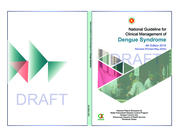
National Guidelines for Clinical Management of Dengue Syndrome - 4rd Edition
Prof. Dr. A. K. Azad; Prof. Dr. S. Tahamina; Prof. Q. T. Islam; et al.
Government of the People's Republic of Bangladesh DGHS Directorate General of Health Services Ministry of Health and Family Welfare ; World Health Organization (Bangladesh)
(2018)
C2
4th Edition 2018
National Malaria Elimination & Aedes Transmitted Disease Control Program
Disease Control Unit Directorate General of Health Services

In 2006, the Special Session of African Union Health Ministers adopted the Maputo Plan of Action for implementing the Continental Policy Framework on sexual and reproductive health and rights (SRHR), which expired at the end of 2015. The goal was for all stakeholders and partners to join forces and
...
re-double efforts, so that together, the effective implementation of the Continental Policy framework including universal access to sexual and reproductive health by 2015 in all countries in Africa can be achieved. The Revised Maputo Plan of Action (MPoA) 2016 – 2030 was subsequently endorsed by the African Union Heads of State at the 27th AU Summit in July 2016 in Kigali, Rwanda. The plan reinforces the call for universal access to comprehensive sexual and reproductive health services in Africa and lays foundation to the Sustainable Development Goals, particularly Goal 3 and 5, as well as the African Union Agenda 2063.
more

UNFPA aims to achieve three world-changing results by 2030, the deadline for achieving the Sustainable Development Goals. These are: Ending unmet need for family planning, ending gender-based violence including harmful practices such as female genital mutilation and child marriage, and ending all pr
...
eventable maternal deaths. COVID-19 pandemic could critically undermine progress made towards achieving these goals.
more
People living with HIV depend on life-saving antiretroviral therapy (ART) and access to ART must be maintained during periods of travel restrictions and lockdowns resulting from the COVID-19 pandemic. The Information note on HIV and COVID-19 addresses common concerns people living with HIV have rega
...
rding the risks of COVID-19 and how to minimize them. For HIV programme managers and health facilities providing HIV services, it identifies key points related to ensuring uninterrupted provision of ART, while protecting clients and staff from the risk of infection with the SARS-CoV-2 virus.
more

Tips for Engaging Communities during COVID-19 in Low-Resource Settings, Remotely and In-Person
recommended
This brief provides key considerations for engaging communities on COVID-19 and tips for how to engage where there are movement restrictions and physical distancing measures in place, particularly in low-resource settings.
People experiencing social disadvantage and marginalization are known to be disproportionately impacted by ill-health. In the context of the COVID-19 pandemic, persons with disabilities may have increased risk for exposure, complications, and death

South Africa reported it fist case of COVID-19 on 5 March 2020. While the first cases were imported, local transmission has led to a rapid increase in the number of cases. As of 21 April 2020, more than 3,400 cases and 58 deaths had been confirmed. On 15 March, President Cyril Ramaphosa declared a n
...
ational state of disaster, and the government has since taken several measures to curb the spread of the virus, including closing borders, implementing strict social distancing measures and a 35-day nation-wide lockdown. These measures, along with the global economic shock caused by the pandemic, are expected to generate rising needs requiring an immediate and urgent response. Although South Africa is considered an upper-middle-income country, the amount of disparities—social, economic, and gender—make the country particularly vulnerable during this emergency.
more
- Interim guide: May 2020 update.
On the 25th of March, the GPEI circulated the first update of the interim guide to help ensure continuity of the programme’s operations in the context of the COVID-19 pandemic, as well as its support to the pandemic response while also ensuring the safety of its
...
personnel and the communities it works with.
more
Supporting the continuity of health and nutrition services in the context of COVID-19 in refugee settings
recommended
The 2014–2015 Ebola outbreak was catastrophic in West Africa but the indirect impact of increasing the mortality rates of other conditions was also substantial. The increased number of deaths caused by malaria, HIV/AIDS, and tuberculosis attributable to health system failures exceeded deaths from
...
Ebola.
With a relatively limited COVID-19 caseload, health systems may have the capacity to maintain routine service delivery in addition to managing COVID-19 cases. When caseloads are high, and/or health workers are directly affected, strategic adaptations are required to ensure that increasingly limited resources provide maximum benefit for the refugees and surrounding host population. The following are key considerations for UNHCR operations on prioritized health care services in the event of a COVID-19 outbreak. These are based on WHO Guidance for Maintaining Essential Health Services and UNHCR guidance for operations and where relevant operation or site level outbreak preparedness and response plans.
more

This document provides guidance for African Union Member States on actions to be taken to ensure they continue to meet all the health
needs of their citizens in accordance with achieving the objectives of the Africa Health Strategy 2016 – 2030.

The WHO COVID-19 Clinical management: living guidance contains the Organization’s most up-to-date recommendations for the clinical management of people with COVID-19. Providing guidance that is comprehensive and holistic for the optimal care of COVID-19 patients throughout their entire illness is
...
important. The latest version of this living guideline is available in pdf format (via the ‘Download’ button) and via an online platform, and is updated regularly as new evidence emerges. No further updates to the previous existing recommendations were made in this latest version.
This updated (fifth) version contains 16 new recommendations for the rehabilitation of adults with post COVID-19 condition (see Chapter 24)
This updated (fourth) version contains three new recommendations regarding hospitalized patients with severe or critical COVID-19
more
The COVID-19 Pakistan Preparedness and Response Plan (PPRP) outlines the international assistance required by the Government of Pakistan (GoP) to stop the transmission of the pandemic and respond to the emerging public health needs in Pakistan. It is created in line with the Pakistan National Action
...
Plan. It aims to steer a coordinated international effort in consultation with Ministry of Foreign Affairs (MoFA) to support the Ministry of Health Services, Regulations and Coordination (M/O NHSRC), National Disaster Management Authority (NDMA) and Provincial Departments of Health, PDMAs under the overall efforts of the Government of Pakistan (GoP). It is prepared with the support of the UN and is guided by the WHO Strategic Preparedness and Response Plan (SPRP).
more
Prevention, early diagnosis, and effective treatment are essential for the control and elimination of Neisseria gonorrhoeae as a public health problem. Currently, in Latin America and the Caribbean, treatment for gonorrhea infection is largely empiric and based on clinical diagnosis. In the Americas
...
, the high burden of new N. gonorrhoeae infections (estimated at 11 million new cases a year), the complexity of the disease epidemiology, and in many countries the limited resources, make it difficult to fully understand the burden of disease and the burden of antimicrobial resistance (AMR) in N. gonorrhoeae.
PAHO has developed this document to facilitate the navigation of available guidance and recommendations for N. gonorrhoeae AMR surveillance by public health and health care professionals, at the national and subnational levels, involved in designing, implementing, and/or strengthening AMR surveillance of N. gonorrhoeae and overall surveillance of sexually transmitted infections.
more
