
Filter
1469
Text search:
high-income
countries
Featured
145
269
Language
Document type
560
533
167
88
57
26
21
9
5
1
1
1
Countries
179
29
26
24
22
21
18
17
15
12
11
11
10
10
9
9
8
8
8
8
7
7
7
6
6
6
5
5
5
5
5
5
5
4
4
4
4
4
4
4
3
3
3
3
3
3
3
3
3
3
3
3
3
3
2
2
2
2
2
2
2
2
2
2
2
2
2
2
2
1
1
1
1
1
1
1
1
1
1
1
1
1
1
1
1
1
1
1
1
1
Authors & Publishers
Publication Years
Category
271
161
149
119
64
16
14
1
Toolboxes
251
139
111
101
74
72
68
68
60
51
51
33
17
15
15
9
8
8
5
4
4
3
2
2

The 2021 Report examines country health spending patterns and trends over the past 20 years, before the COVID-19 pandemic, with greater focus on public spending on health. The report also presents spending on primary health care, preliminary health expenditure in 2020 for a small set of
...

Financing Global Health 2013: Transition in an Age of Austerity, IHME’s fifth annual report on global health expenditure, depicts financing trends that underline the resilience of development assistance for health. This year’s updated estimates show that despite lackluster economic growth and fi
...

Access to safe blood and blood products is recognized as one of the key requirements for delivery of modern health care in the journey towards health for all. The foundation of safe and sustainable blood supplies depends on the collection of blood from voluntary non-remunerated and low-risk donors.
...
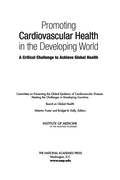
Cardiovascular disease (CVD) is often thought to be a problem of wealthy, industrialized nations. The term “cardiovascular disease” is used throughout the report to refer to cardiac disease, vascular diseases of the brain and kidney, and peripheral vascular disease. The report’s main focus is
...

Background
Noncommunicable diseases are major contributors to morbidity and mortality worldwide. Modifying the risk factors for these conditions, such as physical inactivity, is thus essential. Addressing the context or circumstances in which physical activity occurs may promote physical activity a
...
Diabetes mellitus (DM) is one of the commonest chronic diseases worldwide. Self-Management Education (SME) is regarded as a critical element of treatment for all people with diabetes, as well as those at risk of developing the condition. While a great variety of diabetes self-management education (D
...
The article "Air Pollution: The Emergence of a Major Global Health Risk Factor" discusses the significant health impacts of air pollution, a leading risk factor for global mortality. It highlights the adverse effects of fine particulate matter (PM2.5) and tropospheric ozone, linking them to cardiova
...
Diabetes is one of the leading causes of chronic kidney disease (CKD). Up to 40% of people living with diabetes develop CKD, and the number of new cases of CKD in people with type 2 diabetes increased by 74% between 1990 and 2017. The prevalence of diabetes-related CKD varies widely between
...

The document, "Progress on the Prevention and Control of Non-Communicable Diseases," reports on global efforts to reduce the impact of NCDs, such as heart disease, cancer, diabetes, and chronic respiratory diseases, following the commitments made at high-level United Nations meetings. It highlights
...

Severe and difficult asthma in a low- and middle-income country (LMIC) can relate to lack of availability of basic medications; potentially reversible factors such as poor adherence or comorbidities such as obesity inhibiting a good response to treatment; and (rarely) true severe, therapy-resistant
...

Asthma is the commonest chronic childhood disease and encompasses a spectrum of airway diseases with similar symptoms. Inaccurate diagnosis remains common, especially in younger children, with failure to characterize the different “asthmas.” Children worldwide repeatedly suffer symptoms which se
...

Chronic respiratory diseases, such as asthma and
chronic obstructive pulmonary disease, kill more than
four million people every year and affect hundreds
of millions more. These diseases erode the health
and well-being of the patients and have a negative
impact on families and societies. Women
...

Chronic respiratory diseases, such as asthma and
chronic obstructive pulmonary disease, kill more than
four million people every year and affect hundreds
of millions more. These diseases erode the health
and well-being of the patients and have a negative
impact on families and societies. Women
...

Reprod Health 19, 143 (2022). https://doi.org/10.1186/s12978-022-01452-4.
Delivery of quality reproductive health services has been documented to depend on the availability of healthcare workers who are adequately supported with appropriate training. However, unmet training needs among healthcare
...

The COVID-19 pandemic exposed critical gaps in the global response to health crises, particularly in the financing of pandemic prevention, preparedness, response, recovery, and reconstruction. This chapter presents a comprehensive framework for pandemic financing that spans the entire pandemic cycle
...

Background: Timely reliable data on aid flows to maternal, newborn, and child health are essential for assessing the adequacy of current levels of funding, and to promote accountability among donors for attainment of the Millennium Development Goals (MDGs) for child and maternal health. We provide g
...

WHO today released its first roadmap to tackle postpartum haemorrhage (PPH) – defined as excessive bleeding after childbirth - which affects millions of women annually and is the world’s leading cause of maternal deaths.
Despite being preventable and treatable, PPH results in around 70 000 de
...

Asthma is the most common chronic disease in children globally. The Global Asthma Network (GAN) Phase I study aimed to determine if the worldwide burden of asthma symptoms is changing.
This updated cross-sectional study used the same methods as the International study of Asthma and Allergies in Chi
...

This publication presents the Agenda for the Americas on Health, Environment, and Climate Change 2021–2030 (the Agenda). The Agenda is a call to action to the health sector to lead the charge to address environmental determinants of health in the Americas. The Pan American Health Organization (PAH
...
Six months after its launch on 24 April, the Access to COVID-19 Tools (ACT) Accelerator has already delivered concrete results in speeding up the development of new therapeutics, diagnostics, and vaccines. Now mid-way through the scale-up phase, the tools we need to fundamentally change the course o
...
