
Filter
105
Text search:
United
Nations
Children’s
Fund
UNICEF
Featured
Recommendations
7
New Publications
20
Language
Document type
No document type
59
Studies & Reports
26
Manuals
4
Guidelines
4
Infographics
4
Situation Updates
3
Fact sheets
2
Training Material
1
Videos
1
Strategic & Response Plan
1
Countries / Regions
Kenya
5
Global
4
Senegal
3
Lesotho
3
Congo, Democratic Republic of
2
Ethiopia
2
South Sudan
2
Syria
2
Middle East and North Africa
2
Burkina Faso
1
Sierra Leone
1
Mali
1
Niger
1
Somalia
1
Nepal
1
Indonesia
1
South Africa
1
Bangladesh
1
Malawi
1
Mozambique
1
Namibia
1
Ukraine
1
Greece
1
Myanmar / Burma
1
Yemen
1
East and Southern Africa
1
West and Central Africa
1
South–East Asia Region
1
Western Pacific Region
1
Western and Central Europe
1
Authors & Publishers
Publication Years
Category
Countries
34
Women & Child Health
31
Key Resources
4
Clinical Guidelines
2
Capacity Building
1
Public Health
1
Pharmacy & Technologies
1
Toolboxes
Disability
20
Mental Health
12
HIV
9
COVID-19
8
Conflict
6
Caregiver
3
Planetary Health
2
Pharmacy
2
Cholera
1
Polio
1
Natural Hazards
1
Refugee
1
Specific Hazards
1
Global Health Education
1
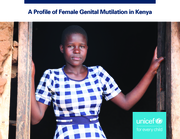
Kenya is home to 4 million girls and women who have experienced FGM. Overall, 21 per cent of girls and women aged 15 to 49 years have undergone the practice, varying from 98 per cent in the North Eastern region to 1 per cent in the Western region
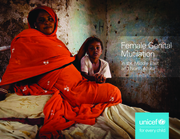
Almost 50 million girls and women have undergone FGM in five countries in the Middle East and North Africa, accounting for one quarter of the global total
Child marriage and female genital mutilation (FGM) threaten the well-being of millions of girls around the world. Both have existed for generations, as manifestations of gender inequality, and have been propagated by discriminatory norms that devalue girls. In many countries where both child marriag
...

Pregnancy and childbirth during adolescence profoundly affects the lives of millions of girls worldwide, and is a leading cause of maternal mortality and morbidity, and infant and child mortality. Every year, an estimated 21 million girls aged 15–19 years old in low- and middle-income countries be
...
UNICEF Syria’s series of think pieces. Every day counts. An outlook on child protection for the most vulnerable children in Syria.To navigate the complex and continuously changing context and attain sustainable results for children,
...
December 2020 — May 2021
Gaps in data covering refugees, asylum seekers, migrants and internally displaced populations are endangering the lives and wellbeing of millions of children on the move, warned five UN and partner agencies today. In 'A call to action: Protecting children on the move starts with better data',
...

The WHO/UNICEF JMP report, WASH in Health Care Facilities, is the first comprehensive global assessment of water, sanitation and hygiene (WASH) in health care facilities. It also finds that 1 in 5 health care facilities has no sanitation service*, i
...

Listening to what children in crisis have to say is not only a moral and ethical responsibility for donor and humanitarian actors, it is also a humanitarian obligation. Children’s right to partici
...

Conflict, climate crisis and COVID-19 pose great threats to the health of women and children.

Data from the 2011 Ethiopia Demographic and Health Survey
This report from Human Rights Watch found that South Africa has failed to guarantee the right to education for many of the country’s children and young adults due to widespread discrimination against children with disabilities in enrollment decisions. Human Rights Watch research in five out of Sou
...
The new Global Strategy aims to achieve the highest attainable standard of health for all women, children and adolescents, transform the future and ensure that every newborn, mother and child not only survives, but thrives.

In 2015, 5.9 million children under age five died (1). The major causes of child deaths globally are pneumonia, prematurity, intrapartum-related complications, neonatal sepsis, congenital anomalies, diarrhoea, injuries and malaria (2). Most of these diseases and conditions are at least partially cau
...
Special Issue: Special Education in Sub-Saharan Africa | This special issue of our Communication*Support*World*Network*Newsletter attempts to share practical ideas and information about special education for children with disabilities in sub-Saharan Africa. Our intent is to begin a dialogue among th
...
