Filter
100
Text search:
Rwanda
Biomedical
Center
Featured
9
11
Language
Document type
59
20
12
4
2
1
1
1
Countries / Regions
46
6
4
4
2
2
2
2
2
1
1
1
1
1
1
1
1
1
1
1
1
1
Authors & Publishers
Publication Years
Category
56
7
4
2
2
1
1
Toolboxes
9
9
5
4
3
3
3
2
2
1
1
1
1
1
1
1
Towards a policy of inclusion
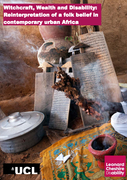
Many groups in sub-Saharan Africa have historically linked persons with disabilities with witchcraft as a component of a wider link between accusations of witchcraft and socially marginalized populations. It is commonly assumed that traditional prejudices towards persons with disabilities are recedi
...

This article examines the activities of national and international actors in Pharmaceutical Services (PS) in Mozambique from 2007 to 2012, focusing on the public provision of HIV/Aids, malaria and tuberculosis medicines. It describes how PS functions in the country, what actors are involved in this
...

This report, published in conjunction with a summary overview of results of rounds 1–8, is the eighth and final report in a series of laboratory-based evaluations of rapid diagnostic tests (RDTs) for malaria. It provides a comparative measure of their performance in a standardized way to distingui
...

Based on the survey, five principles for deinstitutionalization were identified: community-based services must be in place; the health workforce must be committed to change; political support at the highest and broadest levels is crucial; timing is key; and additional financial resources are needed.
...
Overcoming HIV-related stigma and discrimination in health- care settings and beyond
UNAIDS 2017 | REFERENCE
UNAIDS / 2016
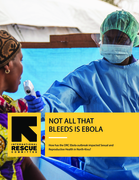
Not all that bleeds is Ebola
recommended
How has the DRC Ebola outbreak impacted Sexual and Reproductive Health in North-Kivu?
Recommendations (more specifics found in the assessment):
1. Sexual and reproductive health needs and services are to be embedded in the EVD response from the outset.
2. Reduce delays at every stage of the patie
...

Internationally, there is a growing concern over antimicro-bial resistance (AMR) which is currently estimated to ac-count for more than 700,000 deaths per year worldwide. If no appropriate measures are taken to halt its pro-gress, AMR will cost approximately 10 million lives andabout US$100 trillion
...
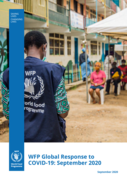
The COVID-19 pandemic is a multiplier of vulnerability, compounding threats to food insecurity, while exposing weaknesses in food and health systems. It is severely undermining the capacity of communities to cope in times of crisis and has become a stress test for political and economic stability.

The study on health facility preparedness for cholera outbreak response in Cameroon evaluates the ability of healthcare facilities in four cholera-prone districts to manage cholera outbreaks. The findings highlight significant weaknesses, including limited surveillance systems, inadequate access to
...
Five years after a global commitment to Fast-Track the HIV response and end AIDS by 2030, the world is off track. A promise to build on the momentum created in the first decade of the twenty-first century by front-loading investment and accelerating HIV service provision has been fulfilled by too fe
...
2021 UNAIDS Global AIDS Update. UNAIDS report shows that people living with HIV face a double jeopardy, HIV and COVID-19, while key populations and children continue to be left behind in access to HIV services
PHARMA’S RESPONSE TO THE COVID-19 VACCINES CRISIS. Update Feb., 14, 2022. In September 2021, Amnesty International published A Double Dose of Inequality, which assessed the extent to which the pharmaceutical industry was restricting access to Covid-19 vaccines. This report updates that assessment
...

The Lancet. 13 March 2022. doi: 10.1016/S0140-6736(21)02868-3. Previous Global Burden of Diseases, Injuries, and Risk Factors Study (GBD) studies have reported
national health estimates for Ethiopia. Substantial regional variations in socioeconomic status, population, demography, and access to hea
...

Abrupt reductions in international HIV assistance in 2025 have deepened existing funding shortfalls. The OECD estimates that external health assistance is projected to drop by 30–40% in 2025 compared with 2023, causing immediate and even more severe disruption to health services in low- and middle
...