
Filter
965
Text search:
sepsis
Featured
136
264
Language
Document type
454
251
111
63
24
23
19
7
5
4
2
1
1
Countries
83
26
24
23
22
20
19
19
18
17
17
17
17
16
14
14
13
13
12
10
10
9
8
8
8
7
7
7
6
6
6
6
5
5
5
5
5
4
4
4
3
3
3
3
3
3
3
3
3
2
2
2
2
2
2
2
2
2
2
2
2
1
1
1
1
1
1
1
1
1
1
1
1
1
1
1
1
1
1
Authors & Publishers
Publication Years
Category
459
151
143
34
25
23
9
Toolboxes
121
91
65
23
20
20
18
18
18
13
10
10
8
8
7
6
5
5
5
2
2
2
1

In Sierra Leone, Health care delivery is organized around a three-tier system i) primary level constituting peripheral health units (community health centers, community health posts, and maternal and child health posts secondary level constituting district hospitals tertiary level comprising region
...

Guidelines approved by the WHO Guidelines -Review Committee; second edition

The guidelines are primarily intended for health-care professionals working in first- or second-level health-care facilities, including emergency, inpatient and outpatient services. They are also directed at policy-makers, health-care planners and programme managers, academic institutions, non-gover
...
WHO guidelines on meningitis diagnosis, treatment and care. Web Annex C. Evidence-to-Decision frameworks
recommended
The guidelines are primarily intended for health-care professionals working in first- or second-level health-care facilities, including emergency, inpatient and outpatient services. They are also directed at policy-makers, health-care planners and programme managers, academic institutions, non-gover
...

This document is for public health specialists, health emergency responders, clinicians, health facility managers, health and care workers and IPC practitioners including but not limited to those working in primary care clinics, sexual health clinics, emergency departments, dental practices, infecti
...

The "Integrated Management of Malaria Training – Health Worker’s Manual" is a practical guide developed by Uganda’s Ministry of Health to train healthcare workers at all levels in the effective diagnosis, treatment, prevention, and management of malaria. It aligns with national malaria treatme
...

The MalariaCare Toolkit. Tools for maintaining high-quality malaria
case management services.
Developed by MalariaCare, this module supports health supervisors in improving the management of severe malaria by providing focused, case-based learning and mentorship. It provides clinical supervisors w
...

This handbook is designed to provide essential information as well as quick tips to improve foot care for people with dark skin tone living with diabetes.

WHO guidelines for clinical management of arboviral diseases: dengue, chikungunya, Zika and yellow fever
recommended
The new WHO guidelines provide clinical management recommendations for four of the most widespread arboviruses affecting humans: dengue, chikungunya, Zika, and yellow fever.
An integrated approach is vital, as these four diseases often present with similar symptoms, especially in the early stages
...

A practical toolkot
Guidelines for the Prevention and Treatment of Opportunistic Infections in Children With and Exposed to HIV
recommended
Full Guidelines
Tuberculosis (TB) remains a serious public health threat in South Africa and is the
leading cause of death in people living with HIV (PWH). Pre-hospital and early in-
hospital mortality is of particular concern in PWH. Significant progress has been made
to date, but a monumental effort is require
...
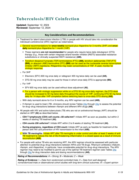
Guidelines for the Use of Antiretroviral Agents in Adults and Adolescents With HIV K-19 Tuberculosis/HIV Coinfection
Updated: September 12, 2024 Key Considerations and Recommendations

Core Guidance. Differentiated service delivery is highlighted as a key approach for HIV programmes to enhance implementation quality and efficiency.

This is the 2025 draft Malawi Guidelines for Syndromic Management of Sexually Transmitted Infections which is yet to be approved by the SMT.
In: Antenatal Care, Maternal Care, Under 5 Clinics, Family Planning Clinics and HIV Exposed Child Follow Up.
This 5th Edition of the Malawi Guidelines for Clinical Management of HIV in Children and Adults is implemented from January 2022. It replaces all previous editions of the Malawi Antiretrovir
...
Internal Document
Advanced Clinical Care (ACC) Live Tutorial session 22 August 2024

This document consolidates, for the first time, WHO recommendations on the prevention, testing, treatment and monitoring of hepatitis B and C, and includes testing strategies for hepatitis D. Drawing on a decade of evidence-based guidance issued between 2015 and 2025, it provides a single, practical
...
El “Libro de bolsillo sobre atención primaria de salud para niños, niñas y adolescentes: orientaciones sobre promoción de la salud, prevención y manejo de enfermedades desde el período neonatal hasta la adolescencia” está destinado a profesionales de medicina y enfermería, así como a ot
...
