
Filter
3561
Text search:
World
Bank
Group
Featured
Recommendations
235
New Publications
1003
Language
Document type
No document type
2037
Studies & Reports
818
Guidelines
264
Manuals
160
Strategic & Response Plan
154
Training Material
41
Fact sheets
39
Situation Updates
30
Resource Platforms
12
Infographics
4
Brochures
2
Countries / Regions
Global
208
India
150
Nepal
102
Kenya
100
Ethiopia
89
Myanmar / Burma
89
Sierra Leone
82
Nigeria
76
Malawi
72
Liberia
70
Zambia
65
Uganda
62
Africa
58
Bangladesh
57
Rwanda
51
Latin America and the Carribbean
48
Ghana
46
Syria
46
Ukraine
43
Congo, Democratic Republic of
42
Tanzania
42
South Africa
41
South Sudan
35
Namibia
35
Western and Central Europe
34
Cambodia
31
Mozambique
30
Lesotho
30
Indonesia
29
Yemen
28
Philippines
27
Asia
27
Haiti
26
Guinea
24
West and Central Africa
24
South–East Asia Region
24
Eastern Europe
24
Zimbabwe
23
Senegal
22
Burkina Faso
21
East and Southern Africa
20
Pakistan
16
Botswana
15
Afghanistan
14
Sudan
14
Cameroon
13
Eswatini/ Swaziland
13
Middle East and North Africa
13
Venezuela
13
Central African Republic
12
Somalia
11
Lebanon
11
Thailand
11
Colombia
11
Russia
11
Benin
10
Madagascar
10
Moldova
10
Mali
9
China
9
Eastern Europe and Central Asia
9
Albania
9
Jordan
8
Brazil
8
Vietnam
8
Sri Lanka
7
Paraguay
7
Palestine
7
Laos
6
Tajikistan
6
Côte d’Ivoire / Ivory Coast
5
Ecuador
5
Mexico
5
Western Pacific Region
5
Niger
4
Peru
4
Southern Africa
4
Timor Leste/ East Timor
4
Kyrgyzstan
4
Jamaica
4
USA
3
Iraq
3
Germany
3
Papua New Guinea
3
Bolivia
3
Libya
3
Angola
3
Chile
3
Iran
3
Georgia
3
Turkmenistan
3
Turkey
2
Egypt
2
Chad
2
Gambia
2
Argentina
2
Serbia
2
Burundi
2
Armenia
2
Lithuania
2
North America
2
Japan
2
Bosnia and Herzegovina
2
Guinea-Bissau
1
Saudi Arabia
1
Malaysia
1
Mauritania
1
Singapore
1
North Macedonia
1
Hungary
1
Croatia
1
El Salvador
1
Guatemala
1
Other region
1
Fiji
1
Bhutan
1
Poland
1
Italy
1
Mongolia
1
Congo-Brazzaville
1
Bulgaria
1
Romania
1
Kazakhstan
1
Mauritius
1
Tunisia
1
Portugal
1
Spain
1
Azerbaijan
1
Belarus
1
Authors & Publishers
Publication Years
Category
Countries
1460
Key Resources
258
Women & Child Health
212
Public Health
200
Clinical Guidelines
157
Capacity Building
47
Pharmacy & Technologies
22
Toolboxes
COVID-19
256
Disability
233
HIV
229
Mental Health
196
Planetary Health
194
Conflict
133
Health Financing Toolbox
124
Global Health Education
114
Caregiver
91
TB
88
AMR
85
Ebola & Marburg
83
NTDs
59
Natural Hazards
54
NCDs
46
Refugee
44
Rapid Response
43
Pharmacy
37
Malaria
31
2.0 Rapid Response
25
Social Ethics
12
Polio
8
Specific Hazards
8
Cholera
7
Zika
5
South Sudan
2
Typhoon
1

The 2030 health-related Sustainable Development Goals call on countries to end AIDS as a public health threat and also to achieve universal health coverage. The World Health Organization (WHO) promotes primary health care (PHC) as the key mechanism
...

While there has been real progress in addressing the burden of disease in the WHO African region, the COVID-19 pandemic has highlighted the link between health, economics and security, as the region saw decades of progress threatened, including positive trends in decreasing inequality. In the Africa
...

The "Stories from the field" document by the WHO Regional Office for the Eastern Mediterranean shares effective strategies from the Eastern Mediterranean Region for addressing noncommunicable diseases (NCDs) and mental health challenges, particularly during the COVID-19 pandemic. It highlights regio
...
4–15 February 2013
The report provides a global knowledge base on suicide and suicide attempts as well as actionable steps for countries based on their current resources and context to move forward in suicide prevention.

Dignity in Mental Health
Countries must invest at least 1% more of GDP on primary health care to eliminate glaring coverage gaps
At current rates of progress up to 5 billion people will miss out on health care in 2030
Countries must increase spending on primary healthcare by at least 1% of their gross domestic product (
...

This fourth annual report monitors global progress towards the 2023 target for global elimination of industrially produced trans-fatty acids (TFA), highlighting achievements during the past year (October 2021 – September 2022). Countries are responding to the
...
WHO Pharmacovigilance indicators: a practical manual for the assessment of pharmacovigilance systems
This manual provides a practical method for determining the pharmacovigilance indices. It is designed to be simple and can be understood by any worker in pharmacovigilance without formal training in monitoring and evaluation. Pharmacovigilance as a medical discipline is crucial in preventing medicin
...
Quality of care in fragile, conflict-affected and vulnerable settings: tools and resources compendium
recommended
This compendium represents a curated, pragmatic and non-prescriptive collection of tools and resources to support the implementation of interventions to improve quality of care in such contexts. Relevant tools and resources are listed under five areas: Ensuring access and basic infrastructure for qu
...
The Asia Pacific Observatory on Health Systems and Policies is a collaborative partnership which supports and promotes evidence-based health policy making in the Asia Pacific Region. Based in WHO’s Regional Office for South-East Asia, it brings together governments, international agencies, foundat
...

The Millennium Development Goals (MDGs) showed
that global commitment and collective action
could significantly reduce the disease burdens of
three deadly communicable diseases: HIV/AIDS,
tuberculosis (TB) and malaria. The MDGs helped
focus efforts on these three deadly diseases
and leveraged
...

In 2016, the risk of premature mortality1 from noncommunicable diseases (NCDs) in Ethiopia was 18.3%. The economic costs of NCDs are significant and are due principally to their impact on the non-health sector (reduced workforce and productivity). In this study, it is estimated that NCDs cost Ethiop
...

The report identifies major global gaps in WASH services: one third of health care facilities do not have what is needed to clean hands where care is provided; one in four facilities have no water services, and 10% have no sanitation services. This means that 1.8 billion people use facilities that l
...
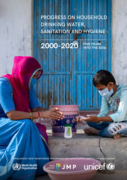
The Joint Monitoring Programme (JMP) report – Progress on household drinking water, sanitation and hygiene 2000 - 2020 – presents estimates on household access to safely managed drinking water, sanitation and hygiene services over the past five years, and assesses progress toward achieving the s
...
