
Filter
8313
Text search:
2011
Featured
Recommendations
536
New Publications
2395
Language
Document type
No document type
5248
Studies & Reports
1396
Guidelines
805
Manuals
305
Strategic & Response Plan
226
Training Material
111
Fact sheets
111
Situation Updates
39
Infographics
29
Brochures
18
Resource Platforms
14
Videos
5
Online Courses
2
Dashboards/Maps
1
App
1
Countries / Regions
India
271
Global
268
Nepal
195
Kenya
193
Ethiopia
176
Western and Central Europe
158
Uganda
155
Indonesia
152
Myanmar / Burma
151
South Africa
150
Latin America and the Carribbean
130
Bangladesh
123
Nigeria
121
Germany
121
Senegal
118
Rwanda
116
Liberia
115
Sierra Leone
114
Congo, Democratic Republic of
114
Malawi
106
Zambia
104
Africa
103
Tanzania
101
Syria
98
Eastern Europe
93
Russia
83
Ukraine
82
Burkina Faso
78
Ghana
75
Benin
75
Namibia
75
Paraguay
75
Venezuela
68
Haiti
66
Philippines
65
Cambodia
63
Brazil
59
Mozambique
58
Zimbabwe
56
Lesotho
54
South Sudan
52
Colombia
50
Cameroon
48
Asia
47
Madagascar
40
Argentina
38
Guinea
37
Botswana
34
Yemen
33
Peru
32
South–East Asia Region
32
Central African Republic
25
West and Central Africa
23
Middle East and North Africa
23
Eastern Europe and Central Asia
22
East and Southern Africa
21
Bolivia
19
Pakistan
18
Jordan
18
Afghanistan
18
Mali
17
Thailand
16
Sudan
16
Eswatini/ Swaziland
16
Vietnam
16
Côte d’Ivoire / Ivory Coast
15
Togo
15
Chile
15
Lebanon
14
Albania
14
Somalia
13
Tajikistan
13
El Salvador
12
Ecuador
11
Western Pacific Region
11
China
10
Sri Lanka
10
Iraq
9
Laos
9
Angola
8
USA
7
Niger
7
Papua New Guinea
7
North Macedonia
7
Moldova
7
Georgia
7
Turkey
6
Burundi
6
Armenia
6
Estonia
6
Kyrgyzstan
6
North America
6
Chad
5
Honduras
5
Guatemala
5
Mexico
5
Southern Africa
5
Iran
5
Egypt
4
Dominican Republic
4
Libya
4
Bhutan
4
Palestine
4
Timor Leste/ East Timor
4
Kazakhstan
4
United Kingdom
4
Spain
4
Morocco
3
Gambia
3
Malaysia
3
Switzerland
3
Serbia
3
Canada
3
Romania
3
France
3
Portugal
3
Belarus
3
Bosnia and Herzegovina
3
Guinea-Bissau
2
Saudi Arabia
2
Singapore
2
Croatia
2
Greece
2
Nicaragua
2
Other region
2
Poland
2
Italy
2
Mongolia
2
Uzbekistan
2
Uruguay
2
Turkmenistan
2
Jamaica
2
Japan
2
Azerbaijan
2
Vanuatu
1
Hungary
1
Fiji
1
Solomon Islands
1
North Korea
1
Qatar
1
Bulgaria
1
Lithuania
1
Slovakia
1
Denmark
1
Belgium
1
Maldives
1
Mauritius
1
Israel
1
Belize
1
Costa Rica
1
Panama
1
Authors & Publishers
Publication Years
Category
Countries
3497
Clinical Guidelines
452
Key Resources
419
Public Health
342
Women & Child Health
339
Capacity Building
128
Pharmacy & Technologies
52
Toolboxes
Mental Health
766
HIV
583
TB
515
Disability
368
Planetary Health
309
COVID-19
284
NTDs
250
Refugee
224
AMR
220
Conflict
212
Caregiver
184
Ebola & Marburg
142
Global Health Education
132
NCDs
128
Health Financing Toolbox
100
Pharmacy
93
Natural Hazards
92
Rapid Response
89
Malaria
68
Zika
62
2.0 Rapid Response
58
Cholera
53
Social Ethics
53
Polio
44
Specific Hazards
31
South Sudan
2
Typhoon
2

The Global Health Expenditure Report delves into the intricate landscape of global economies and health systems. This year, it focuses on health spending in 2022, the third year of the COVID-19 pandemic. It shows how countries around the world responded to the health and economic shocks of the pande
...

The role of evidence in the journey towards universal health coverage is paramount. Financial risk protection monitoring, the major focus of this report, informs where the WHO African Region stands in reducing the financial hardship people face due to health expenses. This report details the status
...

To realize Agenda 2030, aid agencies, private philanthropies, and their partners in the Global South need better data to monitor how official development finance (ODF) dollars advance the Sustainable Development Goals (SDGs) and avoid missing the mark. In this report, we summarize the results of a n
...

This paper presents a bibliometric analysis of the literature on private health aid and official health assistance between 2000 and 2022. It provides an overview of the sites and themes in the literature pertaining to development assistance in health, and collates the significant policy recommendati
...
Each year since 2007, G-FINDER has provided policy-makers, donors, researchers and industry with a comprehensive analysis of global investment into research and development of new products to
prevent, diagnose, control or cure neglected diseases in low- and middle-income countries, making it the go
...
En su condición de departamento técnico de la OMS para el paludismo, al Programa Mundial sobre Malaria le corresponde una importante función de liderazgo de la respuesta mundial. Por medio de sus acciones directas y su red, tiene la capacidad de conformar el ecosistema de la respuesta al paludism
...
En tant que département technique de l'OMS chargé du paludisme, le Programme mondial de lutte contre le paludisme a un rôle important à jouer dans la conduite de la riposte mondiale contre cette maladie. Grâce à ses actions directes et à son réseau, il peut façonner l'écosystème du paludi
...

Africa’s health sector is facing an unprecedented financing crisis, driven by a sharp decline of 70% in Official Development Assistance (ODA) from 2021 to 2025 and deep-rooted structural vulnerabilities. This collapse is placing immense pressure on Africa’s already fragile health systems as ODA
...

Achieving financial risk protection for the whole population requires significant financing for health. Health systems in low- and middle-income countries (LMIC) are plagued with persistent underfunding, and recent reductions in official development assistance have been registered. To create fiscal
...

Development assistance for health (DAH)
plays a vital role in supporting health programmes in lowand middle-income countries. While DAH has historically
focused on infectious diseases and maternal and child
health, there is a lack of comprehensive analysis of DAH
trends, strategic shifts and the
...

Zambia is facing a severe economic crisis marked by high inflation, increasing poverty and a heavy debt burden that is straining both its fiscal stability and progress in health outcomes. By 2020, the country's external debt reached United States dollars (USD) 12.7 billion, representing 108% of the
...

This comprehensive HPFM report thoroughly explores Kenya’s health financing landscape. It provides an in-depth analysis of the current state of affairs and sheds light on required strategic changes in health financing. The report points out the need to improve public financial management within th
...

Conditioned domestic financing policy, referring to the domestic financing of health projects, programs, and national responses conditioned by global health funding agencies and recipient country governments, is one mechanism to promote sustainability and country ownership. We aim to understand how
...
For this report, the Task Force commissioned
additional background papers on health taxes to
update the evidence, assess short-term revenue
potential, and understand the role of health taxes
in the current era of multiple crises. We find that
health taxes continue to be underutilized despite th
...

There has never been a more critical moment to invest in WHO, and strengthen the unique role it plays in global health. Now is the time to sustainably finance WHO and invest in a healthy return for all.

In 2019, the Task Force on Fiscal Policy for Health concluded that taxes on tobacco, alcohol, and sugar-sweetened beverages were a highly effective but greatly underused policy tool to reduce consumption, save lives, and raise domestic resources. The Task Force estimated that if all countries increa
...
Frequent efforts to revise the official development assistance (ODA) accounting rules have raised important questions about the integrity and relevance of what currently “counts” as ODA spending. In this note, we outline a brief history of the evolution of the ODA accounting rules to date, highl
...

The world is facing a sustainable development crisis. The 2024 Financing for Sustainable Development Report: Financing for Development at a Crossroads finds that financing challenges are at the heart of the crisis and imperil the SDGs and climate action. The window to rescue the SDGs and prevent a c
...
The Malaria Ministerial Conference, co-hosted by WHO and the Government of Cameroon on 6 March 2024, brought together more than 400 stakeholders, including Ministers of Health and senior representatives from the African countries hardest hit by malaria, global health leaders, scientists, civil socie
...
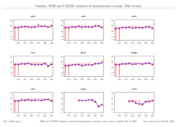
Each year WHO and UNICEF jointly review reports submitted by Member States regarding national immunization coverage, finalized survey reports as well as data from the published and grey literature. Based on these data, with due consideration to potential biases and the views of local experts, WHO an
...
