Filter
8431
Text search:
Human
resources
Featured
Recommendations
753
New Publications
2190
Language
Document type
No document type
4601
Studies & Reports
1530
Guidelines
1024
Manuals
502
Strategic & Response Plan
376
Fact sheets
140
Training Material
137
Situation Updates
65
Resource Platforms
16
Brochures
15
Infographics
11
Online Courses
8
App
1
Videos
1
Countries / Regions
Global
409
India
301
Kenya
251
Sierra Leone
175
South Africa
174
Ethiopia
167
Uganda
166
Nepal
162
Liberia
153
Nigeria
153
Myanmar / Burma
140
Western and Central Europe
140
Syria
124
Africa
123
Zambia
122
Rwanda
120
Latin America and the Carribbean
118
Malawi
117
Bangladesh
112
Tanzania
110
Namibia
96
Ghana
95
Ukraine
82
Congo, Democratic Republic of
70
Philippines
65
Lesotho
60
South Sudan
58
South–East Asia Region
53
Guinea
52
Mozambique
52
Cambodia
51
Asia
50
Eastern Europe
50
Zimbabwe
49
Indonesia
49
East and Southern Africa
44
West and Central Africa
43
Haiti
42
Senegal
39
Middle East and North Africa
39
Yemen
38
Botswana
37
Venezuela
33
Burkina Faso
29
Cameroon
28
Russia
28
Pakistan
27
Germany
27
Eastern Europe and Central Asia
27
Afghanistan
25
Central African Republic
23
Eswatini/ Swaziland
23
Brazil
21
Vietnam
21
Sudan
20
Jordan
19
Lebanon
19
Mali
18
Thailand
18
Western Pacific Region
18
China
17
Colombia
17
USA
15
Somalia
15
Iraq
15
Benin
14
Laos
14
Moldova
13
Côte d’Ivoire / Ivory Coast
12
Turkey
12
Madagascar
12
Albania
11
Tajikistan
11
Sri Lanka
10
Iran
10
Peru
9
Palestine
9
Georgia
9
North America
9
Papua New Guinea
8
Chad
7
Angola
7
Chile
7
Paraguay
7
Southern Africa
7
Niger
6
Gambia
6
North Macedonia
6
Libya
6
Poland
6
Jamaica
6
Guinea-Bissau
5
Hungary
5
Burundi
5
Bolivia
5
Timor Leste/ East Timor
5
Romania
5
Togo
4
Argentina
4
Ecuador
4
Greece
4
Bhutan
4
Canada
4
Kyrgyzstan
4
Japan
4
Saudi Arabia
3
Egypt
3
Malaysia
3
Singapore
3
Croatia
3
Honduras
3
El Salvador
3
Guatemala
3
Mexico
3
Fiji
3
Armenia
3
Australia
3
Turkmenistan
3
Mauritius
3
United Kingdom
3
Portugal
3
Spain
3
Belarus
3
Morocco
2
Italy
2
Qatar
2
Bulgaria
2
Estonia
2
Lithuania
2
Slovakia
2
Kazakhstan
2
Tunisia
2
Azerbaijan
2
Mauritania
1
Ireland
1
Vanuatu
1
Dominican Republic
1
Switzerland
1
Serbia
1
Nicaragua
1
Other region
1
Djibouti
1
Uzbekistan
1
Belgium
1
France
1
Maldives
1
Norway
1
South Korea
1
Bosnia and Herzegovina
1
Belize
1
Costa Rica
1
Panama
1
Authors & Publishers
Publication Years
Category
Countries
3005
Key Resources
621
Clinical Guidelines
510
Public Health
441
Women & Child Health
432
Capacity Building
166
Pharmacy & Technologies
60
Annual Report MEDBOX
3
Toolboxes
HIV
653
Mental Health
632
COVID-19
620
Disability
407
Planetary Health
403
TB
352
Conflict
277
Caregiver
239
Ebola & Marburg
237
AMR
225
NTDs
204
Global Health Education
181
Refugee
172
Rapid Response
170
Natural Hazards
139
Health Financing Toolbox
131
Pharmacy
121
NCDs
119
2.0 Rapid Response
108
Malaria
92
Social Ethics
71
Specific Hazards
55
Cholera
48
Zika
40
Polio
38
Typhoon
6
South Sudan
2

The Director’s guide contains all the information that the course director needs in order to plan and prepare for the course, to decide which modules and sessions will be included in the training, and to select trainers and participants, starting several months before the actual training. It conta
...
A Handbook to Support Strengthening of Organisational Capacity in Developing Information, Education and Communication (IEC) Materials for Lesbian, Gay, Bisexual, Transgender and Intersex (LGBTI) People in Southern Africa Accessed 7 July 2015

Bull World Health Organ 2020;98:773–780
Universal health coverage (UHC) depends on a strong primary health-care
system. To be successful, primary health care must be expanded at community and household levels as much of the world’s population still lacks access to health facilities for basic
...
"This Code provides practical guidance on how to manage health and safety risks associated with hazardous
chemicals for persons conducting a business or undertaking who use chemicals in their workplace."
BMJ 2009; 338 doi: https://doi.org/10.1136/bmj.b158 (Published 05 February 2009)
Cite this as: BMJ 2009;338:b158
Correspondence to: A Burns alistair.burns@manchester.ac.uk
Using the WHO model list of essential medicines to update a national essential medicines list
Since 1977, WHO has been working with countries to design the package of essential medicines as an integral component of treatment within the continuum of care, developing and disseminating the Model List
...
Global growth is projected to slow significantly amid high inflation, tight monetary policy, and more restrictive credit conditions. The possibility of more widespread bank turmoil and tighter monetary policy could result in even weaker global growth and lead to financial dislocations in the most vu
...

WHO has published the first-ever guidance on the clinical management of diphtheria. The only previously available guidance was an operational protocol. The new guidance followed the rigorous process for developing guidance at WHO.
It addresses the use of Diphtheria Antitoxin (DAT) in the treatmen
...


These guidelines were developed as part of Kenya's fast-track plan to end AIDS among adolescents and young people. Based on research into adolescent and young key populations in Kenya and elsewhere, they outline a package of HIV prevention services, and emphasize the need to combine biobehavioural i
...

This handbook is an adaptation from the WHO Clinical Handbook Health care for women subjected to intimate partner violence or sexual violence developed by the World Health Organization (WHO), UN Women and United Nations Population Fund. The handbook draws on the work from professionals who are dedic
...

The document "Global Report on Diabetes" by the World Health Organization (WHO) provides an in-depth analysis of diabetes as a global health challenge. It covers the rising prevalence of the disease, the associated risk factors, and the increasing burden on healthcare systems, particularly in low- a
...
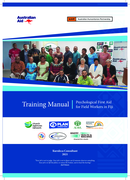
This Fiji contextualized manual was initially drafted for CANDO partners as a result of the work done by the humanitarian arms of the various Christian denominations. However as the work progressed it became evidently clear that the training was needed for all responders, and not only Christian resp
...