
Filter
1440
Text search:
Laboratory
diagnostics
Featured
214
355
Language
Document type
594
280
277
107
89
38
18
11
7
6
6
3
2
1
Countries
68
62
39
39
34
30
28
26
25
23
22
21
21
20
20
19
17
16
16
14
12
12
11
11
10
10
10
9
8
8
8
7
7
7
6
6
6
6
6
5
5
4
4
3
3
3
3
3
2
2
2
2
2
2
2
2
2
2
2
2
2
2
2
2
2
2
2
2
2
1
1
1
1
1
1
1
1
1
1
1
1
1
1
1
1
1
1
1
1
1
1
1
1
1
1
1
1
1
1
1
1
1
1
1
Authors & Publishers
Publication Years
Category
469
160
89
66
50
20
13
1
Toolboxes
248
179
113
111
65
50
44
44
34
29
25
23
19
18
14
13
13
11
10
7
6
5
4
4

Pandemic Influenza Risk Management
recommended
A WHO guide to inform & harmonize national & international pandemic preparedness and response
The main updates from the 2013 interim guidance are:
Alignment with other relevant United Nations policies for crisis and emergency management, and
Inclusion of the significant development in re
...
AMR is a serious and growing global problem. A WHO report released in 2014 stated that this serious threat is no longer a prediction for the future it is happening now in every region of the world and has potential to affect anyone, of any age in any community – a real threat to the public health.
...
This guidance is intended to be used by programme managers following the decision to introduce human papillomavirus (HPV) virological testing as a screening assay in their national cervical cancer prevention and control programme. The guidance includes a step-by-step process to be followed after the
...

Every year, an estimated 15 million babies are born preterm – before 37 weeks of pregnancy. That is more than 1 in 10 live births. Approximately 1 million children die each year worldwide due to complications from their early birth. Those that survive often face a lifetime of ill-health including
...

To meet our Strategy objectives and get within reach
of the 2030 SDG 3 target related to the three diseases,
the Global Fund needs to raise US$18 billion for the
Eighth Replenishment. That sum is essential to drive the
required pace of progress in the fight against HIV, TB
and malaria, and to m
...

To deliver on the Global Fund Strategy milestones
for 2028 and ensure we keep the SDG 3 target
within reach, we need to raise US$18 billion to
fund the Global Fund’s next three-year grant cycle.
This edition provides detailed guidance on essential components such as infrastructure, human resources, equipment, logistics, governance, and monitoring and evaluation (M&E). These elements are crucial for the successful establishment and sustainable operation of NPHIs, which are envisioned as Cent
...

This guidance is intended to be one stop shop to improve the quality and effectiveness of health interventions in emergency, to respond to the most frequent scenarios and conditions.
The main document contains the most common elements to be found in emergencies. As much as possible they are one pag
...

2nd edition. The interagency field handbook on malaria control was developed to set out effective malaria control responses in humanitarian emergencies, particularly during the acute phase when reliance on international humanitarian assistance is greatest. This second edition represents a thorough u
...
Training module on malaria control

Operational Guideline

In the mid-1980s, recognizing the limitations of traditional training and that the knowledge and skills acquired are not necessarily applied back in the workplace, MSH developed the Monitoring‐Training-Planning (MTP) approach to assist the Ecuadorian Ministry of Health to implement its Child Survi
...
The Interagency Emergency Health Kit 2017
recommended
Interagency Guidelines; Medicines and medical devices for 10 000 people for approximately three month.

HIV & AIDS Treatment in Practice No. 188
A Global Inventory of Alternative Medical Waste Treatment Technologies

Training On The Misp For Sexual And Reproductive Health In Crisis Part 2
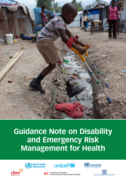
This guidance note is intended primarily for health actors working in emergency and disaster risk management (hereafter 'emergency risk management') at the local, national or international level, and in governmental or nongovernmental agencies. People with disabilities, those
...

