
Filter
820
Text search:
stigmatization
Featured
Recommendations
73
New Publications
165
Language
Document type
No document type
469
Studies & Reports
123
Guidelines
91
Manuals
49
Strategic & Response Plan
39
Training Material
17
Fact sheets
17
Situation Updates
11
Infographics
3
Resource Platforms
1
Countries / Regions
Liberia
36
Sierra Leone
33
Global
27
Nigeria
22
India
22
Western and Central Europe
21
Latin America and the Carribbean
19
Guinea
15
Ghana
15
Africa
13
Tanzania
12
Congo, Democratic Republic of
11
Uganda
10
Zambia
10
Kenya
10
Rwanda
9
West and Central Africa
9
Ethiopia
8
Nepal
8
Bangladesh
8
Eastern Europe
8
Malawi
7
Ukraine
7
Haiti
6
Syria
6
Cambodia
6
Indonesia
6
South Africa
6
Lesotho
6
Yemen
6
South–East Asia Region
6
Asia
6
South Sudan
5
Myanmar / Burma
5
Venezuela
5
Vietnam
5
Iraq
4
Colombia
4
East and Southern Africa
4
Albania
4
Russia
4
Zimbabwe
3
Philippines
3
Germany
3
Thailand
3
Mozambique
3
Namibia
3
Middle East and North Africa
3
Eastern Europe and Central Asia
3
Laos
3
Moldova
3
Georgia
3
Burkina Faso
2
Senegal
2
Cameroon
2
Pakistan
2
China
2
Madagascar
2
Palestine
2
Tajikistan
2
Somalia
1
Jordan
1
Afghanistan
1
Lebanon
1
Malaysia
1
Papua New Guinea
1
Sudan
1
Benin
1
Central African Republic
1
Argentina
1
Peru
1
Brazil
1
North Macedonia
1
Hungary
1
Botswana
1
Greece
1
Angola
1
Mexico
1
Sri Lanka
1
Poland
1
Italy
1
Southern Africa
1
Canada
1
Bulgaria
1
Estonia
1
Romania
1
Lithuania
1
Slovakia
1
Japan
1
Israel
1
Authors & Publishers
Publication Years
Category
Countries
239
Clinical Guidelines
39
Public Health
32
Women & Child Health
30
Key Resources
23
Capacity Building
5
Pharmacy & Technologies
3
Annual Report MEDBOX
2
Toolboxes
HIV
127
Mental Health
120
COVID-19
116
Disability
62
TB
55
Ebola & Marburg
52
NTDs
40
Refugee
25
Conflict
18
Rapid Response
16
Caregiver
8
Planetary Health
8
Zika
6
Global Health Education
6
Cholera
3
Malaria
3
2.0 Rapid Response
3
Natural Hazards
2
Polio
1
Specific Hazards
1
AMR
1
NCDs
1
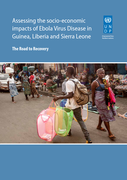
The Road to Recovery. This synthesis report is based on three national studies on the evolution of the Ebola epidemic and its impact on Guinea, Liberia and Sierra Leone

This document contains guidance for strengthening the disability inclusiveness of MHPSS responses and programmes in emergency settings. It is intended to supplement the IASC Guidelines on Mental Health and Psychosocial Support in Emergency Settings (2007).
Overall Objective
To consider and add
...

The leishmaniases are a group of diseases caused by Leishmania spp., which occur in cutaneous, mucocutaneous and visceral forms. They are neglected tropical diseases (NTDs), which disproportionately affect marginalized populations who have limited access to health care. HIV co-infected patients with
...
The European Commission against Racism and Intolerance (ECRI) was established by the Council of Europe. It is an independent body which ensures respect for human rights in the fight against racism, discrimination (based on "race", ethnic/national origin, colour, nationality, religion, language, sexu
...

Guidelines on care, treatment and support for women living with HIV/AIDS and their children in resource-constrained settings

Infectious disease outbreaks are frequently characterized by scientific uncertainty, social and institutional disruption, and an overall climate of fear and distrust. Policy makers and public health professionals may be forced to weigh and prioritize potentially competing ethical values in the face
...

Regional Eastern European and Central Asian project (TB-REP) Copenhagen, Denmark, 26–28 April 2016
A Meand to enhancing HIV prevention in key populations. This document has been developed out of the increasing need to set up standards and procedures to prevent and respond to violence against key populations.
A Step-by-Step, Research-Informed and Faith-Based Planning Manual

Mid-term review of The National AIDS Programme 2011-15
October 2013


Despite the existence of criminal law, which is an important aspect of anti-FGM policies and programmes, there is not much research on the effects of cross-border practices that invalidate the law as a deterrent. Much remains unknown about the practice of cross-border FGM, specifically about gaps in
...

