Filter
276
Text search:
relaxation
techniques
Featured
40
49
Language
Document type
175
35
27
15
11
5
2
2
1
1
1
1
Countries
19
10
7
5
5
5
4
4
4
3
3
3
3
2
2
2
2
2
2
2
2
2
1
1
1
1
1
1
1
1
1
1
1
1
1
1
1
1
1
1
1
1
Authors & Publishers
Publication Years
Category
52
35
16
10
9
9
Toolboxes
126
27
16
14
6
5
5
5
3
3
3
2
2
2
1
1
1
1
1

JOIN European First Aid Guidelines
recommended
In the event of an accident or medical emergency, First Aid saves lives. Keeping the patient alive and safe until the arrival of expert professional help is a vital part of the chain of care which leads to recovery. The principle of First Aid must be simple skills, clearly taught and capable of bein
...
Objectives and scope of the document
This document was developed to provide recommended management strategies for problems and disorders that are specifically related to the occurrence of a major stressful event. The recommended strategies will form the basis of a new module to be added to the WHO
...

This document provides information for WHO Member States, particularly low-income and middle-income countries, to strengthen preparedness and response plans with regard to the social and mental health consequences of biological and chemical attacks.
An Easy-Reference Guidebook for Healthcare Providers In Developed and Developing Countries

Briefing note prepared by the IFRC Reference Centre for Psychosocial Support, August 2014



The manual contains basic principles of prescribing followed by chapters on medicines used in psychotic disorders; depressive disorders; bipolar disorders; generalised anxiety and sleep disorders; obsessive-compulsive disorders and panic attacks; and alcohol and opioid dependence

Mental Health Toolkit
recommended
While working with survivors and victims of domestic abuse, we have learned that
many people who have experienced abuse or trauma in their lives also experience mental health issues as a direct effect of what they have been through. This is why Chayn has created a Mental Health Toolkit available fo
...
Managing stress in humanitarian workers
recommended
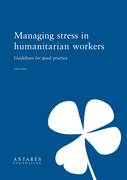
Guidelines for good practice. 3rd edition
The Guidelines for Good Practice are intended to help organizations define their own needs in relation to stress management and develop their own staff care system. The process will be different for each organization. National and international agencies, bi
...
“The children are psychologically crushed and tired.
When we do activities like singing with them, they
don’t respond at all. They don’t laugh like they
would normally. They draw images of children
being butchered in the war, or tanks, or the siege
and the lack of food.”
Teacher in the
...