
Filter
1671
Text search:
hazards
Featured
172
414
Language
Document type
750
315
246
157
92
33
31
21
18
4
2
1
1
Countries
105
78
54
52
36
31
30
25
23
23
21
20
18
17
16
15
15
15
15
15
13
12
11
11
11
11
10
9
9
9
8
8
7
7
6
6
6
6
6
6
5
5
5
4
4
4
4
4
4
3
3
3
3
3
3
3
3
2
2
2
2
2
2
2
2
2
2
2
2
2
2
2
2
2
2
2
2
1
1
1
1
1
1
1
1
1
1
1
1
1
1
1
1
1
1
1
1
1
1
1
1
1
1
1
1
1
Authors & Publishers
Publication Years
Category
549
273
97
69
42
33
25
2
Toolboxes
200
121
110
107
93
63
59
58
55
46
45
44
38
34
31
27
22
14
13
11
9
7
3
2
2
2
2
The UNDP webpage “Climate Information and Early Warning Systems” explains how climate information and early warning systems help countries and communities better prepare for and respond to climate-related hazards such as extreme weather events,
...
The text explains what early warning systems are and why they are important for climate action and disaster risk reduction. It describes how these systems collect and analyze data to detect hazards such as storms, floods, heatwaves, or droughts and
...
A Simulation Exercise (SimEx) simulates an emergency situation to which a described or simulated response is made. The purpose of a simulation exercise is to validate and enhance preparedness and response plans, procedures and systems for all hazards
...
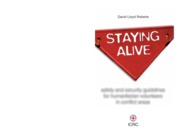
With its expert practical advice on security in situations of armed conflict, this updated set of guidelines will prove invaluable to humanitarian personnel working at the operational level. Following on from the success of the first edition, published in 1999, it addresses new and developing threat
...

Disaster Management Reference Handbook Series Overview.
Floods, storms, and wind account for large proportions of displacement compared to other disasters. Floods are the most frequent type of disaster whereas wind-related disasters constitute the biggest losses in terms of economic damage, displac
...
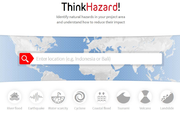
As an online disaster risk visualization tool, ThinkHazard! aims to provide users with information to make risk-informed choices. This is the first platform of its kind, allowing anyone to quickly find information on 8 different types of hazards in
...

All available data from GAR 13's Global Risk Update is provided via this interactive platform for vieweing and downloading. It is presented in an easily accessible manner, over the Internet.
The global risk update featured in the Global Assessment Report 2015 is based on a joint effort by leading
...
"Explosions can produce unique patterns of injury seldom seen outside combat.
When they do occur, they have the potential to inflict multi-system life-threatening injuries
on many persons simultaneously. The injury patterns following such events are a product of
the composition and amount of the
...

This handbook presents basic content and tips for implementing a school-based risk reduction programme. It is organised into five modules: its importance; approach and process; activities to benefit children up to five years old; activities for students aged 5–17; and activities for young people a
...
Thailand is exposed to flooding, landslides, drought, earthquakes, tsunamis, heat waves, forest fires, and epidemics. Thailand is also exposed to technological hazards such as chemical accidents. Flooding is the natural hazard with the most signific
...

Policy Guidance Brief 2
• The potential health risks from climate change include: increase of waterborne and vector-borne diseases, heat-related illnesses, injuries and deaths, food insecurity and increased malnutrition. The poor, women, children and the elderly, as well as communities living ...
• The potential health risks from climate change include: increase of waterborne and vector-borne diseases, heat-related illnesses, injuries and deaths, food insecurity and increased malnutrition. The poor, women, children and the elderly, as well as communities living ...
This guidance has been developed in line with the WHO corporate risk management framework, the WHO business continuity and contingency plans, as well as the Inter-Agency Emergency Response Preparedness Framework. It is based on a common organiza-tional approach and procedures for managing including
...

National Child Traumatic Stress Network National Center for PTSD | The field of school safety and emergency management has evolved significantly over the past decade. Tragically, acts of violence, natural disasters, and terrorist attacks have taught us many lessons. We also know that other types of
...
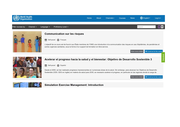
OpenWHO is WHO’s new, interactive, web-based platform that offers online courses to people preparing to work in epidemics, pandemics and health emergencies or already doing so.
The OpenWHO platform delivers WHO’s and partners’ expertise closer to where it is needed and provides information
...
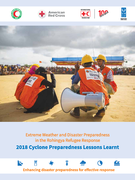
Enhancing disaster preparedness for effective response.
One of the most disaster-prone countries in the world, Bangladesh each year experiences a high degree of seasonal variety, including southwest monsoon and two cyclone seasons. With its long coastline on the Bay of Bengal and with a landscape
...
Under the theme “Stronger Together”, the campaign aims to offer information and strategies to assist communities in the region in better coping with the psychological impact of adverse events before, during and after a disaster situation. It also aims to raise awareness to reduce the stigma abou
...
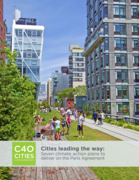
Cities can help nations achieve their Paris Agreement commitment by supporting the implementation of transformational actions to increase the supply of renewable energy, improve building energy efficiency, increase access to affordable, low carbon transport options, and change consumption patterns.
...

Laboratory biosafety guidance related to coronavirus disease (COVID-19): Interim guidance, 28 January 2021
recommended
The latest update (28 January 2021) includes the following addition and revision:
biosafety aspects for working with antigen-detecting rapid diagnostic test;
handling new variants of SARS-CoV-2 in the laboratory;
updated assay decontamination before disposal;
personal protectiv
...
he statistics in this report are from the Emergency Events Database (EM-DAT) maintained by the Centre for Research on the Epidemiology of Disasters (CRED) which records disasters which have killed ten or more people; affected 100 or more people; resulted in a declared state of emergency; or a call f
...
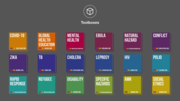
In this video we explore the MEDBOX Toolboxes, a special and very popular features of the online library MEDBOX.
To cover selected topics in more detail, MEDBOX collects the most relevant documents and information into Toolboxes. The topics range from various humanitarian crises such as natural
...
