Filter
163
Text search:
Shield,
K.
Featured
29
28
Language
Document type
57
51
27
14
7
3
3
1
Countries / Regions
11
9
8
8
7
6
5
5
5
4
4
4
4
3
3
3
3
3
3
3
3
2
2
2
2
2
1
1
1
1
1
1
1
1
1
1
1
1
1
1
1
Authors & Publishers
Publication Years
Category
58
18
7
3
2
2
Toolboxes
50
14
13
5
5
5
4
4
3
3
2
2
2
2
2
2
2
2
2
1
1
1
1
1
International Journal for Equity in Health 2014, 13:24
The WHO guidelines provide recommended steps for safe phlebotomy and reiterate accepted principles for drawing, collecting blood and transporting blood to laboratories/blood banks.
Interim emergency guidelines

Updated September 2021.
Provision of water and sanitation and good hygiene practices play an essential role in protecting human health during all disease outbreaks, including during Ebola Virus Disease (EVD) outbreaks. This question and answer document provides practical, evidence-based recommend
...
In light of the decline in new Ebola cases, strategies are now needed to scale down the activities and bed capacities in Ebola care facilities. These facilities include Ebola treatment units, community care centres, Ebola treatment centres and isolation centres. The Governments of Guinea, Liberia an
...
Interim Guidance.
A number of medical problems have been reported in survivors, including mental health issues. Ebola virus may persist in some body fluids, including semen. Ebola survivors need comprehensive support for the medical and psychosocial challenges they face and also to minimize the ...
A number of medical problems have been reported in survivors, including mental health issues. Ebola virus may persist in some body fluids, including semen. Ebola survivors need comprehensive support for the medical and psychosocial challenges they face and also to minimize the ...
Nosocomial or health-facility-acquired infections are a serious issue, representing one of the most significant causes of morbidity and mortality in healthcare systems and consuming many scarce resources, especially in developing countries. Although much has been done, particularly in the hospital s
...
The essential medicines are those that meet the priority needs of the healthcare of the population. While reviewing the 5th edition of the essential Medicines, special attention focused on the health sector policy. Indeed, medicines play an important role in protecting, maintaining and restoring th
...

Rapid Advice Guideline
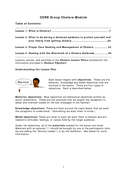
CORE Group has developed a module on cholera to address gaps in preparedness and response in at-risk countries and communities. The guide contains four different lesson plans and is complemented by flipcharts designed for use by community health workers. The lessons are aimed at mothers and carers o
...
Volume 5 2017

Volume 2 - 2014