
Filter
1447
Text search:
Public
Health
Foundation
India
Featured
146
341
Language
Document type
740
313
169
109
53
31
17
8
5
1
Countries
121
118
40
25
24
23
21
19
19
17
16
12
12
12
11
10
9
9
8
8
8
7
6
6
6
6
6
6
6
6
5
5
5
4
4
4
4
4
4
4
3
3
3
3
3
3
3
3
3
3
2
2
2
2
2
2
2
2
2
2
2
2
2
1
1
1
1
1
1
1
1
1
1
1
1
1
1
1
1
1
1
1
1
1
1
1
1
1
1
1
1
1
Authors & Publishers
Publication Years
Category
346
137
128
117
92
25
17
1
Toolboxes
176
106
101
72
61
56
56
54
49
45
43
39
25
23
22
21
16
16
12
10
9
5
5
4
3
1

2nd edition. The purpose of this document is to present updated standardized protocols that P. falciparum-endemic countries can use to determine the prevalence of parasites with pfhrp2/3 gene deletions causing negative HRP2 RDT results among symptomatic falciparum patients. The findings should be us
...

National tuberculosis (TB) prevalence surveys provide a nationally representative measurement of the burden of TB disease in the population, at a given point in time. Repeat surveys allow assessment of trends and tracking of progress towards national and global targets for reductions in TB disease b
...

This publication provides an overview of evidence and guidance on the growing challenge of workplace heat stress in the context of climate change. It highlights the health and productivity risks faced by billions of workers, especially in manual lab
...

This report was developed by the WHO TB Vaccine Accelerator Finance and Access working group, co-led by WHO, Gavi and the Government of South Africa. It sets out the working group’s shared vision for equitable access to novel TB vaccines and will advance a shared understanding of the current lands
...

The primary audience for this guideline includes policy-makers or service providers who are responsible for developing national and local health-care protocols and policies related to care during pregnancy, childbirth and the postnatal period, and t
...

Developed through broad and inclusive consultation, and aligned with the WHO Global Health Sector Strategies and the Sustainable Development Goals, the framework promotes a people-centred approach and antimicrobial stewardship across 5 key domains:
...
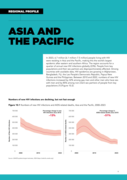
In 2023, 6.7 million [6.1 million–7.5 million] people living with HIV were residing in Asia and the Pacific, making this the world’s largest epidemic after eastern and southern Africa. The region accounts for a quarter of annual new HIV infections globally (23%). People from key populations and
...
The Global hepatitis report 2026 provides the most comprehensive and up-to-date assessment of the global burden of hepatitis B (HBV) and hepatitis C (HCV), which together account for more than 95% of deaths related to viral hepatitis. Despite being preventable and treatable, viral hepatitis remains
...
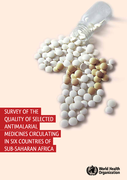
Survey of the Quality of Selected Antimalarial Medicines Circulating in Six Countries of Sub-Saharan Africa
recommended
The survey aimed at evaluating the quality of selected antimalarials in six countries of sub-Saharan Africa (Cameroon, Ethiopia, Ghana, Kenya, Nigeria and the United Republic of Tanzania). These countries have been supported by WHO to strengthen their regulatory controls o
...
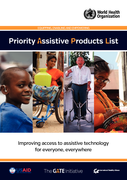
Improving access to assistive technology for everyone, everywhere.
The first WHO Priority Assistive Products List was launched in May 2016. The List includes hearing aids, wheelchairs, communication aids, spectacles, artificial limbs, pill organizers, memory aids and other essential items for many
...

THE RESEARCH FOUNDATION OF CEREBRAL PALSY ALLIANCE newsletter – NOVEMBER 2012
The primary audience of these recommendations includes healthcare providers who are responsible for developing national and local health protocols (particularly those related to hypertensive disorders of pregnancy), and those directly providing care
...

The aim of this toolkit is to guide countries on how to best estimate their current burden of dengue by combining existing data from dengue surveillance systems with on-going research efforts to measure the community burden
of dengue.


mhGAP is based on evidence-based technical guidelines (4) and provides a set of tools and
training packages to extend service provision. The mhGAP Intervention Guide (mhGAP-IG)
for MNS disorders in non-specialized health settings (8) is a clinical
...


Based on the survey, five principles for deinstitutionalization were identified: community-based services must be in place; the health workforce must be committed to change; political support at the highest and broadest levels is crucial; timing is
...
Small drinking-water supplies commonly experience operational, managerial, technical and resourcing challenges that impact their ability to deliver safe and reliable services. The needs and opportunities associated with these supplies therefore warrant explicit consideration in policies and regulati
...
