
Filter
8360
Filtered Results: 8360
Text search:
health
assets
Featured
Recommendations
737
New Publications
2222
Language
Document type
No document type
4641
Studies & Reports
1446
Guidelines
1062
Manuals
473
Strategic & Response Plan
304
Training Material
166
Fact sheets
148
Situation Updates
63
Resource Platforms
21
Infographics
17
Online Courses
9
Brochures
6
Videos
3
App
1
Countries / Regions
India
402
Global
377
Kenya
248
Ethiopia
177
Nepal
176
South Africa
175
Uganda
175
Sierra Leone
162
Nigeria
150
Western and Central Europe
148
Liberia
137
Myanmar / Burma
134
Tanzania
131
Rwanda
129
Zambia
126
Malawi
124
Bangladesh
113
Syria
101
Ghana
100
Africa
98
Indonesia
95
Namibia
85
Philippines
84
Ukraine
76
Latin America and the Carribbean
75
Congo, Democratic Republic of
70
South Sudan
67
Zimbabwe
60
Cambodia
51
Mozambique
47
Haiti
47
Eastern Europe
47
Senegal
46
South–East Asia Region
46
Guinea
44
Lesotho
41
Asia
35
Afghanistan
34
West and Central Africa
34
Venezuela
33
East and Southern Africa
33
Yemen
32
Pakistan
32
Middle East and North Africa
30
Brazil
30
Botswana
29
Eswatini/ Swaziland
28
Cameroon
27
Burkina Faso
27
Eastern Europe and Central Asia
27
Lebanon
22
Sudan
22
Somalia
21
Benin
20
Jordan
20
Russia
20
Central African Republic
20
Colombia
17
Western Pacific Region
17
Mali
17
Thailand
16
Germany
15
Vietnam
15
Tajikistan
13
China
13
Laos
13
Moldova
13
Albania
12
Sri Lanka
12
Turkey
11
USA
11
Iraq
11
Georgia
10
Iran
9
Peru
9
Côte d’Ivoire / Ivory Coast
9
Angola
9
Southern Africa
8
Palestine
8
Madagascar
8
Kazakhstan
7
United Kingdom
7
Chad
7
North Macedonia
6
Timor Leste/ East Timor
6
Mexico
6
Kyrgyzstan
6
Burundi
6
Guinea-Bissau
6
Argentina
6
Papua New Guinea
6
Egypt
6
Gambia
5
Togo
5
Chile
5
Armenia
5
Saudi Arabia
5
Paraguay
5
Jamaica
5
Bhutan
5
Ecuador
5
Serbia
4
Niger
4
North America
4
Turkmenistan
4
Poland
4
Libya
4
Fiji
3
Uzbekistan
3
Croatia
3
Hungary
3
Ireland
3
Portugal
3
Bosnia and Herzegovina
3
Bolivia
3
Romania
3
Guatemala
3
North Korea
2
El Salvador
2
Canada
2
Singapore
2
Estonia
2
Vanuatu
2
Morocco
2
Mongolia
2
Bulgaria
2
Mauritania
2
Dominican Republic
2
Japan
2
Mauritius
2
Tunisia
2
Spain
2
Azerbaijan
2
Belarus
2
Greece
2
Australia
1
Congo-Brazzaville
1
Malaysia
1
Qatar
1
Italy
1
Cape Verde
1
Gabon
1
Uruguay
1
Belgium
1
Maldives
1
Norway
1
Israel
1
Guyana
1
Djibouti
1
Slovakia
1
Honduras
1
Solomon Islands
1
Authors & Publishers
Publication Years
Category
Countries
3169
Clinical Guidelines
607
Key Resources
537
Women & Child Health
467
Public Health
465
Capacity Building
222
Pharmacy & Technologies
68
Annual Report MEDBOX
1
Toolboxes
COVID-19
670
Mental Health
587
HIV
538
TB
373
Planetary Health
326
Disability
294
Caregiver
254
Conflict
254
AMR
223
Rapid Response
221
Ebola & Marburg
221
NTDs
212
NCDs
172
Global Health Education
145
Refugee
133
Natural Hazards
131
Pharmacy
128
Health Financing Toolbox
120
Malaria
95
Zika
57
Cholera
56
Specific Hazards
53
Polio
48
2.0 Rapid Response
27
Social Ethics
25
Typhoon
7
South Sudan
2

The companion Handbook on Humanitarian Access presents the normative framework pertaining to humanitarian access in situations of armed conflict, and therefore serves as a useful reference source for humanitarian practitioners on the normative framework.
This initial version of the Field Manual –...
Social Protection Policy Analysis, Tanzania
As of June 2019, the number of Venezuelans leaving their country reached 4 million, with Colombia, Peru, Chile, Ecuador and Brazil hosting the vast majority of Venezuelans in Latin America. The end of the first half of the year was marked by the announcement of tighter immigration measures in Peru ...
The World Cities Report 2020 shows that the intrinsic value of sustainable urbanization can and should be harnessed for the wellbeing of all. The Report provides evidence and policy analysis of the value of urbanization from an economic, social and environmental perspective, including the unquantifi...

Conflict, climate change, the COVID-19 pandemic, and the economic effects of the Ukraine crisis are interacting to create new and worsen existing hunger hotspots, reversing the gains families had made to escape poverty.
Briefing Note 8.
Ecosystem-based adaptation (EbA) is a strategy for adapting to the adverse impacts of climate change by harnessing nature and the services it can provide. This strategy is crucial for cities and peri-urban areas, threatened by a multitude of climate hazards and home to more than ha...
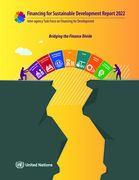
The 2022 Financing for Sustainable Development Report identifies a “great finance divide” as a main driver of the divergent recovery. Developed countries were able to borrow record sums at ultra-low interest rates to support their people and economies, but the pandemic response and investment in...
In line with the Climate and Environment Charter for Humanitarian Organisations which IFRC, ICRC and various Red Cross Red Crescent National Societies have endorsed, this short Guide aims to help practitioners integrate environmental and climate change considerations into their work. It has been dev...
FAO’s component of the Global COVID-19 Humanitarian Response Plan
18.5.2020
Camps is intended to help address the absence of public and standardized training resources for those seeking to use high resolution satellite imagery in support of refugee/IDP assistance operations. Students, general audiences, and volunteers studying and analyzing satellite imagery of displaced po...

How to respond to, mitigate, and prevent risks to children’s protection and well-being is a profound, if unanswered, question. Practitioners agree that it is necessary to develop or strengthen protective factors at multiple levels, such as the family, community, and national levels.

Social Mobilization in the Freetown Peninsula during the Ebola Epidemic 2014-2015
Top 10 hungriest countries contribute just 0.08% of global CO2.
-Climate & Food Vulnerability Index shows 10 most food insecure countries emit less than half a tonne of CO2 per person
-Burundi is the world's most food insecure and smallest per capita emitter
-The average Briton gener...

This policy paper underscores that, although children do not represent a high-risk group for direct COVID-19 fatality, the pandemic posts far-reaching secondary impacts that heighten risks to African children’s rights and wellbeing.
The report covers possible developments in Indonesia over the next 10 months (to end 2016). Four scenarios are outlined:
Delayed Second Crop Harvest
Delayed and Reduced Second Crop Harvest
La Niña disrupts main rural sources of income
Soaring rice prices
The scenarios wer...
Development finance institutions owned by European governments and the World Bank Group are spending hundreds of millions of dollars on expensive for-profit hospitals in the Global South that block patients from getting care, or bankrupt them, with some even imprisoning patients who cannot afford th...
