
Filter
7430
Filtered Results: 7430
Text search:
clinical
management
Featured
Recommendations
813
New Publications
1732
Language
Document type
No document type
3890
Guidelines
1326
Studies & Reports
1079
Manuals
440
Strategic & Response Plan
256
Fact sheets
168
Training Material
144
Situation Updates
49
Resource Platforms
27
Online Courses
23
Infographics
13
Brochures
8
Videos
4
App
3
Countries / Regions
India
372
Global
277
Kenya
198
South Africa
188
Western and Central Europe
146
Uganda
146
Ethiopia
133
Liberia
129
Sierra Leone
128
Nigeria
127
Nepal
112
Africa
112
Tanzania
112
Rwanda
111
Zambia
102
Latin America and the Carribbean
100
Ghana
92
Malawi
89
Bangladesh
87
Namibia
76
Ukraine
66
Eastern Europe
65
Russia
63
Syria
62
Congo, Democratic Republic of
59
Brazil
57
Indonesia
57
Philippines
56
Myanmar / Burma
55
Mozambique
47
West and Central Africa
45
Zimbabwe
42
South–East Asia Region
42
South Sudan
42
Guinea
41
East and Southern Africa
39
Middle East and North Africa
37
Asia
36
Lesotho
35
Senegal
35
Cambodia
35
Haiti
34
Germany
32
Botswana
29
Eastern Europe and Central Asia
26
Colombia
25
Burkina Faso
25
Eswatini/ Swaziland
21
Cameroon
19
Chile
18
Angola
18
Yemen
17
USA
15
Argentina
15
Mali
15
Afghanistan
14
Venezuela
14
Western Pacific Region
14
Pakistan
14
Tajikistan
13
Ecuador
13
Paraguay
12
Madagascar
12
Thailand
11
Benin
11
China
11
Albania
11
Côte d’Ivoire / Ivory Coast
10
Vietnam
10
Guinea-Bissau
9
Spain
9
Sudan
9
Georgia
9
Iraq
9
Laos
8
North America
8
Lebanon
8
Moldova
8
Central African Republic
8
Somalia
8
North Macedonia
7
Peru
7
Armenia
7
United Kingdom
7
Sri Lanka
7
El Salvador
6
Turkey
6
Southern Africa
6
Bolivia
6
Chad
6
Bhutan
6
Jordan
5
Ireland
5
Papua New Guinea
5
Timor Leste/ East Timor
4
Gambia
4
Singapore
4
Estonia
4
Kyrgyzstan
4
Burundi
4
Italy
4
Saudi Arabia
4
France
4
Portugal
4
Mexico
3
Kazakhstan
3
Iran
3
Jamaica
3
Japan
3
Palestine
3
Libya
3
Switzerland
2
Australia
2
Togo
2
Canada
2
Fiji
2
Uzbekistan
2
Morocco
2
Bulgaria
2
Dominican Republic
2
Gabon
2
Belgium
2
Mauritius
2
Belarus
2
Romania
2
Greece
2
North Korea
1
Serbia
1
Niger
1
Austria
1
Qatar
1
Hungary
1
Lithuania
1
Turkmenistan
1
Denmark
1
Maldives
1
Tunisia
1
Belize
1
Costa Rica
1
Oman
1
Panama
1
Nicaragua
1
Egypt
1
Slovakia
1
Poland
1
Honduras
1
Guatemala
1
Authors & Publishers
Publication Years
Category
Countries
2739
Clinical Guidelines
768
Women & Child Health
420
Public Health
397
Key Resources
287
Capacity Building
193
Pharmacy & Technologies
100
Annual Report MEDBOX
3
Toolboxes
COVID-19
761
Mental Health
632
HIV
566
TB
500
NTDs
294
Caregiver
283
AMR
261
Ebola & Marburg
249
NCDs
192
Rapid Response
169
Pharmacy
154
Disability
130
Conflict
130
Planetary Health
105
Malaria
98
2.0 Rapid Response
80
Refugee
74
Global Health Education
72
Zika
60
Cholera
52
Specific Hazards
42
Natural Hazards
42
Health Financing Toolbox
37
Polio
29
Social Ethics
24
Typhoon
1

Malaria vaccines: the 60‑year journey of hope and final success—lessons learned and future prospects
Tropical Medicine and Health (2023) 51:29

The purpose of the guideline is to provide information to stakeholders on the necessary requirements for a complete prequalification dossier for insecticide-treated nets (ITNs). Its aim is to establish the baseline for dossier requirements which are necessary to assess ITN products for the purposes ...

Malaria Journal (2021) 20:190

The framework recommends expanded coverage of malaria diagnostic and treatment services, intensified vector control to drive down transmission, strengthened malaria surveillance, and increased transborder collaboration, especially in terms of efforts to control the sale and use of artemisinin monoth...

A historic funding crisis is threatening to unravel decades of progress unless countries can make radical shifts to HIV programming and funding. The report highlights the impact that the sudden, large-scale funding cuts from international donors are having on countries most affected by HIV. Yet it a...

Offering additional pre-exposure prophylaxis (PrEP) choices has the potential to increase uptake and effective use of PrEP, and of HIV prevention overall, as it allows people to choose a method that they prefer.
In this guideline, WHO recommends an offering long-acting injectable lenacapavir (LEN...

Guidelines on lenacapavir for HIV prevention and testing strategies for long-acting injectable pre-exposure prophylaxis. Web Annex B

Diabetes is an increasingly prevalent yet under-recognised health crisis in Africa, driven by demographic and socioeconomic transitions. In 2021, 24 million adults in the region were living with diabetes, and this figure is expected to increase by 129% by 2045.
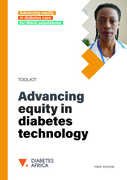
This toolkit suggests several approaches to addressing technology
access disparities. At its core is a comprehensive checklist that helps
teams systematically evaluate their current practices and identify
opportunities for improvement. This structured self-assessment
tool spans both team-level a...

This document highlights the latest WHO recommendations designed to optimize health outcomes, streamline delivery and address persistent barriers to prevention and care. It especially focuses on people often left behind in service delivery, including adolescents and young people, key populations and...
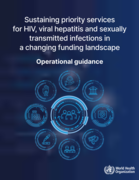
This operational guidance provides a structured approach to support countries in sustaining priority services for HIV, viral hepatitis and sexually transmitted infections in the context of reduced external funding. The guidance is intended for national governments, public health programmes, communit...

Despite being a preventable and curable infectious disease, tuberculosis (TB) has continued to elude global controll efforts. In 2023, 8.2 milion people with TB were diagnosed and notified to the WHO, the hightest number ever reported since WHO began tracking.

Breastfeeding is a cornerstone of healthy infant nutrition, development and survival. It is critical for countries* to improve breastfeeding rates in order to achieve global targets for newborn and child health and survival, as well as economic growth and environmental sustainability
MEDBOX Annual Report 2024
recommended
The MEDBOX Annual Report provides an overview of the most important projects of the past year

Early Adolescent Skills for Emotions (EASE) is an evidence-based group psychological intervention to help 10–15-year-olds affected by internalizing problems (e.g. stress and symptoms of anxiety, depression) in communities exposed to adversity. Published by the World Health Organization (WHO) and U...

The Guidelines for the Use of the APCA African Palliative Outcome Scale (POS) has been developed by the APCA, in collaboration with
stakeholders, to help appropriately trained health practitioners and researchers across the region to utilise the APCA African POS in their work place (Powell et...

On 13 August 2024, the Africa Centres for Disease Control (Africa CDC) declared the multi-country mpox outbreak a public health emergency of continental security, with strong recommendations to improve surveillance and vaccine deployment in all AU Member States. On 14 August 2024, the WHO Director-G...

The global cholera statistics for 2024, showing an increase in both the number of people who fell sick and died from the disease.
Reported cholera cases rose by 5% and deaths by 50% in 2024 compared to 2023, with more than 6000 people dying from a disease that is both preventable and treatable. Whi...

WHO, as the coordinating authority on international health, supports countries in protecting public health through evidence-based policies and actions. Considering the significant health burden and the multiple potential benefits of interventions, the WHO Air Quality, Energy and Health Unit aims to ...
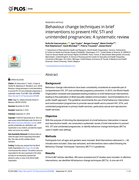
PLoS ONE 13(9): e0204088. .https://doi.org/10.1371/journal.pone.0204088.
Behaviour-change interventions have been consistently considered an essential part of comprehensive HIV, STI and unintended pregnancy prevention. In 2015, the World Health Organization reviewed and assessed existing evidence ...
