
Filter
3409
Text search:
people
with
chronic
conditions
Featured
360
824
Language
3352
80
70
46
45
27
23
15
7
6
5
5
5
4
3
3
3
3
3
3
3
3
3
3
2
2
2
2
2
2
2
2
2
2
2
2
1
1
1
1
1
1
1
1
1
1
1
1
1
1
1
1
1
1
1
1
Document type
1745
668
485
203
133
66
63
21
13
7
3
1
Countries
182
167
112
93
81
81
66
56
51
48
48
46
45
44
44
42
42
40
36
36
36
35
35
32
28
27
24
22
18
18
18
17
17
17
16
14
13
13
13
12
11
11
11
11
10
10
10
10
10
8
8
8
8
7
7
7
6
6
6
6
5
5
4
4
4
4
4
4
4
4
3
3
3
3
3
3
3
3
2
2
2
2
2
2
2
2
2
2
2
2
2
2
2
2
2
1
1
1
1
1
1
1
1
1
1
1
1
1
1
1
1
1
1
1
1
1
1
1
1
1
Authors & Publishers
429
153
120
111
92
68
40
37
31
30
28
25
24
23
20
19
18
17
16
15
15
14
13
13
13
12
12
12
12
12
11
11
11
10
10
10
10
10
10
9
9
9
9
9
9
9
9
8
8
8
8
8
8
8
8
8
8
8
7
7
7
7
7
7
7
7
6
6
6
6
6
6
6
6
6
6
6
6
6
6
6
6
6
6
6
6
6
6
5
5
5
5
5
5
5
5
5
5
5
5
5
5
5
5
5
5
5
5
5
5
5
5
4
4
4
4
4
4
4
4
4
4
4
4
4
4
4
4
4
4
4
4
4
4
4
4
4
4
4
4
4
4
3
3
3
3
3
3
3
3
3
3
3
3
3
3
3
3
3
3
3
3
3
3
3
3
3
3
3
3
3
3
3
3
3
3
3
3
3
3
3
3
3
3
3
3
3
3
3
3
3
3
3
3
3
3
3
3
3
3
3
3
3
3
3
3
3
3
3
3
3
3
3
3
2
2
2
2
2
2
2
2
2
2
2
2
2
2
2
2
2
2
2
2
2
2
2
2
2
2
2
2
2
2
2
2
2
2
2
2
2
2
2
2
2
2
2
2
2
2
2
2
2
2
2
2
2
2
2
2
2
2
2
2
2
2
2
2
2
2
2
2
2
2
2
2
2
2
2
2
2
2
2
2
2
2
2
2
2
2
2
2
2
2
2
2
2
2
2
2
2
2
2
2
2
2
2
2
2
2
2
2
2
2
2
2
2
2
2
2
2
2
2
2
2
2
2
2
2
2
2
2
2
2
2
2
2
2
2
2
2
2
2
2
2
2
2
2
2
2
2
2
2
2
2
2
2
2
2
2
2
2
2
2
2
2
2
2
2
2
2
2
2
2
2
2
2
2
2
2
2
2
2
2
2
2
2
2
2
2
2
2
2
2
2
2
2
2
2
2
2
2
2
2
2
2
2
2
2
1
1
1
1
1
1
1
1
1
1
1
1
1
1
1
1
1
1
1
1
1
1
1
1
1
1
1
1
1
1
1
1
1
1
1
1
1
1
1
1
1
1
1
1
1
1
1
1
1
1
1
1
1
1
1
1
1
1
1
1
1
1
1
1
1
1
1
1
1
1
1
1
1
1
1
1
1
1
1
1
1
1
1
1
1
1
1
1
1
1
1
1
1
1
1
1
1
1
1
1
1
1
1
1
1
1
1
1
1
1
1
1
1
1
1
1
1
1
1
1
1
1
1
1
1
1
1
1
1
1
1
1
1
1
1
1
1
1
1
1
1
1
1
1
1
1
1
1
1
1
1
1
1
1
1
1
1
1
1
1
1
1
1
1
1
1
1
1
1
1
1
1
1
1
1
1
1
1
1
1
1
1
1
1
1
1
1
1
1
1
1
1
1
1
1
1
1
1
1
1
1
1
1
1
1
1
1
1
1
1
1
1
1
1
1
1
1
1
1
1
1
1
1
1
1
1
1
1
1
1
1
1
1
1
1
1
1
1
1
1
1
1
1
1
1
1
1
1
1
1
1
1
1
1
1
1
1
1
1
1
1
1
1
1
1
1
1
1
1
1
1
1
1
1
1
1
1
1
1
1
1
1
1
1
1
1
1
1
1
1
1
1
1
1
1
1
1
1
1
1
1
1
1
1
1
1
1
1
1
1
1
1
1
1
1
1
1
1
1
1
1
1
1
1
1
1
1
1
1
1
1
1
1
1
1
1
1
1
1
1
1
1
1
1
1
1
1
1
1
1
1
1
1
1
1
1
1
1
1
1
1
1
1
1
1
1
1
1
1
1
1
1
1
1
1
1
1
1
1
1
1
1
1
1
1
1
1
1
1
1
1
1
1
1
1
1
1
1
1
1
1
1
1
1
1
1
1
1
1
1
1
1
1
1
1
1
1
1
1
1
1
1
1
1
1
1
1
1
1
1
1
1
1
1
1
1
1
1
1
1
1
1
1
1
1
1
1
1
1
1
1
1
1
1
1
1
1
1
1
1
1
1
1
1
1
1
1
1
1
1
1
1
1
1
1
1
1
1
1
1
1
1
1
1
1
1
1
1
1
1
1
1
1
1
1
1
1
1
1
1
1
1
1
1
1
1
1
1
1
1
1
1
1
1
1
1
1
1
1
1
1
1
1
1
1
1
1
1
1
1
1
1
1
1
1
1
1
1
1
1
1
1
1
1
1
1
1
1
1
1
1
1
1
1
1
1
1
1
1
1
1
1
1
1
1
1
1
1
1
1
1
1
1
1
1
1
1
1
1
1
1
1
1
1
1
1
1
1
1
1
1
1
1
1
1
1
1
1
1
1
1
1
1
1
1
1
1
1
1
1
1
1
1
1
1
1
1
1
1
1
1
1
1
1
1
1
1
1
1
1
1
1
1
1
1
1
1
1
1
1
1
1
1
1
1
1
1
1
1
1
1
1
1
1
1
1
1
1
1
1
1
1
1
1
1
1
1
1
1
1
1
1
1
1
1
1
1
1
1
1
1
1
1
1
1
1
1
1
1
1
1
1
1
1
1
1
1
1
1
1
1
1
1
1
1
1
1
1
1
1
1
1
1
1
1
1
1
1
1
1
1
1
1
1
1
1
1
1
1
1
1
1
1
1
1
1
1
1
1
1
1
1
1
1
1
1
1
1
1
1
1
1
1
1
1
1
1
1
1
1
1
1
1
1
1
1
1
1
1
1
1
1
1
1
1
1
1
1
1
1
1
1
1
1
1
1
1
1
1
1
1
1
1
1
1
1
1
1
1
1
1
1
1
1
1
1
1
1
1
1
1
1
1
1
1
1
1
1
1
1
1
1
1
1
1
1
1
1
1
1
1
1
1
1
1
1
1
1
1
1
1
1
1
1
1
1
1
1
1
1
1
1
1
1
1
1
1
1
1
1
1
1
1
1
1
1
1
1
1
1
1
1
1
1
1
1
1
1
1
1
1
1
1
1
1
1
1
1
1
1
1
1
1
1
1
1
1
1
1
1
1
1
1
1
1
1
1
1
1
1
1
1
1
1
1
1
1
1
1
1
1
1
1
1
1
1
1
1
1
1
1
1
1
1
1
1
1
1
1
1
1
1
1
1
1
1
1
1
1
1
1
1
1
1
1
1
1
1
1
1
1
1
1
1
1
1
1
1
1
1
1
1
1
1
1
1
1
1
1
1
1
1
1
1
1
1
1
1
1
1
1
1
1
1
1
1
1
1
1
1
1
1
1
1
1
1
1
1
1
1
1
1
1
1
1
1
1
1
1
1
1
1
1
1
1
1
1
1
1
1
1
1
1
1
1
1
1
1
1
1
1
1
1
1
1
1
1
1
1
1
1
1
1
1
1
1
1
1
1
1
1
1
1
1
1
1
1
1
1
1
1
1
1
1
1
1
1
1
1
1
1
1
1
1
1
1
1
1
1
1
1
1
1
1
1
1
1
1
1
1
1
1
1
1
1
1
1
1
1
1
1
1
1
1
1
1
1
1
1
1
1
1
1
1
1
1
1
1
1
1
1
1
1
1
1
1
1
1
1
1
1
1
1
1
1
1
1
1
1
1
1
1
1
1
1
1
1
1
1
1
1
1
1
1
1
1
1
1
1
1
1
1
1
1
1
1
1
1
1
1
1
1
1
1
1
1
1
1
1
1
1
1
1
1
1
1
1
1
1
1
1
1
1
1
1
1
1
1
1
1
1
1
1
1
1
1
1
1
1
1
1
1
1
1
1
1
1
1
1
1
1
1
1
1
1
1
1
1
1
1
1
1
1
1
1
1
1
1
1
1
1
1
1
1
1
1
1
1
1
1
1
1
1
1
1
1
1
1
1
1
1
1
1
1
1
1
1
1
1
1
1
1
1
1
1
1
1
1
1
1
1
1
1
1
1
1
1
1
1
1
1
1
1
1
1
1
1
1
1
1
1
1
1
1
1
1
1
1
1
1
1
1
1
1
1
1
1
1
1
1
1
1
1
1
1
1
1
1
1
1
1
1
1
1
1
1
1
1
1
1
1
1
1
1
1
1
1
1
1
1
1
1
1
1
1
1
1
1
1
1
1
1
1
1
1
1
1
1
1
1
1
1
1
1
1
1
1
1
1
1
1
1
1
1
1
1
1
1
1
1
1
1
1
1
1
1
1
1
1
1
1
1
1
1
1
1
1
1
1
1
1
1
1
1
1
1
1
1
1
1
1
1
1
1
1
1
1
1
1
1
1
1
1
1
1
1
1
1
1
1
1
1
1
1
1
1
1
1
1
1
1
1
1
1
1
1
1
1
1
1
1
1
1
1
1
1
1
1
1
1
1
1
1
1
1
1
1
1
1
1
1
1
1
1
1
1
1
1
1
1
1
1
1
1
1
1
1
1
1
1
1
1
1
1
1
1
1
1
1
1
1
1
1
1
1
1
1
1
1
1
1
1
1
1
1
1
1
1
1
1
1
1
1
1
1
1
1
1
1
1
1
1
1
1
1
1
1
1
1
1
1
1
1
1
1
1
1
1
1
1
1
1
1
1
1
1
1
1
1
1
1
1
1
1
1
1
1
1
1
1
1
1
1
1
1
1
1
1
1
1
1
1
1
1
1
1
1
1
1
1
1
1
1
1
1
1
1
1
1
1
1
1
1
1
1
1
1
1
1
1
1
1
1
1
1
1
1
1
1
1
1
1
1
1
1
1
1
1
1
1
1
1
1
1
1
1
1
1
1
1
1
1
1
1
1
1
1
1
1
1
1
1
1
1
1
1
1
1
1
1
1
1
1
1
1
1
1
1
1
1
1
1
1
1
1
1
1
1
1
1
1
1
1
1
1
1
1
1
1
1
1
1
1
1
1
1
1
1
1
1
1
1
1
1
1
1
1
1
1
1
1
1
1
1
1
1
1
1
1
1
1
1
1
1
1
1
1
1
1
1
1
1
1
1
1
1
1
1
1
1
1
1
1
1
1
1
1
1
1
1
1
1
1
1
1
1
1
1
1
1
1
1
1
1
1
1
1
1
1
1
1
1
1
1
1
1
1
1
1
1
1
1
1
1
1
1
1
1
1
1
1
1
1
1
1
1
1
1
1
1
1
1
1
1
1
1
1
1
1
1
1
1
1
1
1
1
1
1
1
1
1
1
1
1
1
1
1
1
1
1
1
1
1
1
1
1
1
1
1
1
1
1
1
1
1
1
1
1
1
1
1
1
1
1
1
1
1
1
1
1
1
1
1
1
1
1
1
1
1
1
1
1
1
1
1
1
1
1
1
1
1
1
1
1
1
1
1
1
1
1
1
1
1
1
1
1
1
1
1
1
1
1
1
1
1
1
1
1
1
1
1
1
1
1
1
1
1
1
1
1
1
1
1
1
1
1
1
1
1
1
1
1
1
1
1
1
1
1
1
1
1
1
1
1
1
1
1
1
1
1
1
1
1
1
1
1
1
1
1
1
1
1
1
1
1
1
1
1
1
1
1
1
1
1
1
1
1
1
1
1
1
1
1
1
1
1
1
1
1
1
1
1
1
1
1
1
1
1
1
1
1
1
1
1
1
1
1
1
1
1
1
1
1
1
1
1
1
1
1
1
1
1
1
1
1
1
1
1
1
1
1
1
1
1
1
1
1
1
1
1
1
1
1
1
1
1
1
1
1
1
1
1
1
1
1
1
1
1
1
1
1
1
1
1
1
1
1
1
1
1
1
1
1
1
1
1
1
1
1
1
1
1
1
1
1
1
1
1
1
1
1
1
1
1
1
1
1
1
1
1
1
1
1
1
1
1
1
1
1
1
1
1
1
1
1
1
1
1
1
1
1
1
1
1
1
1
1
1
1
1
1
1
1
1
1
1
1
1
1
1
1
1
1
1
1
1
1
1
1
1
1
1
1
1
1
1
1
1
1
1
1
1
1
1
1
1
1
1
1
1
1
1
1
1
1
1
1
1
1
1
1
1
1
1
1
1
1
1
1
1
1
1
1
1
1
1
1
1
1
1
1
1
1
1
1
1
1
1
1
1
1
1
1
1
1
1
1
1
1
1
1
1
1
1
1
1
1
1
1
1
1
1
1
1
1
1
1
1
1
1
1
1
1
1
1
1
1
1
1
1
1
1
1
1
1
1
1
1
1
1
1
1
1
1
1
1
1
1
1
1
1
1
1
1
1
1
1
1
1
1
1
1
1
1
1
1
1
1
1
1
1
1
1
1
1
1
1
1
1
1
1
1
1
1
1
1
1
1
1
1
1
1
1
1
1
1
1
1
1
1
1
1
1
1
1
1
1
1
1
1
1
1
1
1
1
1
1
1
1
1
1
1
1
1
1
1
1
1
1
1
1
1
1
1
1
1
1
1
1
1
1
1
1
1
1
1
1
1
1
1
1
1
1
1
1
1
1
1
1
1
1
1
1
1
1
1
1
1
1
1
1
1
1
1
1
1
1
1
1
1
1
1
1
1
1
1
1
1
1
1
1
1
1
1
1
1
1
1
1
1
1
1
1
1
1
1
1
1
1
1
1
1
1
1
1
1
1
1
1
1
1
1
1
1
1
1
1
1
1
1
1
1
1
1
1
1
1
1
1
1
1
1
1
1
1
1
1
1
1
1
1
1
1
1
1
1
1
1
1
1
1
1
1
1
1
1
1
1
1
1
1
1
1
1
1
1
1
1
1
1
1
1
1
1
1
1
1
1
1
1
1
1
1
1
1
1
1
1
1
1
1
1
1
1
1
1
1
1
1
1
1
Publication Years
1095
1956
333
22
3
Category
1256
302
293
197
147
76
16
1
Toolboxes
412
302
167
160
153
146
130
128
101
96
88
85
58
44
42
32
31
28
22
18
14
13
12
10
7
2
2
COVID-19 Recommended Interventions in Mental Health and Psychosocial Support (MHPSS) during the Pandemic
recommended
This document describes the essential interventions in mental health and psychosocial support (MHPSS) that should be developed on an intersectoral basis in countries and communities. Its frame of reference is the Inter-Agency Standing Committee (IASC) intervention pyramid for MHPSS services. The pyr
...
amid shows different levels of support, ranging from social considerations, safety, and basic needs, to the provision of specialized services for the management of more severe conditions, as well as the probable volume of demand at each established level.
Available in Spanisch, Portuguese and English
more
Securing a minimum of financial resources permitting to bring the full range of critical health services to all people constitutes a fundamental human right and an indispensable condition for human dignity. The model outlined here demonstrates that
...
it is within our reach to close the financing gap even for the poorest countries by 2020 if all governments, from the privileged and underprivileged parts of the world alike, just fulfil the commitments and recommendations for financing human development and health that already were agreed many years ago.
more

The objective of this book is to provide health workers with easily accessible information on important aspects of the medicines commonly used at primary care level in Zimbabwe. Medicines are a crucial part of the management of most of our patients,
...
yet many medicines are potentially dangerous if not used correctly (by either prescriber or patient). It is important to have up-to-date information not only on the indications for, and the dose of a particular medicine, but also the contra-indications and reasons for special care, possible side effects and interactions with other medicine or medicines. The patient must also have information on how to use the preparation, what side effects may occur, and when to return for help.
more

Palliative care has been shown to provide significant and diverse benefits for patients with serious, complex,or life-limiting health problem.
Jamison DT, Gelband H, Horton S, Jha P, Laxminarayan R, Mock CN, Nugent R., editors. Disease Control Prio
...
rities, 3rd Edition,
Volume 9: Improving Health and Reducing Poverty. Washington DC: World Bank 2018. doi:10.1596/978-1-4648-0527-1
more
The publication of the Second Edition of the Emergency Drug Guidelines represents the culmination of the efforts of the National Drugs and Therapeutics Committee (NDTC) to publish clinical drug guidelines for common diseases seen in Fiji. These guidelines are targeted for health care professionals w
...
orking at hospitals and at the primary health care settings. It sets the gold standard for the use of drugs in the treatment of emergency medical conditions in Fiji. The guidelines have taken into account the drugs available in the Fiji Essential Medicines Formulary (EMF), 2006 Edition, in recommending treatment approaches. All recommended therapies are either evidencebased or universally accepted standards
more

Updated 22 august 2016. This document aims to provide interim guidance on the case definition of GBS and strategies to manage the syndrome, in the context of Zika virus and its potential association with GBS. This document is intended to inform the
...
development of local clinical protocols and health policies related to the care of patients with GBS
more
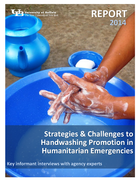
Summary of key informant interviews with representatives of organizations providing, funding, or supporting WASH services to refugee populations

Cross-sectional Survey to Assess Prevalence of Disability and Access to Services in Albay Province, The Philippines
Hodge, M., Bolinas, A., Jaucian, E., et al.
Disability, CBR & Inclusive Development Journal (DCIDJ)
(2017)
CC
In this article a cluster randomized cross-sectional survey, conducted in Albay Province in the Philippines in April 2016, was used to assess the prevalence of disability and access to support services. This was done with the purpose of generating
...
representative data for local programme development. A cross-sectional survey was carried out with the WG/UNICEF methodology to examine the prevalence of disabilities, and the accessibility and coverage of relevant services. The aim is for this information to be used for public policy formulation at all levels, as well as to improve communication and advocacy on disabilities.
more

LEAVING NO-ONE BEHIND | “A Journey to End NTDs – Elimination and Care” records what we have achieved over the last year and where we are now. It presents our plan of action for the coming years, bringing our ‘traditional’ NTD work together with
...
‘Disease Management Disability and Inclusion’ (DMDI), Community Based Inclusive Development (CBID) and Livelihoods. We care for those affected and we’re working to enhance community and government ownership through national
health system strengthening, community engagement and cross-sectoral action. Ultimately, we are working to free future generations from these menacing diseases, improving prevention and treatment, without forgetting those for whom prevention and treatment are too late because they already have a disability.
more
Objective: To review research on associations of trauma type with PTSD in the WHO World Mental Health (WMH) surveys, a series of epidemiological surveys that obtained representative data on trauma-specific PTSD.

Session outline
•Introduction to epilepsy.
•Assessment of epilepsy.
•Management of epilepsy.
•Follow-up of a person with epilepsy.
•Review or materials and skills.
The guidelines are to be used to guide the management of adults with lower respiratory tract infection (LRTI). As will be seen in the following text, this diagnosis, and the other clinical syndromes within this grouping, can be difficult to make acc
...
urately. In the absence of agreed definitions of these syndromes these guidelines are to be used when, in the opinion of a clinician, an LRTI syndrome is present. The following are put forward as def-initions to guide the clinician, but it will be seen in the ensuingtext that some of these labels will always be inaccurate. These definitions are pragmatic and based on a synthesis of available studies. They are primarily meant to be simple to apply in clinical practice, and this might be at the expense of scientific accuracy. These definitions are not mutually exclusive, with lower respiratory tract infection being an umbrella term that includes all others, which can also be used for cases that cannot be classified into one of the other groups. No new evidence has been identified that would lead to a change in the clinical definitions,which are therefore unchanged from the 2005 publication.
Clin Microbiol Infect 2011;17(Suppl. 6): 1–24 The full version of these guidelines can be found on Wiley Online Library.
more

Across Zimbabwe, 7 million people in urban and rural areas are in urgent need of humanitarian assistance, compared to 5.5 million in August 2019. Since the launch of the Revised Humanitarian Appeal in August 2019, circumstances for millions of Zimba
...
bweans have worsened. Drought and crop failure, exacerbated by macro-economic challenges and austerity measures, have directly affected vulnerable households in both rural and urban communities. Inflation continues to erode purchasing power and affordability of food and other essential goods is a daily challenge. The delivery of health care, clean water and sanitation, and education has been constrained and millions of people are facing challenges to access vital services.
more
mnesty International’s annual report on the state of the world’s human rights in 2021, published in March 2022, shows that promises to “build back better” after the Covid-19 pandemic were little more than lip service. Hopes of global cooperation withered in the face of vaccine hoarding and c
...
orporate greed.
Governments suppressed independent and critical voices, with some even using the pandemic as a pretext to shrink further the civic space. New and unresolved conflicts erupted or persisted. Those forced to flee were subjected to a litany of abuses, including pushbacks by countries in the Global North. But hopes for a better post-pandemic world were kept alive by courageous individuals, social movements and civil society organizations.
The report is available in different languages
more
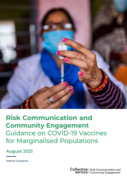
This inter-agency guidance document aims to supplement the COVAX demand creation package for COVID-19 vaccines with key considerations for humanitarian contexts and marginalized populations with spe
...
cific access and communication needs.
21 Sept.2021
more

Tuberculosis continues to represent a severe public health problem in the Region of the Americas, even more so in the case of indigenous peoples, whose TB incidence is much higher than that of the general population. To achieve tuberculosis control in these communities, it is necessary to respond t
...
o communities’ diverse needs from an intercultural perspective that allows the application of a holistic approach—from a standpoint of equality and mutual respect—and considers the value of their cultural practices. In the Region of the Americas, although there has been progress toward recognizing the need for an intercultural approach to health services, obstacles rooted in discrimination, racism, and the exclusion of indigenous peoples and other ethnic groups persist. To respond to this situation, the Pan American Health Organization (PAHO) prepared this guidance which––based on an intercultural approach in accordance with the priority lines of the current PAHO Policy on Ethnicity and Health and its practical development in the Region’s indigenous populations––represent a support tool for implementing the End TB Strategy. This publication integrates PAHO’s accumulated experience and best practices developed by its Member States in recent years, including discussions and experiences shared in regional meetings on the issue, and emphasizes innovation and social inclusion. This requires an urgent shift away from traditional paradigms, taking specific actions that gradually reduce TB incidence and moving toward effective multisectoral actions that have proven effective in quickly containing the epidemic. This publication integrates PAHO’s accumulated experience and best practices developed by its Member States in recent years, including discussions and experiences shared in regional meetings on the issue, and emphasizes innovation and social inclusion. This requires an urgent shift away from traditional paradigms, taking specific actions that gradually reduce TB incidence and moving toward effective multisectoral actions that have proven effective in quickly containing the epidemic.
more
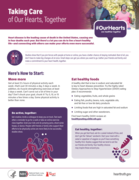
Interested in leading a more heart healthy lifestyle? Small steps go a long way especially when you connect with others to stay motivated. This fact sheet suggests several lifestyle changes you can make starting today and ways to get your friends, f
...
amily, and colleagues involved.
more
Aerosol pollutants are known to raise the risk of development of non-communicable respiratory diseases (NCRDs) such as asthma, chronic bronchitis, chronic obstructive pulmonary disease, and allergic
...
rhinitis. Sub-Saharan Africa’s rapid pace of urbanization, economic expansion, and population growth raise concerns of increasing incidence of NCRDs. This research characterizes the state of research on pollution and NCRDs in the 46 countries of Sub-Saharan Africa (SSA). This research systematically reviewed the literature on studies of asthma; chronic bronchitis; allergic rhinitis; and air pollutants such as particulate matter, ozone, NOx, and sulfuric oxide.
more

Non-Communicable Diseases (NCDs) are a worldwide epidemic. Particularly, the most common diseases - Cardiovascular diseases, Chronic Obstructive Pulmonary Diseases (COPD),
...
Chronic Kidney Diseases, Cancer, Diabetes, injuries and disabilities, EMT, oral, eye greatly contribute to the morbidity and mortality accounting for around 60% of all deaths worldwide. The disease pattern is also changing from infectious to chronic in Rwanda like other developing countries due to the epidemiological transition.
more
This project aimed to reduce the risk of vector-borne infection with Chagas disease by
controlling triatomine bugs, the vectors transmitting the parasite of Chagas disease, and
establishing an epidemiological surveillance system
...
with community participation.
more
