
Filter
7150
Text search:
focus
groups
Featured
Recommendations
556
New Publications
1856
Language
Document type
No document type
4009
Studies & Reports
1342
Guidelines
745
Manuals
420
Strategic & Response Plan
326
Training Material
143
Fact sheets
71
Situation Updates
53
Resource Platforms
13
Infographics
13
Brochures
10
Online Courses
5
Countries / Regions
Global
359
India
282
Kenya
206
Nepal
153
Sierra Leone
146
Ethiopia
146
Uganda
141
Myanmar / Burma
138
South Africa
129
Nigeria
124
Western and Central Europe
120
Liberia
118
Bangladesh
108
Tanzania
105
Africa
105
Malawi
104
Syria
103
Rwanda
101
Zambia
99
Latin America and the Carribbean
93
Ghana
81
Ukraine
77
Namibia
72
Congo, Democratic Republic of
63
South Sudan
57
Philippines
54
South–East Asia Region
50
Indonesia
48
Asia
45
Zimbabwe
44
Cambodia
43
Lesotho
43
Eastern Europe
41
Senegal
40
Haiti
40
Mozambique
39
Guinea
36
East and Southern Africa
35
West and Central Africa
31
Pakistan
30
Botswana
27
Yemen
27
Burkina Faso
25
Middle East and North Africa
25
Venezuela
25
Central African Republic
24
Eastern Europe and Central Asia
23
Cameroon
22
Germany
22
Afghanistan
20
Lebanon
20
Colombia
20
Eswatini/ Swaziland
19
Jordan
18
Somalia
17
Brazil
17
Vietnam
17
Sudan
16
Western Pacific Region
16
Russia
16
Thailand
14
China
13
Laos
13
Tajikistan
13
Sri Lanka
12
Benin
11
Peru
11
Albania
11
Moldova
11
Georgia
10
Mali
9
USA
8
Turkey
8
Burundi
8
Côte d’Ivoire / Ivory Coast
7
Iraq
7
Libya
7
Iran
7
North America
7
United Kingdom
7
Niger
6
North Macedonia
6
Madagascar
6
Palestine
6
Southern Africa
6
Kyrgyzstan
6
Gambia
5
Argentina
5
Hungary
5
Greece
5
Poland
5
Timor Leste/ East Timor
5
Jamaica
5
Togo
4
Egypt
4
Papua New Guinea
4
Serbia
4
Honduras
4
El Salvador
4
Angola
4
Mexico
4
Paraguay
4
Romania
4
Kazakhstan
4
Turkmenistan
4
Portugal
4
Spain
4
Chad
3
Malaysia
3
Croatia
3
Guatemala
3
Chile
3
Bhutan
3
Armenia
3
Canada
3
Bosnia and Herzegovina
3
Morocco
2
Dominican Republic
2
Ecuador
2
Nicaragua
2
Fiji
2
Italy
2
Mongolia
2
Bulgaria
2
Estonia
2
Slovakia
2
Uzbekistan
2
Japan
2
Mauritius
2
Tunisia
2
Azerbaijan
2
Israel
2
Saudi Arabia
1
Mauritania
1
Ireland
1
Singapore
1
Switzerland
1
Bolivia
1
Other region
1
North Korea
1
Djibouti
1
Congo-Brazzaville
1
Qatar
1
Lithuania
1
Gabon
1
Denmark
1
France
1
Maldives
1
Norway
1
Belarus
1
Belize
1
Costa Rica
1
Guyana
1
Panama
1
Authors & Publishers
Publication Years
Category
Countries
2553
Key Resources
512
Public Health
424
Clinical Guidelines
387
Women & Child Health
381
Capacity Building
181
Pharmacy & Technologies
41
Annual Report MEDBOX
3
Toolboxes
Mental Health
638
HIV
589
COVID-19
510
Disability
367
Planetary Health
307
TB
266
Conflict
240
AMR
186
NTDs
184
Caregiver
183
Ebola & Marburg
159
Refugee
159
Global Health Education
147
NCDs
133
Rapid Response
124
Natural Hazards
116
Health Financing Toolbox
107
Malaria
80
2.0 Rapid Response
75
Pharmacy
65
Social Ethics
47
Cholera
38
Polio
34
Zika
34
Specific Hazards
26
Typhoon
4
South Sudan
2

The "Regional Action Plan 2017–2030: Towards a Malaria-Free South-East Asia Region" by the World Health Organization (WHO) outlines a strategic framework to eliminate malaria in the 11 countries of the WHO South-East Asia Region by 2030. It focuses on reducing transmission, particularly of Plasmod
...

World malaria report 2024
recommended
New data from the WHO reveal that an estimated 2.2 billion cases of malaria and 12.7 million deaths have been averted since 2000, but the disease remains a serious global health threat, particularly in the WHO African Region. According to WHO’s latest World malaria report, there were an estimated
...

PLoS ONE 17(9): e0272444. https://doi.org/ 10.1371/journal.pone.0272444.
Based on the RE-AIM metrics, our results show that KMC is a feasible intervention that can improve neonatal outcomes among preterm infants in Zambia. The study findings show a promising, practical approach to scaling up KMC in
...
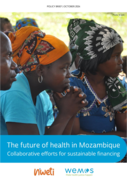
As part of the project ‘Equitable health financing for a strong health system in Mozambique’, N’weti and Wemos developed this policy brief with actionable policy recommendations for the Mozambican government and international organizations on how to increase resources for health in a sustainab
...

The relative priority received by issues
in global health agendas is subjected to impressionistic
claims in the absence of objective methods of assessment
of priority. To build an approach for conducting structured
assessments of comparative priority health issues receive,
we expand the public
...

In the last three decades, health financialization has surged in
several creative ways, yet this growing phenomenon remains surprisingly
unknown, and neglected, in the global health arena. Financialization in the
health domain could be described as the uncontrolled expansion of finance along vari
...
Rising levels of inflation, debt and macrofiscal tightening are putting expenditures on the social sectors including health under immense scrutiny. Already, there are worrying signs of reductions in social sector investments. However, even before the pandemic, evidence showed the significant returns
...

Each year since 2007, G-FINDER has provided policy-makers, donors, researchers and industry with a comprehensive analysis of global investment into research and development of new products to
prevent, diagnose, control or cure neglected diseases in low- and middle-income countries, making it the go
...

Achieving financial risk protection for the whole population requires significant financing for health. Health systems in low- and middle-income countries (LMIC) are plagued with persistent underfunding, and recent reductions in official development assistance have been registered. To create fiscal
...

This comprehensive HPFM report thoroughly explores Kenya’s health financing landscape. It provides an in-depth analysis of the current state of affairs and sheds light on required strategic changes in health financing. The report points out the need to improve public financial management within th
...

The COVID-19 pandemic exposed critical gaps in the global response to health crises, particularly in the financing of pandemic prevention, preparedness, response, recovery, and reconstruction. This chapter presents a comprehensive framework for pandemic financing that spans the entire pandemic cycle
...

There has never been a more critical moment to invest in WHO, and strengthen the unique role it plays in global health. Now is the time to sustainably finance WHO and invest in a healthy return for all.

The world is facing a sustainable development crisis. The 2024 Financing for Sustainable Development Report: Financing for Development at a Crossroads finds that financing challenges are at the heart of the crisis and imperil the SDGs and climate action. The window to rescue the SDGs and prevent a c
...

The National Strategic Plan for Malaria Elimination in India (2023-2027) focuses on achieving malaria elimination by 2030, in alignment with the Global Technical Strategy. The document outlines the strategies, targets, and goals for malaria elimination, aiming for zero indigenous malaria cases by 20
...

The Plan subscribes to the goals and pillars of the WHO Global Technical Strategy against Malaria 2016-2030 (GTS), while presenting key elements to address the specific challenges of the Region.

The guidelines are primarily intended for health-care professionals working in first- or second-level health-care facilities, including emergency, inpatient and outpatient services. They are also directed at policy-makers, health-care planners and programme managers, academic institutions, non-gover
...

The guidelines are primarily intended for health-care professionals working in first- or second-level health-care facilities, including emergency, inpatient and outpatient services. They are also directed at policy-makers, health-care planners and programme managers, academic institutions, non-gover
...
