
Filter
720
Text search:
Kumar,
M.
Featured
Recommendations
73
New Publications
169
Language
Document type
No document type
389
Studies & Reports
138
Guidelines
115
Manuals
39
Fact sheets
15
Strategic & Response Plan
13
Training Material
7
Situation Updates
2
Resource Platforms
2
Countries / Regions
India
139
Nepal
33
Global
32
Bangladesh
24
Brazil
10
Asia
10
Russia
9
Western and Central Europe
8
Germany
7
Kenya
7
South Africa
5
South–East Asia Region
5
Zambia
4
Indonesia
4
Mozambique
4
Colombia
4
East and Southern Africa
4
Middle East and North Africa
4
Eastern Europe
4
Uganda
3
Tanzania
3
Thailand
3
Malawi
3
Ukraine
3
Ecuador
3
Lesotho
3
Myanmar / Burma
3
Sri Lanka
3
West and Central Africa
3
Latin America and the Carribbean
3
Eastern Europe and Central Asia
3
Africa
3
Guinea
2
Sierra Leone
2
Liberia
2
Nigeria
2
Guinea-Bissau
2
Ethiopia
2
Cameroon
2
South Sudan
2
Benin
2
Angola
2
Yemen
2
Western Pacific Region
2
Timor Leste/ East Timor
2
Burkina Faso
1
USA
1
Ghana
1
Zimbabwe
1
Philippines
1
Pakistan
1
Jordan
1
Afghanistan
1
Lebanon
1
Syria
1
Cambodia
1
China
1
Sudan
1
Argentina
1
Namibia
1
Other region
1
Bhutan
1
Venezuela
1
North Korea
1
Tajikistan
1
Iran
1
North America
1
Authors & Publishers
Publication Years
Category
Countries
267
Clinical Guidelines
82
Public Health
51
Women & Child Health
34
Key Resources
25
Capacity Building
6
Pharmacy & Technologies
4
Toolboxes
TB
94
COVID-19
74
Mental Health
43
HIV
33
NTDs
33
Disability
29
Caregiver
26
Planetary Health
25
AMR
16
NCDs
14
Refugee
11
Health Financing Toolbox
11
Rapid Response
9
Natural Hazards
8
Pharmacy
8
Global Health Education
7
Polio
6
2.0 Rapid Response
5
Ebola & Marburg
4
Malaria
4
Cholera
1
Conflict
1
Specific Hazards
1
Social Ethics
1

The Ministry of Health and Family Welfare is committed to ensuring the effective implementation of this strategy, which will contribute to the overall wellbeing and health of all adolescent boys and girls of Bangladesh
In 2017, 3.6 million of the estimated 10 million people with TB worldwide were “missed” by national TB programmes (NTPs). Two thirds of them are thought to access TB treatment of questionable quality from public and private providers who are not engaged by the NTP. The quality of care provided i
...

Sur la base des informations disponibles au 28 février 2021
Rapid Policy Brief Series Series 14: COVID-19 and hypertension


The new WHO recommendations for the treatment of isoniazid-resistant, rifampicin-susceptible TB are based upon a review of evidence from patients treated with such regimens by a Guideline Development Group in conformity with WHO requirements for evidence-based policies.
Nepal has performed exceptionally in improving reproductive, maternal and child health outcomes over the past two decades. In this article, we discuss these achievements and outline a vision for the future of maternal, newborn and child survival in Nepal after the era of the Millennium Development G
...
Disaster Recovery Toolkit

PLoS Negl Trop Dis 16(11): e0010885. https://doi.org/10.1371/journal.pntd.0010885
HAT diagnosis in non-endemic countries is rare and can be challenging, but alertness and
surveillance must be maintained to contribute to WHO’s elimination goals. Early detection is
particularly important as it co
...

Health Services Insights Volume 10: 1–7

This document provides guidelines and tools for monitoring the quality of outsourced viral load test results in India, defining processes and procedures as well as quality indicators and a monitoring checklist for assuring quality of services. Annexes include reporting forms and checklists for monit
...
Scientific Brief, 30 June 2020
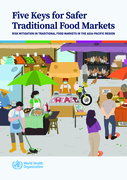
Traditional food markets play important economic, cultural, and social role and are sources of livelihood for millions of people in urban and rural areas. The manual Five keys for safer traditional food markets: risk mitigation in traditional food markets in the Asia-Pacific Region aims to support a
...

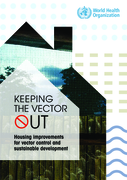
Vector-borne diseases are responsible for 17% of the global burden of communicable diseases and more than 500 000 deaths annually. The ambitious global targets for the control of vector-borne diseases come in the context of the (re-)emergence of diseases, increasing resistances to insecticides and u
...
