
Filter
1764
Text search:
foods
Featured
161
562
Language
Document type
951
348
196
71
61
58
44
10
9
6
5
3
2
Countries
138
97
73
57
49
41
33
33
32
29
29
26
25
25
24
23
23
21
18
17
17
16
14
14
14
12
12
11
10
10
10
10
9
8
8
7
7
6
6
6
6
5
4
4
4
4
4
4
4
4
3
3
3
3
3
3
3
2
2
2
2
2
2
2
2
2
2
2
2
2
2
2
2
1
1
1
1
1
1
1
1
1
1
1
1
1
1
1
1
1
1
1
1
1
1
1
1
1
Authors & Publishers
Publication Years
Category
797
186
141
135
115
54
3
Toolboxes
121
105
84
69
59
52
48
42
41
38
30
28
26
24
24
15
13
11
10
9
8
7
6
5
2
1
1
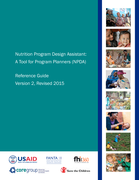
Reference Guide Version 2. Revised. The Nutrition Program Design Assistant is a tool to help organizations design the nutrition component of their community-based maternal and child health, food security, or other development program. The tool focuses on prevention and also provides guidance on recu
...
Essential obstetric and newborn care
recommended
Essential obstetric and newborn care is designed as a tool to help protect mothers and their children in adverse environments. It is intended for midwives, doctors with obstetrics training, and health care personnel who deal with obstetric emergencies.

The Integrated Management of Adolescent/Adult Illness (IMAI) approach
This manual has been developed to guide rapid risk assessment of acute public health risks from any type of hazard in response to requests from Member States of the World Health Organization (WHO). The manual is aimed primarily at national departments with health-protection responsibilities, Nationa
...


This guidance aims to assist leaders in the development or revision of humanitarian-sector contributions to district-level pandemic preparedness and response planning. It is directly linked to H2P guidance for national-level planning.

This field study to assess the pharmaceutical situation was undertaken in Ghana in May-June 2008 using a standardized methodology developed by the World Health Organization. The study assessed medicines availability and affordability, geographical accessibility, quality and r
...

This field study to measure access to and use of medicines was undertaken in GHANA in May-June 2008. The study assessed information on the socio-economic level of households, and access to and use of medicines for acute and chronic conditions as well as opinions and perceptio
...

Results from the 2008 Ghana Demographic and Health Survey

Ghana Med J. 2012 Jun;46(2 Suppl):69-78.
