
Filter
6606
Filtered Results: 6606
Text search:
Ministry
of
Health
,
World
Health
Organisation
(WHO)
Featured
Recommendations
496
New Publications
2030
Language
Document type
No document type
3872
Studies & Reports
1106
Guidelines
702
Manuals
345
Strategic & Response Plan
255
Training Material
110
Situation Updates
92
Fact sheets
78
Resource Platforms
20
Brochures
11
Infographics
11
App
2
Online Courses
2
Countries / Regions
India
338
Kenya
269
Global
228
Sierra Leone
192
Uganda
192
Ethiopia
182
Nigeria
170
Nepal
161
Liberia
150
Myanmar / Burma
148
Zambia
138
Rwanda
128
Malawi
121
Tanzania
120
Bangladesh
110
Ghana
105
Western and Central Europe
105
Namibia
103
Syria
89
Ukraine
84
Congo, Democratic Republic of
83
Africa
81
Latin America and the Carribbean
81
South Sudan
70
Lesotho
66
Cambodia
60
Zimbabwe
59
Indonesia
53
Guinea
50
Eastern Europe
50
Mozambique
49
Haiti
47
South Africa
47
Senegal
46
Asia
43
South–East Asia Region
41
Botswana
41
Brazil
39
Cameroon
35
Burkina Faso
32
Yemen
31
East and Southern Africa
27
Eswatini/ Swaziland
27
West and Central Africa
26
Afghanistan
23
Benin
22
Venezuela
22
Madagascar
22
Philippines
21
Pakistan
20
Colombia
19
Middle East and North Africa
19
Jordan
18
Germany
18
Tajikistan
17
Thailand
17
Central African Republic
17
Eastern Europe and Central Asia
16
Lebanon
16
Vietnam
16
Russia
16
Mali
16
Somalia
16
Sudan
15
Paraguay
14
Iraq
14
Western Pacific Region
13
Sri Lanka
13
Turkey
12
Laos
12
Moldova
12
China
11
Togo
10
Albania
10
Niger
10
Côte d’Ivoire / Ivory Coast
10
Angola
10
Peru
9
Georgia
9
Chad
9
Chile
8
Iran
8
Burundi
8
North Macedonia
7
Kazakhstan
7
Kyrgyzstan
7
Libya
7
El Salvador
6
Armenia
6
Greece
6
Palestine
6
Timor Leste/ East Timor
5
Gambia
5
Jamaica
5
Poland
5
Bhutan
5
Ecuador
5
Mexico
4
Serbia
4
Fiji
4
Guinea-Bissau
4
Hungary
4
North America
4
Turkmenistan
4
Japan
4
Portugal
4
Argentina
4
Romania
4
Honduras
4
Canada
3
Estonia
3
Malaysia
3
Italy
3
Croatia
3
Saudi Arabia
3
France
3
Mauritius
3
Bosnia and Herzegovina
3
Southern Africa
3
Bolivia
3
Papua New Guinea
3
Egypt
3
Singapore
2
Congo-Brazzaville
2
Uzbekistan
2
Morocco
2
Bulgaria
2
Dominican Republic
2
Lithuania
2
Tunisia
2
Spain
2
Azerbaijan
2
Belarus
2
Israel
2
Nicaragua
2
Djibouti
2
Slovakia
2
Guatemala
2
North Korea
1
Vanuatu
1
Mongolia
1
Qatar
1
Mauritania
1
USA
1
Gabon
1
Denmark
1
Maldives
1
United Kingdom
1
Morocco
1
Latvia
1
Belize
1
Costa Rica
1
Guyana
1
Panama
1
Solomon Islands
1
Authors & Publishers
Publication Years
Category
Countries
3130
Key Resources
360
Clinical Guidelines
341
Public Health
328
Women & Child Health
274
Capacity Building
108
Pharmacy & Technologies
49
Annual Report MEDBOX
3
Toolboxes
HIV
448
COVID-19
435
Mental Health
343
TB
321
Disability
273
Ebola & Marburg
229
Rapid Response
200
Conflict
200
Planetary Health
179
AMR
179
NTDs
178
Caregiver
153
Refugee
114
Pharmacy
111
Natural Hazards
84
Global Health Education
84
NCDs
77
Malaria
72
Health Financing Toolbox
70
Cholera
45
Zika
43
Polio
30
Specific Hazards
25
Social Ethics
23
2.0 Rapid Response
23
Typhoon
3
South Sudan
2

Report of a global meeting on yaws eradication surveillance, monitoring and evaluation: Geneva, 29–30 January 2018. World Health Organization.

14 March 2022. Ukraine emergency response
WHO appreciates offers of contributions of supply support in solidarity with the affected population of the current conflict in Ukraine.
Please note that supply into and within Ukraine is seriously constrained by continuously shifting conflict zones, d...

Early detection, assessment and response to acute public health events:
Following review of the latest evidence, WHO recommends that TB-LAMP can be used as a replacement for microscopy for the diagnosis of pulmonary TB in adults with signs and symptoms of TB. It can also be considered as a follow-on test to microscopy in adults with signs and symptoms of pulmonary TB, e...
This report reviews and analyses the Affordable Medicines Programme, which was introduced in Ukraine in April 2017 to provide patients with improved access to 23 outpatient medicines for the treatment of chronic noncommunicable diseases. The evaluation combines both quantitative and qualitative anal...
This module should always be used together with the
mhGAP Intervention Guide for Mental, Neurological
and Substance Use Disorders in Non-specialized Health
Settings (WHO, 2010), which outlines relevant general
principles of care and management of a range of other
mental, neurological and substa...
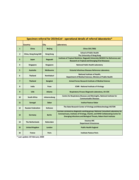
Countries who have no testing capacity can send their samples to the WHO appointed 2019-nCoV referral laboratories for testing. National 2019-nCoV laboratories with limited experience are encouraged to send the first five positives and the first ten negative 2019-nCoV samples to their referral labor...
This handbook is for health care providers involved in the care of girls and women who have been subjected to any form of female genital mutilation (FGM). This includes obstetricians and gynaecologists, surgeons, general medical practitioners, midwives, nurses and other country-specific health profe...
Lack of trained providers capable of identifying which labouring women could benefit from assisted vaginal birth (AVB), and of safely performing the procedure is a major barrier for its use. Education and training are, therefore, considered crucial for building skills and confidence in conducting AV...
A study conducted by the World Health Organisation Regional Office for Africa. The COVID-19 pandemic has had a significant impact on older persons both globally and in the African region. Although overall the region’s population is younger relative to many other world regions, the WHO AFRO region ...
The objectives of these guidelines are to provide recommendations outlining a public health approach to managing people presenting with advanced HIV disease, and to provide guidance on the timing of initiation of antiretroviral therapy (ART) for all people living with HIV.
WHO recommends that a...
WHO recommends that a...
Bull World Health Organ 2022;100:50–59 | doi: http://dx.doi.org/10.2471/BLT.21.286689

It outlines key achievements, needs and opportunities for intervention in the field of rehabilitation in Ukraine. The content of this document is a snapshot in time – not an in-depth analysis of the entire rehabilitation sector. The analysis focuses on rehabilitation policy and governance, service...

Results of rapid assessment
The COVID-19 pandemic has disrupted or halted critical mental health services in 93% of countries worldwide while the demand for mental health is increasing, according to a new WHO survey. The survey of 130 countries provides the first global data showing the devastating...

In 2016, the risk of premature mortality1 from noncommunicable diseases (NCDs) in Ethiopia was 18.3%. The economic costs of NCDs are significant and are due principally to their impact on the non-health sector (reduced workforce and productivity). In this study, it is estimated that NCDs cost Ethiop...

Noncommunicable diseases (NCDs) such as cancer, cardiovascular diseases, diabetes and chronic respiratory diseases and their risk factors are an increasing public health and development challenge in Kyrgyzstan. This report provides evidence through three analyses that NCDs reduce economic outp...
The World Health Organization (WHO) has identified mental health as an integral component of the COVID-19 response. Its rapid assessment of service delivery for mental, neurological and substance use (MNS) disorders during the COVID-19 pandemic, on which this report is based, is the first attempt to...
The document provides detailed guidelines for the production, formulation, and implementation of oral rehydration salts (ORS) to combat dehydration caused by diarrhoea, particularly in children. It focuses on the composition, quality standards, and packaging requirements of ORS, aiming to support na...
