
Filter
6323
Text search:
public
health
sector
Featured
462
1810
Language
5989
268
169
83
73
52
44
20
11
9
8
5
4
4
4
3
3
3
3
2
2
2
2
2
2
2
2
2
2
2
2
2
2
2
2
2
1
1
1
1
1
1
1
1
1
1
1
1
1
1
1
1
1
Document type
3263
1317
708
369
331
135
86
71
16
9
8
5
1
Countries
323
275
226
165
162
161
153
142
137
131
119
115
113
111
110
101
97
92
91
87
73
64
62
57
56
48
48
47
46
44
43
43
42
42
41
40
38
36
35
33
31
30
28
27
26
25
24
23
20
20
19
19
18
18
18
17
16
15
15
14
14
14
13
13
12
12
12
11
11
10
10
10
9
9
9
8
8
8
8
8
7
7
7
6
6
6
6
6
5
5
5
5
5
5
4
4
4
4
4
4
4
4
4
4
4
3
3
3
3
3
3
3
3
3
2
2
2
2
2
2
2
2
2
2
2
2
2
2
2
2
1
1
1
1
1
1
1
1
1
1
1
1
1
1
1
1
1
1
1
1
1
1
1
1
1
Authors & Publishers
771
208
188
179
170
128
107
74
71
68
39
38
36
30
28
28
27
27
26
25
25
24
24
23
23
22
22
21
21
20
20
20
20
20
20
20
20
19
19
19
19
19
19
19
18
18
18
17
17
17
16
16
16
16
16
15
15
15
15
14
14
13
13
13
13
13
12
12
12
12
12
11
11
11
11
11
11
11
11
11
11
10
10
10
10
10
10
9
9
9
9
9
9
9
9
9
9
9
8
8
8
8
8
8
8
8
8
7
7
7
7
7
7
7
7
7
7
7
7
7
7
7
7
7
7
7
7
7
7
7
7
7
7
6
6
6
6
6
6
6
6
6
6
6
6
6
6
6
6
6
6
6
6
6
6
6
6
6
6
6
6
6
6
6
6
5
5
5
5
5
5
5
5
5
5
5
5
5
5
5
5
5
5
5
5
5
5
5
5
5
5
5
5
5
5
5
5
5
5
5
5
4
4
4
4
4
4
4
4
4
4
4
4
4
4
4
4
4
4
4
4
4
4
4
4
4
4
4
4
4
4
4
4
4
4
4
4
4
4
4
4
4
4
4
4
4
4
4
4
4
4
4
4
4
4
4
4
4
4
4
4
4
4
4
4
3
3
3
3
3
3
3
3
3
3
3
3
3
3
3
3
3
3
3
3
3
3
3
3
3
3
3
3
3
3
3
3
3
3
3
3
3
3
3
3
3
3
3
3
3
3
3
3
3
3
3
3
3
3
3
3
3
3
3
3
3
3
3
3
3
3
3
3
3
3
3
3
3
3
3
3
3
3
3
3
3
3
3
3
3
3
3
3
3
3
3
3
3
3
3
3
3
3
3
3
3
3
3
3
3
3
3
3
3
3
3
3
2
2
2
2
2
2
2
2
2
2
2
2
2
2
2
2
2
2
2
2
2
2
2
2
2
2
2
2
2
2
2
2
2
2
2
2
2
2
2
2
2
2
2
2
2
2
2
2
2
2
2
2
2
2
2
2
2
2
2
2
2
2
2
2
2
2
2
2
2
2
2
2
2
2
2
2
2
2
2
2
2
2
2
2
2
2
2
2
2
2
2
2
2
2
2
2
2
2
2
2
2
2
2
2
2
2
2
2
2
2
2
2
2
2
2
2
2
2
2
2
2
2
2
2
2
2
2
2
2
2
2
2
2
2
2
2
2
2
2
2
2
2
2
2
2
2
2
2
2
2
2
2
2
2
2
2
2
2
2
2
2
2
2
2
2
2
2
2
2
2
2
2
2
2
2
2
2
2
2
2
2
2
2
2
2
2
2
2
2
2
2
2
2
2
2
2
2
2
2
2
2
2
2
2
2
2
2
2
2
2
2
2
2
2
2
2
2
2
2
2
2
2
2
2
2
2
2
2
2
2
2
2
2
2
2
2
2
2
2
2
2
2
2
2
2
2
2
2
2
2
2
2
2
2
2
2
2
2
2
2
2
2
2
2
2
2
2
2
2
2
2
2
2
2
2
2
2
2
2
2
2
2
2
2
2
2
2
2
2
2
2
2
2
2
2
2
2
2
2
2
2
2
2
2
2
2
2
2
2
2
2
2
2
2
2
2
2
2
2
2
2
2
2
2
2
2
2
2
2
1
1
1
1
1
1
1
1
1
1
1
1
1
1
1
1
1
1
1
1
1
1
1
1
1
1
1
1
1
1
1
1
1
1
1
1
1
1
1
1
1
1
1
1
1
1
1
1
1
1
1
1
1
1
1
1
1
1
1
1
1
1
1
1
1
1
1
1
1
1
1
1
1
1
1
1
1
1
1
1
1
1
1
1
1
1
1
1
1
1
1
1
1
1
1
1
1
1
1
1
1
1
1
1
1
1
1
1
1
1
1
1
1
1
1
1
1
1
1
1
1
1
1
1
1
1
1
1
1
1
1
1
1
1
1
1
1
1
1
1
1
1
1
1
1
1
1
1
1
1
1
1
1
1
1
1
1
1
1
1
1
1
1
1
1
1
1
1
1
1
1
1
1
1
1
1
1
1
1
1
1
1
1
1
1
1
1
1
1
1
1
1
1
1
1
1
1
1
1
1
1
1
1
1
1
1
1
1
1
1
1
1
1
1
1
1
1
1
1
1
1
1
1
1
1
1
1
1
1
1
1
1
1
1
1
1
1
1
1
1
1
1
1
1
1
1
1
1
1
1
1
1
1
1
1
1
1
1
1
1
1
1
1
1
1
1
1
1
1
1
1
1
1
1
1
1
1
1
1
1
1
1
1
1
1
1
1
1
1
1
1
1
1
1
1
1
1
1
1
1
1
1
1
1
1
1
1
1
1
1
1
1
1
1
1
1
1
1
1
1
1
1
1
1
1
1
1
1
1
1
1
1
1
1
1
1
1
1
1
1
1
1
1
1
1
1
1
1
1
1
1
1
1
1
1
1
1
1
1
1
1
1
1
1
1
1
1
1
1
1
1
1
1
1
1
1
1
1
1
1
1
1
1
1
1
1
1
1
1
1
1
1
1
1
1
1
1
1
1
1
1
1
1
1
1
1
1
1
1
1
1
1
1
1
1
1
1
1
1
1
1
1
1
1
1
1
1
1
1
1
1
1
1
1
1
1
1
1
1
1
1
1
1
1
1
1
1
1
1
1
1
1
1
1
1
1
1
1
1
1
1
1
1
1
1
1
1
1
1
1
1
1
1
1
1
1
1
1
1
1
1
1
1
1
1
1
1
1
1
1
1
1
1
1
1
1
1
1
1
1
1
1
1
1
1
1
1
1
1
1
1
1
1
1
1
1
1
1
1
1
1
1
1
1
1
1
1
1
1
1
1
1
1
1
1
1
1
1
1
1
1
1
1
1
1
1
1
1
1
1
1
1
1
1
1
1
1
1
1
1
1
1
1
1
1
1
1
1
1
1
1
1
1
1
1
1
1
1
1
1
1
1
1
1
1
1
1
1
1
1
1
1
1
1
1
1
1
1
1
1
1
1
1
1
1
1
1
1
1
1
1
1
1
1
1
1
1
1
1
1
1
1
1
1
1
1
1
1
1
1
1
1
1
1
1
1
1
1
1
1
1
1
1
1
1
1
1
1
1
1
1
1
1
1
1
1
1
1
1
1
1
1
1
1
1
1
1
1
1
1
1
1
1
1
1
1
1
1
1
1
1
1
1
1
1
1
1
1
1
1
1
1
1
1
1
1
1
1
1
1
1
1
1
1
1
1
1
1
1
1
1
1
1
1
1
1
1
1
1
1
1
1
1
1
1
1
1
1
1
1
1
1
1
1
1
1
1
1
1
1
1
1
1
1
1
1
1
1
1
1
1
1
1
1
1
1
1
1
1
1
1
1
1
1
1
1
1
1
1
1
1
1
1
1
1
1
1
1
1
1
1
1
1
1
1
1
1
1
1
1
1
1
1
1
1
1
1
1
1
1
1
1
1
1
1
1
1
1
1
1
1
1
1
1
1
1
1
1
1
1
1
1
1
1
1
1
1
1
1
1
1
1
1
1
1
1
1
1
1
1
1
1
1
1
1
1
1
1
1
1
1
1
1
1
1
1
1
1
1
1
1
1
1
1
1
1
1
1
1
1
1
1
1
1
1
1
1
1
1
1
1
1
1
1
1
1
1
1
1
1
1
1
1
1
1
1
1
1
1
1
1
1
1
1
1
1
1
1
1
1
1
1
1
1
1
1
1
1
1
1
1
1
1
1
1
1
1
1
1
1
1
1
1
1
1
1
1
1
1
1
1
1
1
1
1
1
1
1
1
1
1
1
1
1
1
1
1
1
1
1
1
1
1
1
1
1
1
1
1
1
1
1
1
1
1
1
1
1
1
1
1
1
1
1
1
1
1
1
1
1
1
1
1
1
1
1
1
1
1
1
1
1
1
1
1
1
1
1
1
1
1
1
1
1
1
1
1
1
1
1
1
1
1
1
1
1
1
1
1
1
1
1
1
1
1
1
1
1
1
1
1
1
1
1
1
1
1
1
1
1
1
1
1
1
1
1
1
1
1
1
1
1
1
1
1
1
1
1
1
1
1
1
1
1
1
1
1
1
1
1
1
1
1
1
1
1
1
1
1
1
1
1
1
1
1
1
1
1
1
1
1
1
1
1
1
1
1
1
1
1
1
1
1
1
1
1
1
1
1
1
1
1
1
1
1
1
1
1
1
1
1
1
1
1
1
1
1
1
1
1
1
1
1
1
1
1
1
1
1
1
1
1
1
1
1
1
1
1
1
1
1
1
1
1
1
1
1
1
1
1
1
1
1
1
1
1
1
1
1
1
1
1
1
1
1
1
1
1
1
1
1
1
1
1
1
1
1
1
1
1
1
1
1
1
1
1
1
1
1
1
1
1
1
1
1
1
1
1
1
1
1
1
1
1
1
1
1
1
1
1
1
1
1
1
1
1
1
1
1
1
1
1
1
1
1
1
1
1
1
1
1
1
1
1
1
1
1
1
1
1
1
1
1
1
1
1
1
1
1
1
1
1
1
1
1
1
1
1
1
1
1
1
1
1
1
1
1
1
1
1
1
1
1
1
1
1
1
1
1
1
1
1
1
1
1
1
1
1
1
1
1
1
1
1
1
1
1
1
1
1
1
1
1
1
1
1
1
1
1
1
1
1
1
1
1
1
1
1
1
1
1
1
1
1
1
1
1
1
1
1
1
1
1
1
1
1
1
1
1
1
1
1
1
1
1
1
1
1
1
1
1
1
1
1
1
1
1
1
1
1
1
1
1
1
1
1
1
1
1
1
1
1
1
1
1
1
1
1
1
1
1
1
1
1
1
1
1
1
1
1
1
1
1
1
1
1
1
1
1
1
1
1
1
1
1
1
1
1
1
1
1
1
1
1
1
1
1
1
1
1
1
1
1
1
1
1
1
1
1
1
1
1
1
1
1
1
1
1
1
1
1
1
1
1
1
1
1
1
1
1
1
1
1
1
1
1
1
1
1
1
1
1
1
1
1
1
1
1
1
1
1
1
1
1
1
1
1
1
1
1
1
1
1
1
1
1
1
1
1
1
1
1
1
1
1
1
1
1
1
1
1
1
1
1
1
1
1
1
1
1
1
1
1
1
1
1
1
1
1
1
1
1
1
1
1
1
1
1
1
1
1
1
1
1
1
1
1
1
1
1
1
1
1
1
1
1
1
1
1
1
1
1
1
1
1
1
1
1
1
1
1
1
1
1
1
1
1
1
1
1
1
1
1
1
1
1
1
1
1
1
1
1
1
1
1
1
1
1
1
1
1
1
1
1
1
1
1
1
1
1
1
1
1
1
1
1
1
1
1
1
1
1
1
1
1
1
1
1
1
1
1
1
1
1
1
1
1
1
1
1
1
1
1
1
1
1
1
1
1
1
1
1
1
1
1
1
1
1
1
1
1
1
1
1
1
1
1
1
1
1
1
1
1
1
1
1
1
1
1
1
1
1
1
1
1
1
1
1
1
1
1
1
1
1
1
1
1
1
1
1
1
1
1
1
1
1
1
1
1
1
1
1
1
1
1
1
1
1
1
1
1
1
1
1
1
1
1
1
1
1
1
1
1
1
1
1
1
1
1
1
1
1
1
1
1
1
1
1
1
1
1
1
1
1
1
1
1
1
1
1
1
1
1
1
1
1
1
1
1
1
1
1
1
1
1
1
1
1
1
1
1
1
1
1
1
1
1
1
1
1
1
1
1
1
1
1
1
1
1
1
1
1
1
1
1
1
1
1
1
1
1
1
1
1
1
1
1
1
1
1
1
1
1
1
1
1
1
1
1
1
1
1
1
1
1
1
1
1
1
1
1
1
1
1
1
1
1
1
1
1
1
1
1
1
1
1
1
1
1
1
1
1
1
1
1
1
1
1
1
1
1
1
1
1
1
1
1
1
1
1
1
1
1
1
1
1
1
1
1
1
1
1
1
1
1
1
1
1
1
1
1
1
1
1
1
1
1
1
1
1
1
1
1
1
1
1
1
1
1
1
1
1
1
1
1
1
1
1
1
1
1
1
1
1
1
1
1
1
1
1
1
1
1
1
1
1
1
1
1
1
1
1
1
1
1
1
1
1
1
1
1
1
1
1
1
1
1
1
1
1
1
1
1
1
1
1
1
1
1
1
1
1
1
1
1
1
1
1
1
1
1
1
1
1
1
1
1
1
1
1
1
1
1
1
1
1
1
1
1
1
1
1
1
1
1
1
1
1
1
1
1
1
1
1
1
1
1
1
1
1
1
1
1
1
1
1
1
1
1
1
1
1
1
1
1
1
1
1
1
1
1
1
1
1
1
1
1
1
1
1
1
1
1
1
1
1
1
1
1
1
1
1
1
1
1
1
1
1
1
1
1
1
1
1
1
1
1
1
1
1
1
1
1
1
1
1
1
1
1
1
1
1
1
1
1
1
1
1
1
1
1
1
1
1
1
1
1
1
1
1
1
1
1
1
1
1
1
1
1
1
1
1
1
1
1
1
1
1
1
1
1
1
1
1
1
1
1
1
1
1
1
1
1
1
1
1
1
1
1
1
1
1
1
1
1
1
1
1
1
1
1
1
1
1
1
1
1
1
1
1
1
1
1
1
1
1
1
1
1
1
1
1
1
1
1
1
1
1
1
1
1
1
1
1
1
1
1
1
1
1
1
1
1
1
1
1
1
1
1
1
1
1
1
1
1
1
1
1
1
1
1
1
1
1
1
1
1
1
1
1
1
1
1
1
1
1
1
1
1
1
1
1
1
1
1
1
1
1
1
1
1
1
1
1
1
1
1
1
1
1
1
1
1
1
1
1
1
1
1
1
1
1
1
1
1
1
1
1
1
1
1
1
1
1
1
1
1
1
1
1
1
1
1
1
1
1
1
1
1
1
1
1
1
1
1
1
1
1
1
1
1
1
1
1
1
1
1
1
1
1
1
1
1
1
1
1
1
1
1
1
1
1
1
1
1
1
1
1
1
1
1
1
1
1
1
1
1
1
1
1
1
1
1
1
1
1
1
1
1
1
1
1
1
1
1
1
1
1
1
1
1
1
1
1
1
1
1
1
1
1
1
1
1
1
1
1
1
1
1
1
1
1
1
1
1
1
1
1
1
1
1
1
1
1
1
1
1
1
1
1
1
1
1
1
1
1
1
1
1
1
1
1
1
1
1
1
1
1
1
1
1
1
1
1
1
1
1
1
1
1
1
1
1
1
1
1
1
1
1
1
1
1
1
1
1
1
1
1
1
1
1
1
1
1
1
1
1
1
1
1
1
1
1
1
1
1
1
1
1
1
1
1
1
1
1
1
1
1
1
1
1
1
1
1
1
1
1
1
1
1
1
1
1
1
1
1
1
1
1
1
1
1
1
1
1
1
1
1
1
1
1
1
1
1
1
1
1
1
1
1
1
1
1
1
1
1
1
1
1
1
1
1
1
1
1
1
1
1
1
1
1
1
1
1
1
1
1
1
1
1
1
1
1
1
1
1
1
1
1
1
1
1
1
1
1
1
1
1
1
1
1
1
1
1
1
1
1
1
1
1
1
1
1
1
1
1
1
1
1
1
1
1
1
1
1
1
1
1
1
1
1
1
1
1
1
1
1
1
1
1
1
1
1
1
1
1
1
1
1
1
1
1
1
1
1
1
1
1
1
1
1
1
1
1
1
1
1
1
1
1
1
1
1
1
1
1
1
1
1
1
1
1
1
1
1
1
1
1
1
1
1
1
1
1
1
1
1
1
1
1
1
1
1
1
1
1
1
1
1
1
1
1
1
1
1
1
1
1
1
1
1
1
1
1
1
1
1
1
1
1
1
1
1
1
1
1
1
1
1
1
1
1
1
1
1
1
1
1
1
1
1
1
1
1
1
1
1
1
1
1
1
1
1
1
1
1
1
1
1
1
1
1
1
1
1
1
1
1
1
1
1
1
1
1
1
1
1
1
1
1
1
1
1
1
1
1
1
1
1
1
1
1
1
1
1
1
1
1
1
1
1
1
1
1
1
1
1
1
1
1
1
1
1
1
1
1
1
1
1
1
1
1
1
1
1
1
1
1
1
1
1
1
1
1
1
1
1
1
1
1
1
1
1
1
1
1
1
1
1
1
1
1
1
1
1
1
1
1
1
1
1
1
1
1
1
1
1
1
1
1
1
1
1
1
1
1
1
1
1
1
1
1
1
1
1
1
1
1
1
1
1
1
1
1
1
1
1
1
1
1
1
1
1
1
1
1
1
1
1
1
1
1
1
1
1
1
1
1
1
1
1
1
1
1
1
1
1
1
1
1
1
1
1
1
1
1
1
1
1
1
1
1
1
1
1
1
1
1
1
1
1
1
1
1
1
1
1
1
1
1
1
1
1
1
1
1
1
1
1
1
1
1
1
1
1
1
1
1
1
1
1
1
1
1
1
1
1
1
1
1
1
1
1
1
1
1
1
1
1
1
1
1
1
1
1
1
1
1
1
1
1
1
1
1
1
1
1
1
1
1
1
1
1
1
1
1
1
1
1
1
1
1
1
1
1
1
1
1
1
1
1
1
1
1
1
1
1
1
1
1
1
1
1
1
1
1
1
1
1
1
1
1
1
1
1
1
1
1
1
1
1
1
1
1
1
1
1
1
1
1
1
1
1
1
1
1
1
1
1
1
1
1
1
1
1
1
1
1
1
1
1
1
1
1
1
1
1
1
1
1
1
1
1
1
1
1
1
1
1
1
1
1
1
1
1
1
1
1
1
1
1
1
1
1
1
1
1
1
1
1
1
1
1
1
1
1
1
1
1
1
1
1
1
1
1
1
1
1
1
1
1
1
1
1
1
1
1
1
1
1
1
1
1
1
1
1
1
1
1
1
1
1
1
1
1
1
1
1
1
1
1
1
1
1
1
1
1
1
1
1
1
1
1
1
1
1
1
1
1
1
1
1
1
1
1
1
1
1
1
1
1
1
1
1
1
1
1
1
1
1
1
1
1
1
1
1
1
1
1
1
1
1
1
1
1
1
1
1
1
1
1
1
1
1
1
1
1
1
1
1
1
1
1
1
1
1
1
1
1
1
1
1
1
1
1
1
1
1
1
1
1
1
1
1
1
1
1
1
1
1
1
1
1
1
1
1
1
1
1
1
1
1
1
1
1
1
1
1
1
1
1
1
1
1
1
1
1
1
1
1
1
1
1
1
1
1
1
1
1
1
1
1
1
1
1
1
1
1
1
1
1
1
1
1
1
1
1
1
1
1
1
1
1
1
1
1
1
1
1
1
1
1
1
1
1
1
1
1
1
1
1
1
1
1
1
1
1
1
1
1
1
1
1
1
1
1
1
1
1
1
1
1
1
1
1
1
1
1
1
1
1
1
1
1
1
1
1
1
1
1
1
1
1
1
1
1
1
1
1
1
1
1
1
1
1
1
1
1
1
1
1
1
1
1
1
1
1
1
1
1
1
1
1
1
1
1
1
1
1
1
1
1
1
1
1
1
1
1
1
1
1
1
1
1
1
1
1
1
1
1
1
1
1
1
1
1
1
1
1
1
1
1
1
1
1
1
1
1
1
1
1
1
1
1
1
1
1
1
1
1
1
1
1
1
1
1
1
1
1
1
1
1
1
1
1
1
1
1
1
1
1
1
1
1
1
1
1
1
1
1
1
1
1
1
1
1
1
1
1
1
1
1
1
1
1
1
1
1
1
1
1
1
1
1
1
1
1
1
1
1
1
1
1
1
1
1
1
1
1
1
1
1
1
1
1
1
1
1
1
1
1
1
1
1
1
1
1
1
1
1
1
1
1
1
1
1
1
1
1
1
1
1
1
1
1
1
1
1
1
1
1
1
1
1
1
1
1
1
1
1
1
1
1
1
1
1
1
1
1
1
1
1
1
1
1
1
1
1
1
1
1
1
1
1
1
1
1
1
1
1
1
1
1
1
1
1
1
1
1
1
1
1
1
1
1
1
1
1
1
1
1
1
1
1
1
1
1
1
1
1
1
1
1
1
1
1
1
1
1
1
1
1
1
1
1
1
1
1
1
1
1
1
1
1
1
1
1
1
1
1
1
1
1
1
1
1
1
1
1
1
1
1
1
1
1
1
1
1
1
1
1
1
1
1
1
1
1
1
1
1
1
1
1
1
1
1
1
1
1
1
1
1
1
1
1
1
1
1
1
1
1
1
1
1
1
1
1
1
1
1
1
1
1
1
1
1
1
1
1
1
1
1
1
1
1
1
1
1
1
1
1
1
1
1
1
1
1
1
1
1
1
1
1
1
1
1
1
1
1
1
1
1
1
1
1
1
1
1
1
1
1
1
1
1
1
1
1
1
1
1
1
1
1
1
1
1
1
1
1
1
1
1
1
1
1
1
1
1
1
1
1
1
1
1
1
1
1
1
1
1
1
1
1
1
1
1
1
1
1
1
1
1
1
1
1
1
1
1
1
1
1
1
1
1
1
1
1
1
1
1
1
1
1
1
1
1
1
1
1
1
1
1
1
1
1
1
1
1
1
1
1
1
1
1
1
1
1
1
1
1
1
1
1
1
1
1
1
1
1
1
1
1
1
1
1
1
1
1
1
1
1
1
1
1
1
1
1
1
1
1
1
1
1
1
1
1
1
1
1
1
1
1
1
1
1
1
1
1
1
1
1
1
1
1
1
1
1
1
Publication Years
1
2049
3755
492
23
3
Category
2907
458
363
240
238
78
35
3
Toolboxes
510
341
339
278
261
226
216
180
157
149
145
137
126
114
109
100
95
94
77
71
31
29
24
22
20
7
1

Zika Virus Infection: Step by Step Guide on Risk Communication and Community Engagement
recommended
Pan American Health Organization
(2016)
C_WHO
This document offers suggested risk communication actions in relation to Zika virus infection and other health issues linked to this disease. It is directed toward ministers of health and other
...
health sector actors who, with their national (multidisciplinary) teams for communication and social mobilization, will be able to adapt the provided information to the needs of their countries and audiences.
more
The 2007 Rwanda Service Provision Assessment (RSPA) was a national representative survey conducted in 538 health facilities throughout Rwanda. The survey covered hospitals, health centers, dispensar
...
ies and
health posts, including all public facilities such as government and government-assisted health facilities. The 2007 RSPA used interviews with health service providers and clients and observations of provider client consultations to obtain information on the capacity of facilities to provide quality services and the existence of functioning systems to support quality services. The areas addressed were the overall facility
infrastructure, maternal and child health, reproductive health, tuberculosis, malaria services; and services for sexually transmitted infections and HIV/AIDS. The objective was to assess the strengths and
weaknesses of the infrastructure and systems supporting these services, and to assess the adherence to standards in the delivery of services.
more

RBC/IHDPC/ EID Division | November2011 - The aim of the standard operating procedures is to guide health care providers and public health
experts
...
from various levels of the health system in the implementation of enhanced surveillance of meningococcal meningitis.
more
This Plan envisions a future with the elimination of cervical cancer as a public health problem as a result of universal access to sexual health an
...
d STI prevention services, HPV vaccines, effective screening and precancer treatment services, treatment of invasive cervical cancer, and palliative care. It foresees that all women and girls, regardless of age, race, ethnicity, socioeconomic status, HIV status, or disability will have timely access to quality cervical cancer prevention, care, and treatment so that they can live in good health throughout the life course and enjoy the health-related human rights.
The goal is to accelerate progress toward the elimination of cervical cancer as a public health problem in the Americas by reducing incidence and mortality rates by one-third by 2030.
more
Prevention, early diagnosis, and effective treatment are essential for the control and elimination of Neisseria gonorrhoeae as a public health problem. Currently, in Latin America and the Caribbean,
...
treatment for gonorrhea infection is largely empiric and based on clinical diagnosis. In the Americas, the high burden of new N. gonorrhoeae infections (estimated at 11 million new cases a year), the complexity of the disease epidemiology, and in many countries the limited resources, make it difficult to fully understand the burden of disease and the burden of antimicrobial resistance (AMR) in N. gonorrhoeae.
PAHO has developed this document to facilitate the navigation of available guidance and recommendations for N. gonorrhoeae AMR surveillance by public health and health care professionals, at the national and subnational levels, involved in designing, implementing, and/or strengthening AMR surveillance of N. gonorrhoeae and overall surveillance of sexually transmitted infections.
more

Health promotion is the process of enabling people to increase control over, and to improve, their health. To reach a state of complete physical mental and social wellbeing, an individual or group m
...
ust be able to identify and to realize aspirations, to satisfy needs, and to change or cope with the environment. Health is, therefore, seen as a resource fo everyday life, not the objective of living. Health is a positive concept emphasizing social and personal resources, as well as physical capacities. Therefore, health promotion is not just the responsibility of the health sector, but goes beyond healthy lifestyles to wellbeing.
more
The Zimbabwe Multi-Sectoral Cholera Elimination Plan (2018–2028) aims to eradicate cholera by improving water, sanitation, and healthcare infrastructure, strengthening disease surveillance, and expanding oral cholera vaccination (OCV). The strategy focuses on five pillars, including
...
public health response, WASH, infrastructure, community empowerment, and financing. A multi-sectoral approach involving government, international organizations, and local communities targets cholera hotspots to prevent outbreaks and ensure long-term disease control.
more
Emergency in Ukraine: external situation report
recommended
Here you can download the latest Situation Reports
Weekly updates on the current situation in Ukraine and refugee-receiving countries, priority public health concerns and WHO’s actions to rapidly
...
respond to the health emergency triggered by the conflict and to minimize disruptions to the delivery of critical health services.
more
Updated recommendations on simplified service delivery and diagnostics for hepatitis C infection
recommended
Policy Brief. 24 June 2022. This policy brief, one of two on the updated hepatitis C (HCV) guidelines, focuses on the new recommendations on simplified service delivery for a public health approach
...
to HCV testing, care and treatment. These recommendations include decentralization, integration and task-sharing, in addition to the use of point-of-care (POC) HCV viral load assays and reflex viral load testing.
more
This collection of case studies on risk communication and community engagement (RCCE) from 18 different country/area level public health partners in the WHO European Region provides evidence o
...
f numerous results achieved and lessons learned since the start of the COVID-19 pandemic. RCCE has not traditionally been an area where evidence of challenges and solutions was documented. With this compendium, we wanted to collect and share this evidence to support decision-making in this area of work.
more
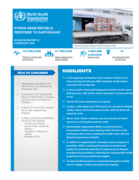
TUATION UPDATE
In the early morning of 6 February 2023, a magnitude 7.8 earthquake occurred in southern Türkiye near the
northern border of Syria. The earthquake was followed 11 minutes later by a magnitude 6.7 aftershock. Many
aftershocks are still being felt across the region. Whilst the imp
...
act is still being assessed, initial reports evidence
significant damage in the areas of southern Türkiye and northern Syria.
In response, the Syria Ministry of Health (MoH) activated its emergency operations centre (EOC) on 6 Feb 2023
under the chairmanship of the Deputy Minister. In all affected governorates, public and private health facilities
and medical convoys have been repurposed to support the response and are being managed by the National
Ministry of Health (MoH) and Directorate of Health (DoH) at governorate level. Support has been directed to
affected areas, with medical convoys including 28 ambulances and 7 mobile clinics, deployed from the health
directorates of Damascus, Rural Damascus, Quneitra, Homs, Tartous, Aleppo and Latakia. At the same time, 4
more

The Transformation Agenda (TA) ushered in an ambitious reform process intended to transform the World Health Organization (WHO) into an organization that is proactive, results-driven, accountable and which meets stakeholder expectations, towards tra
...
nsforming and improving public health services in the African Region. It aimed to achieve a WHO that is pro-results, which optimally and creatively targets technical work as well as make operations more responsive, with greater effectiveness in both communications and partnerships. The Africa Region has been the epicentre of the human immunodeficiency virus (HIV) epidemic and it’s one of the leading causes of disease and death on the continent. The WHO, with partners, has worked tirelessly for many years to control the threat and reduce the negative impact of the disease. Since the early 2000s, significant progress has been made in the global fight against the scourge of HIV. However, the WCA subregion was falling concerningly behind ESA on several key indicators of progress. In 2016, the WHO joined UNAIDS, UNICEF and other partners in a call for a strong and urgent response to support WCA countries to develop catch-up plans to triple and fast-track ART coverage, to enable the region to catch up with ESA by the end of 2020. Implementation of a widespread test-and-treat strategy, coupled with the scale-up of differentiated service delivery (DSD) and mobilization of requisite funding, accelerated WCA’s progress towards this goal. The HIV treatment catch-up and fast-track plan has achieved its target of seeing the West and Central African region (WCA) catch up with the Eastern and Southern African region’s (ESA) antiretroviral coverage rate of 78% in 2021, albeit later than the 2020 target time frame. A 33% improvement was achieved in WCA, against 21% in ESA, between 2015–2020. WCA achieved a significant 42% increase, compared to ESA’s 23%, between 2015 and 2021, to see WCA draw level with ESA at 78%. In the Democratic Republic of the Congo (DRC) alone, progress of up to 47% was observed between 2015 and 2020, for example. In addition, 1.6 million more People Living with HIV (PLHIV) were enrolled on antiretroviral treatment (ART) between 2015 and 2020.
more

The development of this draft Proposed programme budget 2022–2023 comes at a unique moment for WHO. The world is in the grip of the coronavirus disease (COVID-19) pandemic and faces health, social and economic consequences on an unprecedented scal
...
e. Although it is not known when the COVID-19 pandemic will end, recent encouraging vaccine results, in addition to the examples of countries that have achieved good results through public health measures, hold out the prospect of better days ahead. The full impact of the pandemic cannot yet be determined. But whatever its implications, the Secretariat will rise to the challenge and is ready to adapt so that it is fully equipped to support Member States for any eventuality in the future – to make sure that the world will never again have to face this kind of crisis.
more

This country cooperation strategy (CCS) outlines how the World Health Organization (WHO) will work with the Lao People’s Democratic Republic over the next five years (2024–2028), supporting the implementation of the five-year
...
health sector development plans and the Health Sector Reform Strategy 2021–2030 to attain the Sustainable Development Goals (SDGs) by 2030.
The Lao People’s Democratic Republic experienced substantial economic growth in the 30 years prior to the coronavirus disease (COVID-19) pandemic, contributing to reduced poverty and significant progress toward the SDGs. However, the COVID-19 pandemic brought this development to a halt. It was anticipated that the COVID-19 recovery and the tremendous population growth in recent years would provide opportunities for a shift toward more sustainable and inclusive development in the years ahead. In 2023, however, the contrary was the case. Rural residents, including many ethnic minorities, continued to face marginalization because of limited access to education, health care and economic opportunities.
Despite the challenges of COVID-19 and other disease outbreaks, the country has made significant improvements in health. Nonetheless, progress has been uneven and not everyone has benefited from these achievements. In the mountainous region, many people lack access to quality health care because of the unequal distribution of well-trained health-care workers. Preventable deaths due to poor-quality health care for children and newborns, infants and mothers remain a concern, as do communicable diseases such as sexually transmitted infections and tuberculosis. The increasing burden of noncommunicable diseases and the health impact of worsening climate change further heighten the need for strengthened and resilient health systems, which are at risk due to an underfunded health sector and weak economy.
This CCS aims to address remaining and future challenges as well as health needs while creating an impact that is sustainable. It identifies three strategic priorities and nine deliverables (Table 1) to support the attainment of the national vision of Health for all by all, as articulated in the 9th Health Sector Development Plan 2021–2025. It contributes to the country’s goals to achieve universal health coverage, graduate from least developed country status by 2026 and attain SDGs by 2030.
more

The Country Cooperation Strategy is the World Health Organization (WHO)’s reference for country work guiding planning and resource allocation through alignment with national health priorities and
...
harmonization with other development partners. It clarifies roles and functions of WHO in supporting the national strategic plan for health through the Sector-Wide Approach and Malawi Growth and Development Strategy II. The Country Cooperation Strategy is based on a systematic assessment of the recent national achievements, emerging health needs,
challenges, government policies and expectations. An evaluation of the previous CCS was conducted and jointly discussed with the Ministry of Health as well as other key stakeholders. This process led to the identification of the, achievements, challenges and shortfalls of the previous CCS. Through this process the areas where WHO needed to focus on were also identified. The CCS development has also been done in parallel with the formulation of the new Health Sector Strategic Plan (HSSP) to ensure that there is a linkage between the two.
more

WHO recently conducted a survey to assess the availability and cost of a national tracer list of essential medicines in the outpatient sector in Ukraine using a new collection tool – the WHO Essential Medicines and
...
Health Products Price and Availability Monitoring Mobile Application. This tool facilitates rapid and inexpensive data collection at the facility level.
more
The COVID-19 Strategic Preparedness and Response Plan (SPRP) 2021 Monitoring and Evaluation Framework tracks global progress against the COVID-19 SPRP 2021 for the ten pillars of the public health r
...
esponse. The operational intelligence complements the epidemiologic information used to drive a global dynamic system of support and response. Monitoring SPRP 2021 implementation will support countries, partners and WHO in strategic thinking, operational tracking and course correction based on evidence and transparency to strengthen the response to COVID-19.
more
WHO recently conducted a survey to assess the availability and cost of a national tracer list of essential medicines in the outpatient sector in Ukraine using a new collection tool – the WHO Essential Medicines and
...
Health Products Price and Availability Monitoring Mobile Application. This tool facilitates rapid and inexpensive data collection at the facility level.
more
The EYE communication strategy is intended for use by all EYE partners and respective communication teams, as well as regional and country colleagues who will need to communicate about the work of EYE. It will also be publicly available for others, such as non-governmental organizations (NGOs) and p
...
rivate sector organizations, who may wish to read or share content published about EYE.
more
Integrating neglected tropical diseases into global health and development: fourth WHO report on neglected tropical diseases evaluates the changing global public
...
health landscape; assesses progress towards the 2020 targets; and considers the possible core elements of a strategic vision to integrating neglected tropical diseases into the 2030 Agenda of the Sustainable Development Goals.
Advances have been made through expanded interventions delivered through five public health approaches: innovative and intensified disease management; preventive chemotherapy; vector ecology and management; veterinary public health services; and the provision of safe water, sanitation and hygiene. In 2015 alone nearly one billion people were treated for at least one disease and significant gains were achieved in relieving the symptoms and consequences of diseases for which effective tools are scarce; important reductions were achieved in the number of new cases of sleeping sickness, of visceral leishmaniasis in South-East Asia and also of Buruli ulcer.
The report also considers vector control strategies and discusses the importance of the draft WHO Global Vector Control Response 2017–2030. It argues that veterinary public health requires a multifaceted approach across the human–animal interface as well as a multisectoral programme of work to protect and improve the physical, mental and social well-being of humans, including veterinary, water, sanitation and hygiene.
Integration of activities and interventions into broader health systems is crucial, and despite challenges, has the potential to accelerate progress towards universal health coverage while advancing the 2030 Agenda.
In short, this report drives the message home that “no one must be left behind”.
more
