
Filter
630
Text search:
parasitic
disease
Featured
70
143
Language
Document type
236
160
80
38
25
24
21
18
9
6
6
4
2
Countries
62
22
21
17
17
12
11
10
9
9
9
9
9
7
6
6
6
6
5
5
4
4
4
4
4
4
3
3
3
3
3
3
3
3
3
2
2
2
2
2
2
2
2
2
2
2
2
1
1
1
1
1
1
1
1
1
1
1
1
1
1
1
1
1
1
1
1
1
1
1
1
1
1
1
1
1
1
1
1
1
1
1
1
1
1
Authors & Publishers
Publication Years
Category
183
67
41
30
22
20
14
Toolboxes
195
34
30
27
20
14
13
10
10
9
8
8
8
6
6
6
6
4
4
3
3
2
1
1

Growing emergencies and displacements across the world demand increasingly complex interventions and responses. The World Health Organization (WHO) has developed Malaria control in emergencies: a field manual to provide technical guidance to help partners respond effectively to malaria in emergency
...

Essential triple EMTCT services include testing for HIV, syphilis and HBV in ante-
natal care (ANC) settings; prompt and efficacious interventions to treat women
who test positive; prevent transmission of any of the infections to their children;
counseling for women and their partners to reduce t
...

This report presents the performance results of 21 household water treatment (HWT) products evaluated in Rounds III and IV of the WHO International Scheme to Evaluate Household Water Treatment Technologies (the Scheme). Released alongside a consolidated overview of findings from Rounds I–II, it re
...

Out of the shadows
10 Lines on National Deworming Day in English/Essay On National Deworming Day /#nationaldewormingday
Accessed on 28.02.2023
Youtube-Video
Diagnostic performance, cost-effectiveness, ease of performance, rapidity and in-field applicability of tests for Soil-transmitted helminth infections.
Visión de conjunto:
El ciclo de transmisión
Teniasis. Las tenias viven en los intestinos de las personas infectadas. Los huevos de la tenia se liberan con las heces. Si se defeca al aire libre, se puede contaminar el ambiente (incluyendo los vegetales y el agua). Cisticercosis humana. La inges
...
Website last accessed on 09.04.2023
L’échinococcose humaine est une maladie parasitaire causée par des ténias du genre Echinococcus. Plus d’un million de personnes sont touchées par l’échinococcose.

Soil transmitted helminth (STH) infections are among the most common human infections worldwide with over 1 billion people affected. Many estimates of STH infection are often based on school-aged children (SAC). This study produced predictive risk-maps of STH on a more finite scale, estimated the nu
...

Website last accessed on 14.04.2023
Food-borne trematode infections are zoonotic, and their pathogens can be transmitted to humans only after the completion of a complex life cycle, some stages of which take place in the body of an intermediate animal host. The first intermediate hosts of all tr
...
Vue d’ensemble:
Le cycle de transmission
Téniase. Les ténias vivent dans l’intestin des êtres humains. Les œufs du ténia sont libérés avec les matières fécales. En cas de défécation à l’air libre, l'environnement (en particulier les légumes et l'eau) peut être contaminé. Cysti
...
Background: Despite several cycles of Mass Drug Administration (MDA), however, the prevalence of Soil-transmitted helminthiasis (STH) remains high in Bangladesh. A clear understanding of local knowledge, attitudes, and practices (KAP) related to the acceptance and utilization of MDA is critical for
...
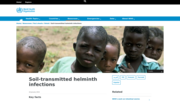
Soil-transmitted helminth (STH) infections are among the most common infections worldwide with an estimated 1.5 billion infected people or 24% of the world’s population. These infections affect the poorest and most deprived communities with poor access to clean water, sanitation and hygiene in tro
...
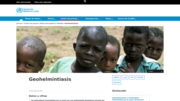
Las geohelmintiasis son una de las parasitosis más comunes en el mundo, y se estima que 1500 millones de personas, el 24 % de la población mundial, están infestadas. Estas infestaciones afectan a las comunidades más pobres y desfavorecidas de zonas tropicales y subtropicales con un acceso defici
...
Les géohelminthiases comptent parmi les infections les plus courantes dans le monde, plus de 1,5 milliard de personnes, soit près de 24 % de la population mondiale, étant infestées à l’échelle mondiale. Ces infections touchent les communautés les plus pauvres et les plus défavorisées ayan
...
Передающиеся через почву гельминтозы (ППГ) относятся к наиболее распространенным инвазиям во всем мире и, согласно расчетам, поражают 1,5 млрд человек, или 24% мировоÐ
...
عد عدوى الديدان الطفيلية المنقولة بالتربة من بين أكثر أنواع العدوى شيوعاً في العالم، مع وجود ما يقدّر بـ1,5 مليار شخص مصاب بها في جميع أنحاء العالم، أو ما يعادل 24٪ من Ø
...
Website last accessed on 09.04.2023
La equinococosis humana es una enfermedad parasitaria causada por tenias del género Echinococcus. La equinococosis afecta a más de un millón de personas.
Website last accessed on 09.04.2023
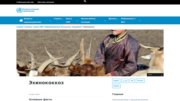
Эхинококкоз человека - это паразитарное заболевание, вызываемое ленточными червями рода Echinococcus. Эхинококкозом болеют более миллиона человек
...
