
Filter
6083
Text search:
training
resource
Featured
Recommendations
586
New Publications
1692
Language
Document type
No document type
3474
Studies & Reports
848
Guidelines
763
Manuals
389
Strategic & Response Plan
280
Training Material
129
Resource Platforms
72
Fact sheets
61
Situation Updates
37
Brochures
8
Infographics
8
Online Courses
6
App
4
Videos
2
Countries / Regions
India
261
Global
255
Kenya
208
Uganda
141
Ethiopia
140
Sierra Leone
130
Nepal
129
South Africa
129
Nigeria
124
Liberia
122
Myanmar / Burma
122
Malawi
101
Zambia
93
Bangladesh
93
Tanzania
91
Africa
91
Rwanda
84
Ghana
79
Western and Central Europe
74
Namibia
71
Latin America and the Carribbean
64
Syria
51
Ukraine
49
Congo, Democratic Republic of
48
South Sudan
46
Lesotho
46
Philippines
45
Guinea
41
Zimbabwe
39
East and Southern Africa
36
South–East Asia Region
35
Asia
34
Eastern Europe
34
Indonesia
32
Senegal
31
Botswana
30
Haiti
29
Cambodia
29
West and Central Africa
29
Mozambique
25
Burkina Faso
19
Pakistan
19
Middle East and North Africa
19
Cameroon
18
Yemen
16
Russia
16
Eswatini/ Swaziland
15
Central African Republic
14
Mali
13
Somalia
13
Afghanistan
13
Eastern Europe and Central Asia
13
Vietnam
13
Lebanon
12
Benin
12
Colombia
12
Western Pacific Region
12
Jordan
11
China
11
Sudan
11
Brazil
11
USA
10
Peru
10
Madagascar
10
Laos
10
Thailand
9
Germany
8
Sri Lanka
8
Côte d’Ivoire / Ivory Coast
7
Gambia
7
Burundi
7
Venezuela
7
Iran
7
Togo
6
Iraq
6
Chad
6
Southern Africa
6
Timor Leste/ East Timor
6
Moldova
6
Turkey
5
Bhutan
5
Georgia
5
North America
5
Egypt
4
Papua New Guinea
4
Argentina
4
Albania
4
Tajikistan
4
Japan
4
Malaysia
3
North Macedonia
3
Serbia
3
Croatia
3
Honduras
3
Angola
3
Chile
3
Canada
3
Mauritius
3
Guinea-Bissau
2
Niger
2
Singapore
2
Dominican Republic
2
Ecuador
2
El Salvador
2
Bolivia
2
Libya
2
Mexico
2
Paraguay
2
Palestine
2
Kazakhstan
2
Turkmenistan
2
Jamaica
2
United Kingdom
2
Azerbaijan
2
Belarus
2
Morocco
1
Saudi Arabia
1
Mauritania
1
Vanuatu
1
Switzerland
1
Hungary
1
Greece
1
Guatemala
1
Nicaragua
1
Fiji
1
Solomon Islands
1
Poland
1
North Korea
1
Djibouti
1
Qatar
1
Estonia
1
Romania
1
Uzbekistan
1
Kyrgyzstan
1
Maldives
1
Tunisia
1
Portugal
1
Spain
1
Bosnia and Herzegovina
1
Belize
1
Costa Rica
1
Guyana
1
Panama
1
Authors & Publishers
Publication Years
Category
Countries
2292
Key Resources
452
Clinical Guidelines
445
Public Health
368
Women & Child Health
367
Capacity Building
176
Pharmacy & Technologies
50
Annual Report MEDBOX
2
Toolboxes
Mental Health
458
HIV
440
COVID-19
370
Disability
322
TB
284
Caregiver
240
Planetary Health
213
Ebola & Marburg
174
AMR
151
NTDs
150
Conflict
145
Rapid Response
128
NCDs
102
Global Health Education
98
Natural Hazards
96
Pharmacy
85
2.0 Rapid Response
82
Refugee
76
Malaria
70
Health Financing Toolbox
55
Cholera
37
Specific Hazards
32
Polio
30
Zika
21
Social Ethics
21
Typhoon
3
South Sudan
2

This guidance synthesizes current evidence on dengue laboratory testing and diagnostics and provides practical recommendations for laboratories, clinicians, public health officials, and programme managers involved in dengue diagnosis, surveillance, and control, in the context of the global emergency
...
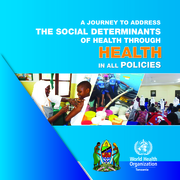
Health in All Policies (HiAP) promotes health and equity. It is based on the recognition that our greatest health challenges for example, non-communicable diseases, health inequities and inequalities, climate change, and spiraling health care costs are highly complex and often linked through the soc
...

To guide the provision of quality palliative care services across the African region, the African Palliative Care Association (APCA) has developed a framework of core palliative care competencies that can be used by service providers, educators and other stakeholders to guide programmes development.
...

This document outlines the plan for a continental cholera prevention and control with the implementation framework for the Cholera IMST, detailing its governance structure, strategic priorities, and operational modalities

Public health challenges over the past decade have highlighted the importance of approaching health through a holistic lens of human, animal, and environmental sectors, recognizing the need for a collaborative response against shared threats. Zoonotic diseases, transmitted between humans and animals
...

WHO guideline on HIV service delivery
recommended
Updated guidance on the integration of diabetes, hypertension and mental health services, and interventions to support adherence to antiretroviral therapy. The guideline offers practical implementation guidance for countries and key stakeholders as well as outlining key research gaps. As life expec
...
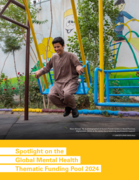
Promoting and protecting the mental health and psychosocial wellbeing of children, adolescents, and their caregivers remains undamental to achieving the Sustainable Development Goals (SDGs), with a direct contribution to SDG 3 (Good Health and Well- eing). In 2024, UNICEF accelerated the scale-up o
...
Lesotho’s Social and Behaviour Change Communication Strategy is a strategic response to the high levels of HIV and TB prevalence in the country that are exacerbated by the persistence of structural and sio-economic difficulties, such as poverty, unemployment, gender inequality and more. This strat
...

The health impacts of climate change are no longer a distant threat. They are being felt here and now and becoming more extreme.
To address these threats, the WHO Asia-Pacific Centre for Environment and Health in the Western Pacific Region (ACE) was established in 2019 through a partnership with
...

WHO consolidated guidelines on tuberculosis: Module 6: tuberculosis and comorbidities, 2nd ed
recommended
Addressing TB comorbidities and risk factors is central to the World Health Organization (WHO) End TB Strategy. These guidelines consolidate the latest WHO recommendations on TB and key comorbidities. The guidelines are a living document and will include dedicated sections for each key TB comorbidit
...

PHSM are vital in reducing the risk and scale of infectious disease transmission and lowering hospitalization and deaths. Examples include contact tracing, quarantine and isolation, mask use, ventilation, school or workplace measures, mobility restrictions and travel requirements.
While these mea
...

This Toolkit for ensuring rights-based and ethical use of digital technologies in HIV and health programmes is derived from the comprehensive UNDP Guidance on the rights-based and ethical use of digital technologies in HIV and health programmes document. The foundational UNDP Guidance document outli
...

Building on the WHO guidelines for disclosure to children up to age 12 in 2011, this implementation guidance provides evidence on existing interventions that support children and adolescents living with HIV in the process of disclosure. It includes interventions that focuses on safe disclosure, as w
...

Adolescents and young adults aged 10-24 remain underserved in the global response against HIV. Combination prevention, treatment and care programmes use a mix of evidence-based interventions to meet the current HIV prevention needs of adolescents and young adults. However, there needs to be a focus
...
The document provides a standardized protocol for evaluating the Early Warning Alert and Response Network (EWARN), a surveillance system used during humanitarian emergencies when regular national health surveillance may be disrupted. The purpose of EWARN is to detect outbreaks of communicable diseas
...

This report was developed by the WHO TB Vaccine Accelerator Finance and Access working group, co-led by WHO, Gavi and the Government of South Africa. It sets out the working group’s shared vision for equitable access to novel TB vaccines and will advance a shared understanding of the current lands
...

The primary audience for this guideline includes policy-makers or service providers who are responsible for developing national and local health-care protocols and policies related to care during pregnancy, childbirth and the postnatal period, and those directly providing care to women during pregna
...

In an era of constrained resources and tightening budgets, strategic prioritization in tuberculosis (TB) programming is more critical than ever. Countries must make informed decisions to allocate limited resources effectively - maximizing impact, preventing avoidable deaths, and sustaining progress
...

The findings of the report are both urgent and devastating. At the current rate of progress, by 2040 we would still have 1.9 million new HIV infections and 990,000 AIDS-related deaths in children. But if funding for HIV prevention and treatment continues to fall as current trends suggest, the world
...
