
Filter
748
Text search:
forced
migration
Featured
55
203
Language
Document type
341
235
55
38
27
15
14
14
5
2
1
1
Countries
45
38
34
24
20
20
20
19
19
17
14
13
12
12
11
11
10
10
10
10
9
8
8
7
7
6
6
6
6
5
5
5
5
5
5
5
4
4
4
4
4
4
4
4
4
3
3
3
3
3
2
2
2
2
2
2
2
2
2
2
2
2
2
2
2
2
2
1
1
1
1
1
1
1
1
1
1
1
1
1
1
1
1
1
1
1
1
1
1
1
1
1
1
Authors & Publishers
Publication Years
Category
244
61
36
24
12
12
2
Toolboxes
120
79
79
71
68
32
20
18
16
15
14
9
7
7
5
5
4
3
3
3
2
2
2
1

The humanitarian crisis in Yemen remains the worst in the world. Nearly four years of conflict and severe economic decline are driving the country to the brink of famine and exacerbating needs in all sectors. An estimated 80 per cent of the population – 24 million people – require some form of h
...

Guiding framework for development cooperation, Working paper 2017.
This document was drawn up on the basis of expert publications and inputs from partners in the
GIZ regional programme Psychosocial Support for Syrian and Iraqi Refugees and Internally
Displaced People1 in order to serve as guidanc
...
The full range and scale of all forms of violence against children are only now becoming visible, as is the evidence of the harm it does. This book documents the outcomes and recommendations of the process of the United Nations Secretary-General’s Study on Violence against Children. ‘The Studyâ€
...
16-17 march 2015, Geneva, Switzerland
Meeting report

Based on the survey, five principles for deinstitutionalization were identified: community-based services must be in place; the health workforce must be committed to change; political support at the highest and broadest levels is crucial; timing is key; and additional financial resources are needed.
...
World Drug Report 2018
-5-
Harm reduction: evidence, impacts and challenges
-10-
Miscellaneous
Chapter J.2

Miscellaneous
Chapter J.4

While the full extent of Cyclone Ida’s impact is still being assessed, early reports indicate significant damage to infrastructure and livelihoods, with an estimated 3,000km2 of land submerged. Preliminary government reports as of 24 March indicate that more than 58,600 houses have been damaged, i
...

Haiti, one of the poorest countries in the world, was devastated by an earthquake in 2010. The disaster uncovered the realities of a non-existent mental health care system with only ten psychiatrists nationwide. Attempts were made to assess the increased prevalence of mental illness, likely due to t
...

Psychol Behav Sci Int J 5(5): PBSIJ.MS.ID.555675 (2017)

Dignity in Mental Health
A comprehensive summary of mental health research, providing a unique handbook of key facts and figures, covering all key areas of mental health

Understanding Cultural Diversity in Mental Health

The project was developed by the International Federation of Medical Students’ Associations (IFMSA), in line with the Federation’s statement “a world in which students are equipped with knowledge, skills and value to take on health leadership roles locally and globally so to
...
Asia-Pacific Human Development Report
ABOUT THE REPORT
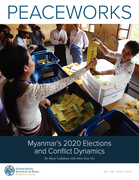
Based on more than seventy interviews, surveys of both mainstream and social media in Myanmar, and a desk review of available election-related materials, this report evaluates the environment in which the current electoral cycle, Rakhine conflicts, and the 21st Century Panglong pea
...
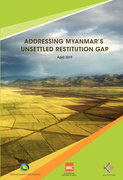
Giving Myanmar's displaced their land back
The Norwegian Refugee Council and Displacement Solutions have produced the report "Addressing Myanmar's Unsettled Restitution Gap" to advocate and help find ways for displaced people in Myanmar to be able to return home and recover their property and pos
...

These country reports provide information on the legal situation for displaced populations, namely asylum seekers, refugees, and returnees, where relevant, regarding access to mobile services, in each country covered
