
Filter
841
Text search:
blood
transfusion
Featured
119
307
Language
Document type
494
148
81
56
25
15
8
3
3
3
2
1
1
Countries
121
33
29
25
23
22
22
18
18
18
16
16
16
15
14
12
11
9
9
8
7
6
6
5
5
5
5
5
5
4
3
3
3
3
3
3
3
3
3
3
3
2
2
2
2
2
2
2
2
2
2
2
1
1
1
1
1
1
1
1
1
1
1
1
1
1
1
1
1
1
1
1
1
1
1
Authors & Publishers
Publication Years
Category
450
105
73
32
26
21
20
Toolboxes
46
41
39
38
29
24
23
17
15
13
12
9
7
7
5
5
5
4
2
2
1
1
1

This document provides interim guidance on the management of the blood supply in response to the pandemic outbreak of coronavirus disease (COVID-19). It emphasizes the importance of being prepared and responding quickly and outlines key actions and
...

: interim guidance, 17 February 2021
This document provides interim guidance on the management of the blood supply in response to the pandemic outbreak of coronavirus disease (COVID-19). It emphasizes the importance of being prepared and responding
...

This document provides interim guidance on the management of the blood supply in response to the pandemic outbreak of coronavirus disease (COVID-19). It emphasizes the importance of being prepared and responding quickly and outlines key actions and
...
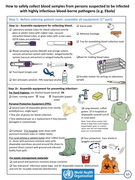
The WHO guidelines provide recommended steps for safe phlebotomy and reiterate accepted principles for drawing, collecting blood and transporting blood to laboratories/
...

Epidemiology
Chagas disease (American trypanosomiasis) is caused by the protozoan parasite Trypanosoma cruzi, and transmitted to humans by infected triatomine bugs, and less commonly by transfusion, organ transplant, from mother to infant, and in r
...
Welcome to the World Health Organization pulse oximeter training manual. In many countries pulse
oximetry is mandatory for monitoring patients during anaesthesia. Although pulse oximetry is a simple and reliable technology that can detect low levels of oxygen in the
...
PLoS Negl Trop Dis 13(10): e0007694. In 2005, the World Health Organization (WHO) recognized Chagas disease (CD; Trypanosoma cruzi infection) as a neglected tropical disease (NTD) [1] and included it into the global plan to combat NTDs [2]. The Target 3.3 of the United Nations Sustainable Developmen
...

Mass population movements have accounted for the emergence of Chagas disease (CD) outside endemic regions,
including the European Union/European Economic Area (EU/EEA). The parasite responsible for causing CD,
Trypanosoma cruzi (T. cruzi), can be transmitted through substances of human origin (SoH
...

WHO today released its first roadmap to tackle postpartum haemorrhage (PPH) – defined as excessive bleeding after childbirth - which affects millions of women annually and is the world’s leading cause of maternal deaths.
Despite being preventable and treatable, PPH results in around 70 000 de
...

El “Manual de Procedimientos Operativos de Técnicas Inmunohematológicas efectuadas en Servicios de Sangre”, otorga los lineamientos generales para que los Servicios de Sangre (Bancos de Sangre y Servicios de Transfusión) trabajen de manera un
...
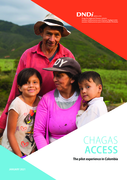
Over 6 million people worldwide are infected with Trypanosoma cruzi, the protozoan that causes Chagas disease. Endemic in 21 Latin American countries, the disease can be transmitted by vector insects called triatomines — also known as “kissing bugs” —, foods or beverages contaminated with th
...

Department of AIDS Control
Ministry of Health & Family Welfare
The objective of this document is to guide the preparation and implementation of national preparedness plans for the safety of substances of human origin during outbreaks of Zika virus infection, both in affected and non-affected areas.

