Filter
1860
Text search:
adolescent
mental
health
Featured
202
435
Language
1674
95
80
56
28
19
10
7
7
5
5
4
4
3
3
3
3
2
2
2
1
1
1
1
1
1
1
1
1
1
1
1
1
1
1
1
1
1
1
Document type
1154
262
200
93
65
35
20
12
8
3
3
1
1
Countries / Regions
74
61
53
51
37
34
31
31
31
30
28
28
27
27
24
21
20
20
19
17
16
15
15
15
12
12
11
11
11
10
10
10
8
8
8
8
7
7
7
7
7
6
6
6
6
6
5
5
5
4
4
4
4
3
3
3
3
3
3
3
3
3
3
2
2
2
2
2
2
2
1
1
1
1
1
1
1
1
1
1
1
1
1
1
1
1
1
1
1
1
1
1
1
1
1
1
1
Authors & Publishers
204
142
104
86
59
52
51
37
35
35
34
33
32
16
16
15
11
11
11
11
10
9
8
8
8
8
7
7
7
7
6
6
6
5
5
5
5
5
5
5
5
5
5
5
5
5
5
5
5
4
4
4
4
4
4
4
4
4
4
4
4
4
4
4
4
4
4
4
4
4
4
4
4
4
4
4
4
4
4
3
3
3
3
3
3
3
3
3
3
3
3
3
3
3
3
3
3
3
3
3
3
3
3
3
3
3
3
3
3
3
3
3
3
3
3
3
3
3
3
3
3
3
3
3
3
3
3
3
3
3
3
3
3
3
3
3
3
3
3
3
2
2
2
2
2
2
2
2
2
2
2
2
2
2
2
2
2
2
2
2
2
2
2
2
2
2
2
2
2
2
2
2
2
2
2
2
2
2
2
2
2
2
2
2
2
2
2
2
2
2
2
2
2
2
2
2
2
2
2
2
2
2
2
2
2
2
2
2
2
2
2
2
2
2
2
2
2
2
2
2
2
2
2
2
2
2
2
2
2
2
2
2
2
2
2
2
2
2
2
2
2
2
2
2
2
2
2
2
2
2
2
2
2
2
2
2
2
2
2
2
2
2
2
2
2
2
2
2
2
2
2
2
2
2
2
2
2
2
2
2
2
2
2
2
2
2
2
2
2
2
2
2
2
2
2
2
2
2
2
2
2
2
2
2
2
2
2
2
2
2
2
2
2
2
2
2
2
2
2
2
2
1
1
1
1
1
1
1
1
1
1
1
1
1
1
1
1
1
1
1
1
1
1
1
1
1
1
1
1
1
1
1
1
1
1
1
1
1
1
1
1
1
1
1
1
1
1
1
1
1
1
1
1
1
1
1
1
1
1
1
1
1
1
1
1
1
1
1
1
1
1
1
1
1
1
1
1
1
1
1
1
1
1
1
1
1
1
1
1
1
1
1
1
1
1
1
1
1
1
1
1
1
1
1
1
1
1
1
1
1
1
1
1
1
1
1
1
1
1
1
1
1
1
1
1
1
1
1
1
1
1
1
1
1
1
1
1
1
1
1
1
1
1
1
1
1
1
1
1
1
1
1
1
1
1
1
1
1
1
1
1
1
1
1
1
1
1
1
1
1
1
1
1
1
1
1
1
1
1
1
1
1
1
1
1
1
1
1
1
1
1
1
1
1
1
1
1
1
1
1
1
1
1
1
1
1
1
1
1
1
1
1
1
1
1
1
1
1
1
1
1
1
1
1
1
1
1
1
1
1
1
1
1
1
1
1
1
1
1
1
1
1
1
1
1
1
1
1
1
1
1
1
1
1
1
1
1
1
1
1
1
1
1
1
1
1
1
1
1
1
1
1
1
1
1
1
1
1
1
1
1
1
1
1
1
1
1
1
1
1
1
1
1
1
1
1
1
1
1
1
1
1
1
1
1
1
1
1
1
1
1
1
1
1
1
1
1
1
1
1
1
1
1
1
1
1
1
1
1
1
1
1
1
1
1
1
1
1
1
1
1
1
1
1
1
1
1
1
1
1
1
1
1
1
1
1
1
1
1
1
1
1
1
1
1
1
1
1
1
1
1
1
1
1
1
1
1
1
1
1
1
1
1
1
1
1
1
1
1
1
1
1
1
1
1
1
1
1
1
1
1
1
1
1
1
1
1
1
1
1
1
1
1
1
1
1
1
1
1
1
1
1
1
1
1
1
1
1
1
1
1
1
1
1
1
1
1
1
1
1
1
1
1
1
1
1
1
1
1
1
1
1
1
1
1
1
1
1
1
1
1
1
1
1
1
1
1
1
1
1
1
1
1
1
1
1
1
1
1
1
1
1
1
1
1
1
1
1
1
1
1
1
1
1
1
1
1
1
1
1
1
1
1
1
1
1
1
1
1
1
1
1
1
1
1
1
1
1
1
1
1
1
1
1
1
1
1
1
1
1
1
1
1
1
1
1
1
1
1
1
1
1
1
1
1
1
1
1
1
1
1
1
1
1
1
1
1
1
1
1
1
1
1
1
1
1
1
1
1
1
1
1
1
1
1
1
1
1
1
1
1
1
1
1
1
1
1
1
1
1
1
1
1
1
1
1
1
1
1
1
1
1
1
1
1
1
1
1
1
1
1
1
1
1
1
1
1
1
1
1
1
1
1
1
1
1
1
1
1
1
1
1
1
1
1
1
1
1
1
1
1
1
1
1
1
1
1
1
1
1
1
1
1
1
1
1
1
1
1
1
1
1
1
1
1
1
1
1
1
1
1
1
1
1
1
1
1
1
1
1
1
1
1
1
1
1
1
1
1
1
1
1
1
1
1
1
1
1
1
1
1
1
1
1
1
1
1
1
1
1
1
1
1
1
1
1
1
1
1
1
1
1
1
1
1
1
1
1
1
1
1
1
1
1
1
1
1
1
1
1
1
1
1
1
1
1
1
1
1
1
1
1
1
1
1
1
1
1
1
1
1
1
1
1
1
1
1
1
1
1
1
1
1
1
1
1
1
1
1
1
1
1
1
1
1
1
1
1
1
1
1
1
1
1
1
1
1
1
1
1
1
1
1
1
1
1
1
1
1
1
1
1
1
1
1
1
1
1
1
1
1
1
1
1
1
1
1
1
1
1
1
1
1
1
1
1
1
1
1
1
1
1
1
1
1
1
1
1
1
1
1
1
1
1
1
1
1
1
1
1
1
1
1
1
1
1
1
1
1
1
1
1
1
1
1
1
1
1
1
1
1
1
1
1
1
1
1
1
1
1
1
1
1
1
1
1
1
1
1
1
1
1
1
1
1
1
1
1
1
1
1
1
1
1
1
1
1
1
1
1
1
1
1
1
1
1
1
1
1
1
1
1
1
1
1
1
1
1
1
1
1
1
1
1
1
1
1
1
1
1
1
1
1
1
1
1
1
1
1
1
1
1
1
1
1
1
1
1
1
1
1
1
1
1
1
1
1
1
1
1
1
1
1
1
1
1
1
1
1
1
1
1
1
1
1
1
1
1
1
1
1
1
1
1
1
1
1
1
1
1
1
1
1
1
1
1
1
1
1
1
1
1
1
1
1
1
1
1
1
1
1
1
1
1
1
1
1
1
1
1
1
1
1
1
1
1
1
1
1
1
1
1
1
1
1
1
1
1
1
1
1
1
1
1
1
1
1
1
1
1
1
1
1
1
1
1
1
1
1
1
1
1
1
1
1
1
1
1
1
1
1
1
1
1
1
1
1
1
1
1
1
1
1
1
1
1
1
1
1
1
1
1
1
1
1
1
1
1
1
1
1
1
1
1
1
1
1
1
1
1
1
1
1
1
1
1
1
1
1
1
1
1
1
1
1
1
1
1
1
1
1
1
1
1
1
1
1
1
1
1
1
1
1
1
1
1
1
1
1
1
1
1
1
1
1
1
1
1
1
1
1
1
1
1
1
1
1
1
1
1
1
1
1
1
1
1
1
1
1
1
1
1
1
1
1
1
1
1
1
1
1
1
1
1
1
1
1
1
1
1
1
1
1
1
1
1
1
1
1
1
1
1
1
1
1
1
1
1
1
1
1
1
1
1
1
1
1
1
1
1
1
1
1
1
1
1
1
1
1
1
1
1
1
1
1
1
1
1
1
1
1
1
1
1
1
1
1
1
1
1
1
1
1
1
1
1
1
1
1
1
1
1
1
1
1
1
1
1
1
1
1
1
1
1
1
1
1
1
1
1
1
1
1
1
1
1
1
1
1
1
1
1
1
1
1
1
1
1
1
1
1
1
1
1
1
1
1
1
1
1
1
1
1
1
1
1
1
1
1
1
1
1
1
1
1
1
Publication Years
506
1203
148
3
Category
629
203
89
79
75
66
3
1
Toolboxes
533
172
122
58
52
48
41
30
28
25
23
16
13
12
11
8
7
4
3
2
2
1
1
1
Clinical Child Psychology and Psychiatry Volume 28, Issue Pages 3-14
The Russian invasion of Ukraine on 24th February 2022 has prompted this article to summarise some of the salient mental health i
...
ssues experienced by young asylum seekers and refugees focussing on resettlement countries, drawing on the substantial literature, for Child and Adolescent Mental Health Practitioners. Firstly, the various UNHCR categories of persons affected by war and persecution and statistics are described. By July 2022, over 100 million people globally were of concern to UNHCR, a number increased by the many millions of refugees fleeing Ukraine to neighbouring countries. Selected findings on the psychiatric epidemiology of young refugees are summarised, and some principles of Child and Adolescent Mental Health Service delivery and treatments are outlined. The research on Ukrainian refugees’ mental health is limited and this is an area that requires further investigation alongside active attempts to meet their mental health needs.
more
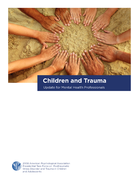
Children and trauma: update for mental health professionals
APA Presidential Task Force on Posttraumatic Stress Disorder and Trauma in Children and Adolescents
American Psychological Association
(2008)
C2
Much of our knowledge about PTSD is based on studies of adults. As evidenced by the birth of new scientific disciplines (e.g., developmental translational neuroscience), it is clear that what we learn from research involving adults may not necessarily be applicable to children and adolescents. Indee
...
d, the field of child and adolescent PTSD and trauma is relatively young, although the knowledge base has increased substantially over the past 2 decades. Moreover, task force members recognize that mental health professionals may have many different perspectives on child and adolescent trauma, particularly in regard to the specific nature of its effects and what interventions may be most effective in reducing negative outcomes and enhancing adaptive functioning. Although we attempt to summarize here what is currently known about child and adolescent PTSD and trauma, we welcome ongoing discussion and novel perspectives, which help to advance the field.
more
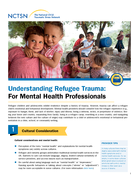
Refugee children and adolescents exhibit resilience despite a history of trauma. However, trauma can affect a refugee
child’s emotional and behavioral development. Mental health providers should
...

consider how the refugee experience (e.g.,
exposure to hunger, thirst, and lack of shelter; injury and illness; being a witness, victim, or perpetrator of violence; fleeing
your home and country; separating from family; living in a refugee camp; resettling in a new country; and navigating
between the new culture and the culture of origin) may contribute to a child or adolescent’s emotional or behavioral presentation
in a clinic, school, or community setting.
more
Traditionally, understanding of the psychiatric and psychological effects of trauma have been developed from studies with adults and then applied to trauma-exposed children with some modifications. While this is an important step to understanding the sequelae of trauma in children and adolescents, t
...
he adverse developmental effects of traumatic exposures on the rapidly evolving neurological, physical, social and psychological capacities of children calls for a developmentally sensitive framework for understanding, assessing and treating trauma-exposed children.
ournal of Child and Adolescent Mental Health 2013: 1-14
more
Diagnostic profiles and predictors of treatment outcome among children and adolescents attending a national psychiatric hospital in Botswana
A. A. Olashore; B. Frank‐Hatitchki: O. Ogunwobi
BioMed Central; Child and Adolescent Psychiatry and Mental Health
(2017)
CC
Olashore et al.
Child Adolesc Psychiatry Ment Health (2017) 11:8 DOI 10.1186/s13034-017-0144-9
Recomendaciones sobre salud mental para la población de niños, niñas y adolescentes a un año del inicio de la pandemia por covid-19. ACTUALIZACIÓN 2021
Direccion Nacional de salud mental y adicciones del Ministerio de Salud
Ministerio de Salud Argentina
(2021)
CC
Mental health recommendations for the child and adolescent population one year after the start of the covid-19 pandemic. UPDATE 2021

The World Health Organization (WHO) is releasing the second edition of its Global Accelerated Action for the Health of Adolescents (AA-HA!) guidance. The document aims to equip governments to respon
...
d to the health and well-being challenges, opportunities and needs of adolescents.
The guidance provides the latest available data on adolescent health and well-being. It also outlines an updated list of core indicators that data should be collected on. Globally, road injury was the top cause of death for adolescent males in 2019. Among female adolescents, the leading causes of death were diarrhoeal diseases among the younger group (10-14 years) and tuberculosis (TB) in the older group (15-19 years).
Over the last 20 years, mortality rates have declined among adolescents globally, with the largest decline in older (15–19 years) adolescent girls. For non-fatal diseases, the burden has not improved over the past two decades, with the main causes of ill health in this category being: mental health conditions (depressive and anxiety disorders, childhood behavioural disorders), iron deficiency anaemia, skin diseases and migraine.
Adolescent well-being depends on a range of factors, including healthy food, education, life skills and employability, connectedness, feeling valued by society, safe and supportive environments, resilience, and the freedom to make choices. To take an appropriately holistic approach, the guidance outlines how to take crosscutting action to support adolescent health and well-being, with mutually reinforcing interventions across sectors, such as health, education, social protection, and telecommunications. Targeted efforts are also required to engage adolescents, as they trust health systems less than adults do and are especially vulnerable to modern-day trends, like online bullying and gaming.
more
Research Square https://doi.org/10.21203/rs.3.rs-4540081/v1
Front Psychiatry. 2022 Aug 11;13:937723. doi: 10.3389/fpsyt.2022.937723. PMID: 36061286; PMCID: PMC9429610. The review findings show that there exist several diverse interventions that promote mental healt
...
h among adolescents in sub-Saharan Africa. These interventions can be implemented in diverse settings including schools, communities, health facilities, and camps, and can be delivered by lay persons.
more
Fact sheet - Adolescent mental health in the WHO European Region (Russian Version)

Bhana A et al. Journal of the International AIDS Society 2021, 24(S2):e25713
Attention deficit hyperactivity disorder (Russian version edited by O Dolenko, D Martsenkovskyi) Расстройство дефицита внимания и гиперактивности
Moriyama TS, Cho AJM, Verin RE et al.
International Association for Child and Adolescent Psychiatry and Allied Professions
(2012)
C1
This publication is intended for professionals training or practicing in mental health and not for the general public. The opinions expressed are those of the authors and do not necessarily represen
...

t the views of the Editor or IACAPAP. This publication seeks to describe the best treatments and practices based on the scientific evidence available at the time of writing as evaluated by the authors and may change as a result of new research. Readers need to apply this knowledge to patients in accordance with the guidelines and
laws of their country of practice. Some medications may not be available in some countries and readers should consult the specific drug information since not all dosages and unwanted effects are mentioned. Organizations, publications and websites are cited or linked to illustrate issues or as a source of further information. This does not mean that authors, the Editor or IACAPAP endorse their content or
recommendations, which should be critically assessed by the reader. Websites may also change or cease to exist.
more
mhGAP is based on evidence-based technical guidelines (4) and provides a set of tools and
training packages to extend service provision. The mhGAP Intervention Guide (mhGAP-IG)
for MNS disorders in non-specialized health settings (8) is a clinical
...

decision-making tool
for assessing and managing priority MNS conditions (depression, psychoses, epilepsy, child
and adolescent mental and behavioural disorders, dementia, disorders due to substance
use, self-harm and suicide).
more
The Guidelines on promotive and preventive mental health interventions for adolescents - Helping Adolescents thrive (HAT), provide evidence-informed recommendations on psychosocial interventions to
...
promote mental health, prevent mental disorders, and reduce self-harm and other risk behaviours among adolescents.
The HAT Guidelines aims to inform policy development, service planning and the strengthening of health and education systems, and facilitate mainstreaming of adolescent mental health promotion and prevention strategies across sectors and delivery platforms.
more
mhGAP Intervention Guide Mental Health Gap Action Programme Version 2.0 for mental, neurological and substance use disorders in non-specialized
...
health settings
The key updates include: content update in various sections based on new evidence; design changes for enhanced usability; a streamlined and simplified clinical assessment that includes an algorithm for follow-up; inclusion of two new modules
- Essential Care and Practice that includes general guidelines and Iminterventions and implementation module to support the proposed interventions by necessary infrastructure and resources; and, revised modules for Psychoses, Child and Adolescent Mental and Behavioural Disorders and Disorders due to Substance Use
more
Early Adolescent Skills for Emotions (EASE) is an evidence-based group psychological intervention to help 10–15-year-olds affected by internalizing problems (e.g. stress and symptoms of anxiety, depression) in communities exposed to adversity. Pub
...
lished by the World Health Organization (WHO) and United Nations Children’s Fund (UNICEF), EASE aims to support adolescents and their caregivers with skills to reduce distress. The EASE training manual accompanies the EASE intervention manual and is designed to be used to train EASE helpers (those who deliver the EASE intervention to adolescents and caregivers) and EASE trainers/supervisors (those who will go on to train/supervise future EASE helpers).
more
Sangath
(2019)
CC
Sangath is a non-governmental, not-for-profit organisation committed to improving health across the life span by empowering existing community resources to provide appropriate physical, psychological and social therapies. Its primary focus areas inc
...
lude child development, adolescent and youth health, and adult health and chronic disease.
Started in 1996 by seven professionals in Goa, Sangath developed a vision to provide professional healthcare services for developmental disabilities and mental health problems. Today, it is one of the largest NGOs in the state, with more than 100 service providers, two centres in Goa, projects across India, collaborations with leading institutions in the world, and international recognition for its path-breaking research and intervention programmes in the community.
more
These guidelines were developed as part of Kenya's fast-track plan to end AIDS among adolescents and young people. Based on research into adolescent and young key populations in Kenya and elsewhere, they outline a package of HIV prevention services,
...
and emphasize the need to combine biobehavioural interventions with services in education, job skills training, mental health, and social care and protection.
more
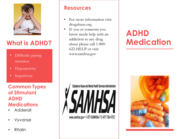
The pamphlet "ADHD Medications" provides an overview of medications commonly used to treat ADHD, such as Adderall, Vyvanse, and Ritalin. It explains that these medications do not enhance intelligence and affect individuals differently based on dosage and medical history. Potential dangers of misuse
...

include insomnia, appetite changes, increased heart rate, and reliance on the drugs for studying. Combining ADHD medications with alcohol or sleeping pills is particularly dangerous. The pamphlet emphasizes the importance of proper medical supervision and provides resources for addiction support.
more