Filter
157
Text search:
Insect
control
Featured
Recommendations
21
New Publications
54
Language
Document type
No document type
86
Guidelines
25
Studies & Reports
18
Manuals
11
Training Material
6
Fact sheets
6
Strategic & Response Plan
4
Situation Updates
1
Countries / Regions
Global
7
Latin America and the Carribbean
4
Nigeria
3
Philippines
3
India
3
Nepal
3
Brazil
3
Cameroon
2
Ghana
2
Chad
2
Kenya
2
Yemen
2
South–East Asia Region
2
Guinea
1
Burkina Faso
1
Liberia
1
Senegal
1
Congo, Democratic Republic of
1
Mali
1
Côte d’Ivoire / Ivory Coast
1
USA
1
Uganda
1
Niger
1
Zimbabwe
1
Zambia
1
Gambia
1
Mauritania
1
South Africa
1
Bangladesh
1
Namibia
1
North Macedonia
1
Angola
1
Madagascar
1
Lesotho
1
Myanmar / Burma
1
West and Central Africa
1
Middle East and North Africa
1
Western and Central Europe
1
Africa
1
Venezuela
1
Authors & Publishers
Publication Years
Category
Countries
31
Key Resources
20
Public Health
19
Clinical Guidelines
14
Capacity Building
4
Women & Child Health
3
Pharmacy & Technologies
2
Toolboxes
NTDs
22
Zika
18
Planetary Health
15
Pharmacy
6
Specific Hazards
5
AMR
5
COVID-19
5
Malaria
5
Conflict
4
Natural Hazards
4
Rapid Response
4
Ebola & Marburg
3
Caregiver
3
Refugee
2
HIV
2
Mental Health
2
2.0 Rapid Response
2
Disability
1
Cholera
1
Advising principles. The purpose of this document is to support competent authorities in charge of IHR implementation to improve national capacities for the prevention, detection and control of events, by strengthening communications and coordinatio
...
A survey was conducted in countries in all six WHO regions and focused on the building blocks that are considered prerequisites to combat antimicrobial resistance: a comprehensive national plan, laboratory capacity to undertake surveillance for resistant microorganisms, access to safe, effective ant
...
Recent forecasts by the Food and Agriculture Organization of the United Nations (FAO) have indicated a risk of locust invasion in West Africa from June 2020. From East Africa, some swarms could reach the eastern part of the Sahel and continue westwards from Chad to Mauritania.
Surveillance and
...
This manual addresses all the issues. It focus on the cycle of microbes, antibiotics, vaccination, AMR,
infection prevention and control. It will support nurses on better action and also on communication towards
their patients and families.
WSTP-I is the second part of the WHO wheelchair service training package series and focusses more on addressing the needs of people who have severe difficulties in walking and moving around and also having poor postural control .
The school and a community teaching modules are aimed at preventing vector-borne diseases through community participation. Meanwhile, the interactive toolkit is meant to be help raise awareness on health, sanitation and vector control. These materia
...
The Lancet Volume 390, Issue 10110p2397-2409November 25, 2017.
Human African trypanosomiasis (HAT), also called sleeping sickness, is a parasitic infection that almost invariably progresses to death, unless treatment is provided. HAT caused devastating epidemics during the 20th century. Thanks to
...
Drugs and medical supplies are dispensed at the cutting edge level of the interface between the public health system and the people. Availability or lack of it brings either credit or discredit to the public health system. The primary reason for holding stocks of medicines and medical supplies in a
...
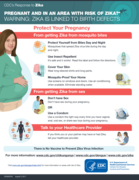
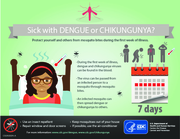
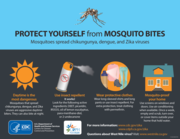
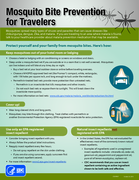
Health communication has proven to play a crucial role in addressing diseases such as dengue, Zika and chikungunya, for which there are no definitive or easily accessible vaccines. In this context, this discipline becomes a fundamental tool to promote the change behavior and promote preventive pract
...
2nd edition. This document describes the latest methods and procedures for disinsection of internal areas of passenger, military and cargo aircraft to prevent international transport of mosquito vectors of human diseases and protect aircraft passengers and airline crew. It provides updates on insect
...
The document provides guidance on the tools, activities and strategies required to achieve malaria elimination and prevent re-establishment of transmission in countries, regardless of where they lie across the spectrum of transmission intensity. It is intended to inform national malaria elimination
...
The use of safe and efficacious insecticides against the adult and larval populations of mosquito vectors is one of the most effective ways to rapidly interrupt transmission of Zika virus, as well as other viruses transmitted by Aedes mosquitoes such as chikungunya and dengue.
This document offers suggested risk communication actions in relation to Zika virus infection and other health issues linked to this disease. It is directed toward ministers of health and other health sector actors who, with their national (multidisciplinary) teams for communication and social mobil
...
Working document from an informal consultation of experts. A Protocol for risk assessment at the field level. The purpose of document is to provide guidance on the methodology to be used for assessing, at field level, the yellow fever virus circulation in areas at risk, and is primarily intended fo
...
There is a broad consensus nowadays that the Earth is warming up as a result of greenhouse gas emissions caused by anthropogenic activities. It is also clear that current trends in the fields of energy, development and population growth will lead to continuous and ever more dramatic climate change.
...
Recent efforts to fight malaria in the Greater Mekong Subregion (GMS) have yielded impressive results. According to the latest WHO estimates, the six GMS countries cut their malaria case incidence by an estimated 54% between 2012 and 2015. Malaria death rates fell by 84% over the same period.
I ...
I ...
Zika Virus Infection - Step-by-Step Guide to Risk Communication and Community Engagement
recommended
This document provides Technical content on ZIKV, its manifestations, complications, modes of transmission, and prevention measures to be used in answering frequently asked questions and conveying messages in information and communication materials, community talks, press conferences, etc.