
Filter
5390
Text search:
presence
Featured
Recommendations
515
New Publications
1460
Language
Document type
No document type
3024
Studies & Reports
888
Guidelines
731
Manuals
318
Strategic & Response Plan
181
Training Material
89
Fact sheets
89
Situation Updates
43
Resource Platforms
9
Infographics
8
Brochures
5
Dashboards/Maps
3
Online Courses
1
Videos
1
Countries / Regions
India
347
Global
195
Kenya
139
Ethiopia
117
Sierra Leone
112
Nigeria
101
Nepal
100
Liberia
96
South Africa
95
Western and Central Europe
91
Myanmar / Burma
89
Uganda
84
Tanzania
80
Bangladesh
76
Syria
75
Malawi
70
Latin America and the Carribbean
68
Africa
65
Philippines
63
Congo, Democratic Republic of
61
Rwanda
59
Ghana
56
Zambia
55
Ukraine
55
South Sudan
45
Namibia
40
Zimbabwe
37
Venezuela
33
Haiti
31
Mozambique
31
Indonesia
30
Guinea
29
Yemen
27
South–East Asia Region
27
Central African Republic
25
Cambodia
24
Lesotho
24
Pakistan
23
Brazil
23
West and Central Africa
23
Senegal
22
Cameroon
20
Afghanistan
20
Eastern Europe
20
Burkina Faso
19
Germany
19
Asia
18
East and Southern Africa
17
Eswatini/ Swaziland
16
Colombia
16
Botswana
16
Lebanon
15
Mali
14
Somalia
13
USA
12
Middle East and North Africa
12
Eastern Europe and Central Asia
12
Turkey
11
Thailand
11
Russia
11
Jordan
10
Sudan
10
Vietnam
10
Benin
9
Sri Lanka
9
Togo
8
Peru
8
Madagascar
8
Côte d’Ivoire / Ivory Coast
7
China
7
Burundi
7
Western Pacific Region
7
Albania
7
Laos
7
Moldova
7
Iran
7
Argentina
6
North America
6
Niger
5
Chad
5
Palestine
5
United Kingdom
5
Iraq
4
North Macedonia
4
Ecuador
4
Libya
4
Angola
4
Guatemala
4
Chile
4
Timor Leste/ East Timor
4
Tajikistan
4
Georgia
4
Portugal
4
Spain
4
Gambia
3
Singapore
3
Papua New Guinea
3
Serbia
3
Hungary
3
Croatia
3
Honduras
3
Mexico
3
Paraguay
3
Poland
3
Kyrgyzstan
3
Morocco
2
Saudi Arabia
2
Dominican Republic
2
El Salvador
2
Greece
2
Fiji
2
Bhutan
2
Canada
2
Estonia
2
Romania
2
Kazakhstan
2
Turkmenistan
2
Jamaica
2
Tunisia
2
Algeria
2
Belarus
2
Guyana
2
Guinea-Bissau
1
Egypt
1
Malaysia
1
Ireland
1
Vanuatu
1
Bolivia
1
Nicaragua
1
Other region
1
Italy
1
Djibouti
1
Armenia
1
Mongolia
1
Southern Africa
1
Qatar
1
Lithuania
1
Uzbekistan
1
Australia
1
Gabon
1
Japan
1
France
1
Maldives
1
Mauritius
1
Norway
1
Azerbaijan
1
Israel
1
Bosnia and Herzegovina
1
Belize
1
Costa Rica
1
Panama
1
Authors & Publishers
Publication Years
Category
Countries
1988
Clinical Guidelines
475
Key Resources
332
Public Health
256
Women & Child Health
252
Capacity Building
111
Pharmacy & Technologies
71
Annual Report MEDBOX
1
Toolboxes
Mental Health
413
COVID-19
375
HIV
320
TB
266
NTDs
235
Conflict
194
Ebola & Marburg
189
Disability
185
AMR
152
Planetary Health
147
Caregiver
132
Refugee
126
Rapid Response
113
NCDs
101
Malaria
85
Natural Hazards
83
Pharmacy
76
Zika
63
2.0 Rapid Response
57
Global Health Education
50
Social Ethics
45
Specific Hazards
44
Cholera
39
Polio
33
Health Financing Toolbox
32
Typhoon
7
Scientific Brief, 17 June 2020

While motivational factors vary, opportunities for career advancement, stimulating and challenging tasks, opportunities for promotion, and co-worker recognition are core factors that can engender retention of rural health workers. Interventions are required to enhance rural health worker motivation
...

Tax capacity—the policy, institutional, and technical capabilities to collect tax revenue—is part of a deeper process of state building that is essential for achieving the sustainable development goals. This Staff Discussion Note shows that developing countries have made some progress in revenue
...

This paper was commissioned by N´weti and Wemos as part
of the project “Equitable health financing for a strong health
system in Mozambique”. Its purpose is to contribute to the
debate of the Mozambican Ministry of Health’s draft Health
Sector Financing Strategy (HSFS) 2025 – 2034

In the last three decades, health financialization has surged in
several creative ways, yet this growing phenomenon remains surprisingly
unknown, and neglected, in the global health arena. Financialization in the
health domain could be described as the uncontrolled expansion of finance along vari
...

Africa’s health sector is facing an unprecedented financing crisis, driven by a sharp decline of 70% in Official Development Assistance (ODA) from 2021 to 2025 and deep-rooted structural vulnerabilities. This collapse is placing immense pressure on Africa’s already fragile health systems as ODA
...

Development assistance for health (DAH)
plays a vital role in supporting health programmes in lowand middle-income countries. While DAH has historically
focused on infectious diseases and maternal and child
health, there is a lack of comprehensive analysis of DAH
trends, strategic shifts and the
...

This paper examines the implications of the IMF’s April 2024 macro-fiscal forecast updates on government health expenditure (GHE) across 170 economies through 2029, covering nearly all years remaining to achieve the Sustainable Development Goals (SDGs). The findings reveal wide disparities in gove
...

Conditioned domestic financing policy, referring to the domestic financing of health projects, programs, and national responses conditioned by global health funding agencies and recipient country governments, is one mechanism to promote sustainability and country ownership. We aim to understand how
...

For this report, the Task Force commissioned
additional background papers on health taxes to
update the evidence, assess short-term revenue
potential, and understand the role of health taxes
in the current era of multiple crises. We find that
health taxes continue to be underutilized despite th
...

The COVID-19 pandemic exposed critical gaps in the global response to health crises, particularly in the financing of pandemic prevention, preparedness, response, recovery, and reconstruction. This chapter presents a comprehensive framework for pandemic financing that spans the entire pandemic cycle
...

There has never been a more critical moment to invest in WHO, and strengthen the unique role it plays in global health. Now is the time to sustainably finance WHO and invest in a healthy return for all.

All malaria-endemic countries in the Region of the Americas have taken on the challenge to eliminate the disease and to put in place measures to orient their health programs and strategies in that direction. This manual explains how to implement measures to achieve malaria elimination and prevent it
...

The National Strategic Plan for Malaria Elimination in India (2023-2027) focuses on achieving malaria elimination by 2030, in alignment with the Global Technical Strategy. The document outlines the strategies, targets, and goals for malaria elimination, aiming for zero indigenous malaria cases by 20
...
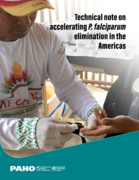
This technical note provides guidance on actions to accelerate P. falciparum elimination in areas close to achieving this goal without compromising unified malaria elimination efforts (P. vivax - P. falciparum), while contributing to the country's ultimate goal of eliminating malaria overall.

The guidelines are primarily intended for health-care professionals working in first- or second-level health-care facilities, including emergency, inpatient and outpatient services. They are also directed at policy-makers, health-care planners and programme managers, academic institutions, non-gover
...
WHO guidelines on meningitis diagnosis, treatment and care. Web Annex A. Quantitative evidence reports
recommended
The guidelines are primarily intended for health-care professionals working in first- or second-level health-care facilities, including emergency, inpatient and outpatient services. They are also directed at policy-makers, health-care planners and programme managers, academic institutions, non-gover
...

The guidelines are primarily intended for health-care professionals working in first- or second-level health-care facilities, including emergency, inpatient and outpatient services. They are also directed at policy-makers, health-care planners and programme managers, academic institutions, non-gover
...

WHO guidelines on meningitis diagnosis, treatment and care. Web Annex C. Evidence-to-Decision frameworks
recommended
The guidelines are primarily intended for health-care professionals working in first- or second-level health-care facilities, including emergency, inpatient and outpatient services. They are also directed at policy-makers, health-care planners and programme managers, academic institutions, non-gover
...
