
Filter
5331
Text search:
policy
actions
Featured
Recommendations
428
New Publications
1372
Language
Document type
No document type
2731
Studies & Reports
1039
Guidelines
672
Manuals
353
Strategic & Response Plan
300
Training Material
94
Fact sheets
79
Situation Updates
31
Resource Platforms
11
Infographics
11
Brochures
5
Online Courses
4
Countries / Regions
Global
285
Kenya
163
India
128
Ethiopia
104
Western and Central Europe
102
Liberia
99
Uganda
99
Myanmar / Burma
97
Nepal
96
Sierra Leone
94
Nigeria
89
South Africa
85
Latin America and the Carribbean
82
Africa
70
Bangladesh
69
Zambia
68
Tanzania
66
Rwanda
62
Malawi
62
Ghana
59
Namibia
53
Ukraine
48
Syria
44
South–East Asia Region
42
Philippines
40
Congo, Democratic Republic of
39
Indonesia
37
Eastern Europe
36
Asia
35
Lesotho
32
Guinea
30
South Sudan
29
West and Central Africa
29
East and Southern Africa
28
Senegal
27
Zimbabwe
27
Cambodia
27
Mozambique
27
Middle East and North Africa
24
Burkina Faso
23
Cameroon
21
Haiti
21
Brazil
20
Benin
19
Central African Republic
19
Eastern Europe and Central Asia
19
Yemen
18
Venezuela
18
Russia
18
Botswana
17
Afghanistan
16
Eswatini/ Swaziland
16
Pakistan
15
Colombia
15
Western Pacific Region
15
Sudan
13
Thailand
12
Germany
11
Lebanon
11
Moldova
11
Vietnam
11
Mali
10
Somalia
10
Jordan
9
Madagascar
9
Laos
9
USA
8
Côte d’Ivoire / Ivory Coast
7
China
7
Peru
7
Sri Lanka
7
Chile
7
Paraguay
7
Albania
7
Tajikistan
7
North America
7
Iraq
6
Burundi
6
Southern Africa
6
Timor Leste/ East Timor
6
Togo
5
Turkey
5
Ecuador
5
Iran
5
Kyrgyzstan
5
Guinea-Bissau
4
Egypt
4
Gambia
4
Papua New Guinea
4
Argentina
4
Angola
4
Mexico
4
Bhutan
4
Serbia
3
Honduras
3
El Salvador
3
Bolivia
3
Libya
3
Fiji
3
Poland
3
Palestine
3
Canada
3
Romania
3
Turkmenistan
3
United Kingdom
3
Bosnia and Herzegovina
3
Niger
2
Chad
2
Malaysia
2
Singapore
2
North Macedonia
2
Hungary
2
Croatia
2
Greece
2
Armenia
2
Kazakhstan
2
Georgia
2
Mauritius
2
Portugal
2
Spain
2
Azerbaijan
2
Belarus
2
Dominican Republic
1
Guatemala
1
Nicaragua
1
North Korea
1
Italy
1
Qatar
1
Bulgaria
1
Estonia
1
Lithuania
1
Japan
1
Denmark
1
Belgium
1
Maldives
1
Israel
1
Belize
1
Costa Rica
1
Panama
1
Authors & Publishers
Publication Years
Category
Countries
1850
Key Resources
455
Public Health
338
Women & Child Health
328
Clinical Guidelines
253
Capacity Building
98
Pharmacy & Technologies
35
Toolboxes
COVID-19
425
HIV
405
Mental Health
365
Planetary Health
311
Disability
275
TB
207
AMR
182
Caregiver
154
Conflict
146
Global Health Education
119
Refugee
118
Ebola & Marburg
115
Rapid Response
106
NTDs
98
NCDs
98
2.0 Rapid Response
84
Natural Hazards
74
Pharmacy
74
Malaria
61
Health Financing Toolbox
60
Polio
30
Specific Hazards
29
Social Ethics
27
Cholera
21
Zika
21
Typhoon
2
South Sudan
1

This Communication Guide for Malaria Control Interventions is aligned with Tanzania’s Malaria Strategic Plan (2015–2020) and provides comprehensive guidance on the implementation of Social and Behaviour Change Communication (SBCC) for the prevention, diagnosis and treatment of malaria. It is int
...

This Implementation Kit (I-Kit), developed by the Health Communication Capacity Collaborative (HC3), helps national and local stakeholders to design country-specific social and behavioural change communication (SBCC) campaigns that address the threat posed by substandard, spurious, falsified and fal
...
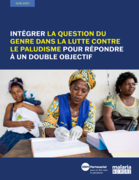
Cette note d'information souligne l'importance d'intégrer une approche sensible au genre dans les efforts de lutte contre le paludisme dans le monde entier. Il montre que la prise en compte des vulnérabilités et des besoins spécifiques à chaque sexe - en particulier ceux des femmes et des enfan
...

Community led-monitoring is based on the principle that «Nothing that is done for us should
be done without us”. The combination of this principle with evidence shows that community-led
monitoring is an important driver of improved service delivery and health outcomes that needs to
be re-empha
...

Pillar 3 of the Global technical strategy for malaria 2016–2030 calls for the transformation of malaria surveillance into a core intervention in all malaria-endemic countries, as well as in countries which have eliminated malaria but remain susceptible to re-establishment of transmission. This ref
...

Anopheles stephensi is an invasive mosquito species which has been found spreading across Africa. While this species presents a new challenge for malaria control on the continent, its surveillance and management have been ongoing in Asia for many years. This document aims to summarize key lessons fr
...
La lutte antivectorielle est un élément essentiel des stratégies de prévention, de contrôle et d'élimination du paludisme, car elle peut s'avérer très efficace pour assurer la protection des personnes et/ou réduire la transmission de la maladie.

Vector control, alongside case management, remains the most effective approach to controlling and eliminating malaria. Key interventions, such as indoor residual spraying (IRS) and long-lasting insecticidal nets (LLINs), have significantly reduced malaria transmission in many African countries. This
...


The framework recommends expanded coverage of malaria diagnostic and treatment services, intensified vector control to drive down transmission, strengthened malaria surveillance, and increased transborder collaboration, especially in terms of efforts to control the sale and use of artemisinin monoth
...

The National Strategic Plan on Malaria Prevention and Elimination Period 2021 – 2025 seeks to build on the previous national successes of the National Institute of Malariology, Parasitology, and Entomology (NIMPE) while addressing current challenges to reduce the overall burden of malaria in the S
...

This toolkit is a comprehensive set of practical tools and resources designed to support country-level risk communication and community engagement (RCCE) practitioners, decision-makers and partners to plan and implement readiness and response activities for Ebola disease outbreaks. The toolkit conta
...

This toolkit is a comprehensive set of practical tools and resources designed to support country-level risk communication and community engagement (RCCE) practitioners, decision-makers, and partners to plan and implement readiness and response activities for yellow fever outbreaks. The toolkit conta
...

This toolkit is a comprehensive set of practical tools and resources designed to support country-level risk communication and community engagement (RCCE) practitioners, decision-makers, and partners to plan and implement readiness and response activities for yellow fever outbreaks. The toolkit conta
...

This guidance covers different options for banning or phasing out a pesticide and suggests related risk reduction measures to be taken during the phase-out period. A key focus of this guidance is how to take action to manage, prevent, minimize, and communicate about identified risks during the imple
...

This document highlights the latest WHO recommendations designed to optimize health outcomes, streamline delivery and address persistent barriers to prevention and care. It especially focuses on people often left behind in service delivery, including adolescents and young people, key populations and
...

This guide provides strategic direction for host countries, event organizers, health authorities, and key stakeholders to effectively plan and conduct Simulation Exercises (SimEx) and After Action Reviews (AARs) for mass gathering events. Packed with practical tools, it empowers users to seamlessly
...

National tuberculosis (TB) prevalence surveys provide a nationally representative measurement of the burden of TB disease in the population, at a given point in time. Repeat surveys allow assessment of trends and tracking of progress towards national and global targets for reductions in TB disease b
...
This operational guidance provides a structured approach to support countries in sustaining priority services for HIV, viral hepatitis and sexually transmitted infections in the context of reduced external funding. The guidance is intended for national governments, public health programmes, communit
...

WHO guidelines for clinical management of arboviral diseases: dengue, chikungunya, Zika and yellow fever
recommended
The new WHO guidelines provide clinical management recommendations for four of the most widespread arboviruses affecting humans: dengue, chikungunya, Zika, and yellow fever.
An integrated approach is vital, as these four diseases often present with similar symptoms, especially in the early stages
...
