
Filter
5275
Text search:
tuberculosis
Featured
Recommendations
434
New Publications
1335
Language
Document type
No document type
3078
Studies & Reports
820
Guidelines
608
Manuals
233
Strategic & Response Plan
179
Fact sheets
102
Situation Updates
90
Training Material
84
Infographics
27
Resource Platforms
26
Brochures
11
Videos
7
Online Courses
6
Dashboards/Maps
2
App
1
Countries / Regions
India
241
Global
202
Western and Central Europe
136
Kenya
129
South Africa
120
Nepal
98
Latin America and the Carribbean
97
Ethiopia
94
Uganda
93
Tanzania
87
Nigeria
86
Malawi
85
Rwanda
78
Eastern Europe
75
Liberia
72
Zambia
72
Africa
72
Myanmar / Burma
68
Sierra Leone
63
Namibia
63
Bangladesh
62
Ghana
60
Ukraine
56
Colombia
55
Lesotho
53
Paraguay
48
Germany
46
Argentina
45
Peru
44
Cambodia
41
Indonesia
40
Venezuela
40
Asia
38
Mozambique
35
Zimbabwe
33
Philippines
33
South–East Asia Region
33
Russia
33
Senegal
30
Brazil
27
Bolivia
26
Botswana
25
Congo, Democratic Republic of
23
El Salvador
23
Haiti
22
South Sudan
19
Syria
18
Burkina Faso
17
East and Southern Africa
17
Tajikistan
16
Cameroon
13
West and Central Africa
13
Moldova
13
Pakistan
12
Benin
12
Eswatini/ Swaziland
12
Albania
12
Guinea
11
Ecuador
11
Chile
11
Georgia
11
Middle East and North Africa
10
Eastern Europe and Central Asia
10
Afghanistan
9
Yemen
9
Papua New Guinea
8
Armenia
8
Thailand
7
Sudan
7
Madagascar
7
Vietnam
7
Somalia
6
Timor Leste/ East Timor
6
China
5
Central African Republic
5
North Macedonia
5
Angola
5
Mexico
5
Nicaragua
5
Sri Lanka
5
North America
5
Uruguay
5
Saudi Arabia
4
Jordan
4
Lebanon
4
Honduras
4
Guatemala
4
Western Pacific Region
4
Laos
4
Estonia
4
Romania
4
Iran
4
Jamaica
4
Guinea-Bissau
3
USA
3
Togo
3
Dominican Republic
3
Hungary
3
Poland
3
Spain
3
Azerbaijan
3
Mali
2
Morocco
2
Iraq
2
Chad
2
Gambia
2
Switzerland
2
Bhutan
2
Palestine
2
Southern Africa
2
Turkmenistan
2
Japan
2
Turkey
1
Egypt
1
Serbia
1
Burundi
1
Greece
1
Libya
1
Other region
1
Solomon Islands
1
North Korea
1
Djibouti
1
Mongolia
1
Qatar
1
Bulgaria
1
Slovakia
1
Uzbekistan
1
Kyrgyzstan
1
Kazakhstan
1
Gabon
1
Denmark
1
Maldives
1
Tunisia
1
United Kingdom
1
Norway
1
Portugal
1
Belarus
1
French Guyana
1
Belize
1
Costa Rica
1
Panama
1
Authors & Publishers
Publication Years
Category
Countries
2222
Clinical Guidelines
369
Public Health
241
Women & Child Health
177
Key Resources
146
Capacity Building
64
Pharmacy & Technologies
58
Annual Report MEDBOX
1
Toolboxes
TB
1146
HIV
701
COVID-19
253
AMR
176
Mental Health
123
Health Financing Toolbox
118
NTDs
115
Caregiver
94
Global Health Education
86
Pharmacy
86
NCDs
82
Refugee
74
Ebola & Marburg
71
Conflict
70
Planetary Health
67
Malaria
60
Rapid Response
58
Disability
48
Polio
35
2.0 Rapid Response
34
Natural Hazards
30
Cholera
8
Zika
6
Social Ethics
5
Specific Hazards
3
South Sudan
1

Fragile Beginnings. The Fragile Beginnings series examines the growing body of research on the unique vulnerabilities of children: in utero and at birth, during infancy and childhood and throughout adolescence. Its purpose is to enable evidence-based advocacy and action on children’s environmental
...

The framework recommends expanded coverage of malaria diagnostic and treatment services, intensified vector control to drive down transmission, strengthened malaria surveillance, and increased transborder collaboration, especially in terms of efforts to control the sale and use of artemisinin monoth
...
Getting back on track to cutting malaria by 90% could boost African economies by $127bn by 2030. This important new report shows we can save lives, boost economies and trade, creating a healthier world
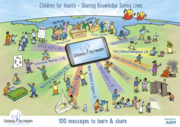
This document outlines key health messages for children and their caregivers, with a focus on the prevention and early treatment of common illnesses. Topics covered include malaria, diarrhoea, malnutrition, respiratory infections, intestinal worms, HIV/AIDS and accident prevention. The importance of
...
The '100 Health Messages for Children to Learn & Share' is an educational resource developed by Children for Health. It is aimed at children aged 8–14, particularly young adolescents (aged 10–14), who often care for younger siblings. The set contains 100 simple, accurate and adaptable health mes
...

A historic funding crisis is threatening to unravel decades of progress unless countries can make radical shifts to HIV programming and funding. The report highlights the impact that the sudden, large-scale funding cuts from international donors are having on countries most affected by HIV. Yet it a
...

Offering additional pre-exposure prophylaxis (PrEP) choices has the potential to increase uptake and effective use of PrEP, and of HIV prevention overall, as it allows people to choose a method that they prefer.
In this guideline, WHO recommends an offering long-acting injectable lenacapavir (LEN
...

Guidelines on lenacapavir for HIV prevention and testing strategies for long-acting injectable pre-exposure prophylaxis. Web Annex B

The Ghana National Malaria Strategic Plan 2021–2025 aims to reduce malaria mortality by 90% and malaria cases by 50% (using 2019 as baseline) and to achieve pre-elimination in at least six districts by 2025. The plan focuses on scaling up prevention measures like distributing insecticide-treated n
...

The National Strategic Plan on Malaria Prevention and Elimination Period 2021 – 2025 seeks to build on the previous national successes of the National Institute of Malariology, Parasitology, and Entomology (NIMPE) while addressing current challenges to reduce the overall burden of malaria in the S
...

The Rwanda Malaria Strategic Plan 2020–2024 outlines Rwanda’s national strategy to reduce malaria morbidity and mortality by at least 50% compared to 2019 levels. The vision is a malaria-free Rwanda contributing to socioeconomic development.
The plan includes strengthening prevention through lo
...

This publication provides guidance for planning country-specific programming to achieve the triple elimination of mother-to-child (or vertical) transmission of HIV, syphilis and hepatitis B virus. It is based on the WHO Triple Elimination Framework, which promotes an integrated, person-centred appro
...
This operational guidance provides a structured approach to support countries in sustaining priority services for HIV, viral hepatitis and sexually transmitted infections in the context of reduced external funding. The guidance is intended for national governments, public health programmes, communit
...

The 2024 edition reviews more than 50 health-related indicators from the Sustainable Development Goals and WHO’s Thirteenth General Programme of Work. It also highlights the findings from the Global health estimates 2021, notably the impact of the COVID-19 pandemic on life expectancy and healthy l
...

Growing emergencies and displacements across the world demand increasingly complex interventions and responses. The World Health Organization (WHO) has developed Malaria control in emergencies: a field manual to provide technical guidance to help partners respond effectively to malaria in emergency
...

In line with the Defeating meningitis by 2030: a global road map, the WHO guidelines on meningitis diagnosis, treatment and care Executive Summary provides a summary of the evidence-based recommendations for the clinical management of children and adults with community-acquired meningitis, including
...

The 2022 report reviews the global malaria diagnostics market and technological landscape to support Unitaid’s 2023–2027 strategy for quality malaria case management. The report highlights the stalled progress of malaria control efforts, the gaps in access to diagnostics and the public health im
...
This document provides technical guidance for manufacturers seeking World Health Organization (WHO) prequalification of in vitro diagnostic devices (IVDs) for malaria, with a focus on rapid diagnostic tests (RDTs) for symptomatic patients. It summarises the minimum performance requirements, includin
...
This document provides technical guidance for manufacturers seeking World Health Organization (WHO) prequalification of in vitro diagnostic devices (IVDs) for malaria, with a focus on rapid diagnostic tests (RDTs) for symptomatic patients. It summarises the minimum performance requirements, includin
...

For education to be competency-based and effective, appropriate training methodologies have to be used to support the learner to have the appropriate knowledge and to translate this knowledge into skills and competencies. Such education and training should lead to a change in attitudes, beliefs a
...
