Filter
5528
Filtered Results: 5528
Text search:
World
Health
Organization
World
Health
Organization
WHO
Team
Control
of
Neglected
Tropical
Diseases
Featured
Recommendations
549
New Publications
1632
Language
Document type
No document type
3091
Studies & Reports
824
Guidelines
740
Manuals
385
Strategic & Response Plan
239
Training Material
102
Fact sheets
70
Situation Updates
47
Resource Platforms
12
Brochures
11
Online Courses
4
Infographics
3
Countries / Regions
India
243
Global
216
Kenya
204
Sierra Leone
168
Liberia
139
Uganda
136
South Africa
129
Nigeria
128
Ethiopia
123
Nepal
108
Myanmar / Burma
92
Tanzania
91
Rwanda
90
Ghana
85
Africa
85
Western and Central Europe
83
Zambia
83
Malawi
79
Bangladesh
77
Syria
73
Namibia
63
Congo, Democratic Republic of
57
Latin America and the Carribbean
55
South Sudan
52
Philippines
51
Ukraine
49
Guinea
45
Lesotho
40
Cambodia
38
Mozambique
33
Zimbabwe
32
South–East Asia Region
32
Indonesia
32
Eastern Europe
31
Senegal
30
Asia
30
West and Central Africa
30
Botswana
27
East and Southern Africa
26
Haiti
24
Russia
24
Burkina Faso
21
Eswatini/ Swaziland
21
Yemen
20
Middle East and North Africa
18
Cameroon
17
Venezuela
17
Afghanistan
16
Eastern Europe and Central Asia
16
Pakistan
15
Germany
14
Madagascar
14
Benin
13
China
13
Central African Republic
13
Mali
13
Colombia
12
Western Pacific Region
12
Brazil
12
Jordan
11
Lebanon
11
Vietnam
11
Somalia
11
Thailand
10
Sudan
10
Albania
9
Moldova
9
Laos
8
Iraq
8
Togo
7
USA
7
Côte d’Ivoire / Ivory Coast
7
Sri Lanka
7
Tajikistan
6
Kyrgyzstan
6
Burundi
6
Palestine
6
Chad
6
North Macedonia
5
Timor Leste/ East Timor
5
Mexico
5
Gambia
5
Iran
5
North America
5
Angola
5
Bhutan
5
Serbia
4
Kazakhstan
4
Armenia
4
Guinea-Bissau
4
Hungary
4
Turkmenistan
4
Jamaica
4
Argentina
4
Egypt
4
Poland
4
El Salvador
3
Turkey
3
Niger
3
Peru
3
Paraguay
3
Portugal
3
Southern Africa
3
Papua New Guinea
3
Georgia
3
Libya
3
Chile
2
Estonia
2
Bulgaria
2
Mauritania
2
Croatia
2
Lithuania
2
Japan
2
Mauritius
2
United Kingdom
2
Spain
2
Azerbaijan
2
Belarus
2
Bosnia and Herzegovina
2
Romania
2
Honduras
2
Fiji
1
Singapore
1
Congo-Brazzaville
1
Uzbekistan
1
Malaysia
1
Morocco
1
Qatar
1
Italy
1
Saudi Arabia
1
Gabon
1
France
1
Maldives
1
Norway
1
Morocco
1
Latvia
1
Bolivia
1
Guyana
1
Djibouti
1
Slovakia
1
Greece
1
Ecuador
1
Guatemala
1
Authors & Publishers
Publication Years
Category
Countries
2257
Key Resources
445
Clinical Guidelines
402
Public Health
345
Women & Child Health
256
Capacity Building
125
Pharmacy & Technologies
52
Annual Report MEDBOX
2
Toolboxes
COVID-19
453
HIV
364
Mental Health
336
Ebola & Marburg
244
TB
233
Caregiver
190
Conflict
170
AMR
158
Disability
152
NTDs
150
Rapid Response
149
Planetary Health
136
NCDs
96
Pharmacy
91
2.0 Rapid Response
88
Refugee
73
Global Health Education
71
Malaria
69
Natural Hazards
68
Health Financing Toolbox
47
Specific Hazards
39
Zika
39
Cholera
37
Polio
26
Social Ethics
16
Typhoon
3
South Sudan
2
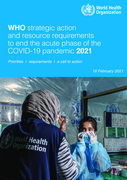
WHO has a unique combination of technical public health and scientific expertise, and a global operational footprint, with field offices in more than 150 countries. In 2020, this global, technical, and operational reach meant WHO was able to support countries around the world in every aspect of COVI...
To provide a foundation for the strategic policy and programme development needed to ensure the sustainable implementation of effective interventions for reducing the global burden of PPH
Cervical intraepithelial neoplasia (CIN) is a premalignant lesion that may exist at any one of three stages: CIN1, CIN2, or CIN3. If left untreated, CIN2 or CIN3 (collectively referred to as CIN2+) can progress to cervical cancer. Instead of screening and diagnosis by the standard sequence of cytolo...


The internationally recognized criteria for diagnosis of neurocysticercosis include a requirement for neuroimaging techniques, such as computerized tomography (CT) and/or magnetic resonance imaging (MRI), ideally supported by serology. These facilities are not available in all settings, especially i...
The WHO Toolkit for the care and support of people affected by complications associated with Zika virus has been developed to serve as a model guide, with the goal of enhancing country preparedness for Zika virus outbreaks. The toolkit is intended to provide a systems approach involving public heal...

The Committee discussed the implications for preparedness for smallpox-like events reflected by the ongoing COVID-19 pandemic. The Committee noted how quickly diagnostics and vaccines could be developed and deployed when resources and political will were abundant. This rapidity was also due to the f...
Health Evidence Network synthesis report 53

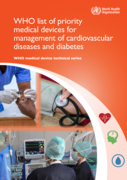
WHO list of priority medical devices for management of cardiovascular diseases and diabetes
recommended
This publication was developed in response to the need for a reference list of priority medical devices required for management of noncommunicable diseases (NCDs), focusing on cardiovascular diseases and diabetes, especially for low- and middle-income countries to support universal health coverage a...

WHO guidelines for clinical management of arboviral diseases: dengue, chikungunya, Zika and yellow fever
recommended
The new WHO guidelines provide clinical management recommendations for four of the most widespread arboviruses affecting humans: dengue, chikungunya, Zika, and yellow fever.
An integrated approach is vital, as these four diseases often present with similar symptoms, especially in the early stages...
The 2021 COVID-19 Strategic Preparedness and Response Plan (SPRP) for AFR serves as a regional guide for a holistic public health response to COVID‑19 at regional, national and sub-national levels. The 2021
SPRP:
1. Builds upon the lessons learnt from the implementation of the 2020 SPRP and outl...

Updated 2022. This guide addresses the care pathway from presentation of the patient to a health facility to patient discharge. It considers different levels of disease severity, from asymptomatic individuals to critically ill patients. Accounting for variations in the benefits and harms of chest im...