
Filter
5978
Text search:
country
action
plan
Featured
542
1726
Language
5775
177
124
88
62
39
32
20
10
8
7
7
7
6
6
6
5
5
5
5
4
4
4
4
4
4
4
3
3
3
3
3
3
3
3
3
2
2
2
2
2
2
2
2
2
2
2
2
2
2
2
2
2
1
1
1
1
1
1
1
1
1
1
1
Document type
3145
1104
688
406
345
126
78
55
11
10
4
3
1
Countries
316
228
181
143
139
134
134
132
124
120
118
116
107
94
88
86
86
85
76
75
70
64
56
50
50
49
45
45
43
41
40
40
39
37
36
35
34
33
31
27
27
25
25
25
24
24
23
21
21
20
19
19
16
16
16
16
15
15
14
13
13
13
12
12
10
10
10
9
9
9
9
8
8
8
7
7
6
6
6
5
5
5
5
5
5
4
4
4
4
4
4
4
4
4
4
3
3
3
3
3
3
3
3
3
3
3
3
2
2
2
2
2
2
2
2
2
2
2
2
2
2
2
2
2
2
2
2
2
1
1
1
1
1
1
1
1
1
1
1
1
1
1
1
1
1
1
1
1
1
1
1
1
Authors & Publishers
854
253
185
175
150
137
87
78
61
60
46
46
40
35
35
29
28
26
25
25
25
24
24
23
21
21
21
21
20
20
19
19
19
18
18
18
17
17
17
17
17
17
16
16
16
15
15
15
15
15
15
15
15
15
14
14
14
13
13
13
13
13
13
12
12
12
11
11
11
11
11
11
11
11
11
11
11
10
10
10
9
9
9
9
9
9
9
9
9
9
9
8
8
8
8
8
8
8
8
8
8
8
7
7
7
7
7
7
7
7
7
7
7
7
7
7
7
7
7
7
7
6
6
6
6
6
6
6
6
6
6
6
6
6
6
6
6
6
6
6
6
6
6
6
6
6
6
6
6
6
6
5
5
5
5
5
5
5
5
5
5
5
5
5
5
5
5
5
5
5
5
5
5
5
5
5
5
5
5
5
5
5
5
5
5
5
4
4
4
4
4
4
4
4
4
4
4
4
4
4
4
4
4
4
4
4
4
4
4
4
4
4
4
4
4
4
4
4
4
4
4
4
4
4
4
4
4
4
4
4
4
4
4
4
4
4
4
4
4
4
4
4
4
4
4
4
4
4
3
3
3
3
3
3
3
3
3
3
3
3
3
3
3
3
3
3
3
3
3
3
3
3
3
3
3
3
3
3
3
3
3
3
3
3
3
3
3
3
3
3
3
3
3
3
3
3
3
3
3
3
3
3
3
3
3
3
3
3
3
3
3
3
3
3
3
3
3
3
3
3
3
3
3
3
3
3
3
3
3
3
3
3
3
3
3
3
3
3
3
3
3
3
3
3
3
3
3
3
3
3
3
3
3
3
3
3
3
3
3
3
3
3
3
3
3
3
3
3
2
2
2
2
2
2
2
2
2
2
2
2
2
2
2
2
2
2
2
2
2
2
2
2
2
2
2
2
2
2
2
2
2
2
2
2
2
2
2
2
2
2
2
2
2
2
2
2
2
2
2
2
2
2
2
2
2
2
2
2
2
2
2
2
2
2
2
2
2
2
2
2
2
2
2
2
2
2
2
2
2
2
2
2
2
2
2
2
2
2
2
2
2
2
2
2
2
2
2
2
2
2
2
2
2
2
2
2
2
2
2
2
2
2
2
2
2
2
2
2
2
2
2
2
2
2
2
2
2
2
2
2
2
2
2
2
2
2
2
2
2
2
2
2
2
2
2
2
2
2
2
2
2
2
2
2
2
2
2
2
2
2
2
2
2
2
2
2
2
2
2
2
2
2
2
2
2
2
2
2
2
2
2
2
2
2
2
2
2
2
2
2
2
2
2
2
2
2
2
2
2
2
2
2
2
2
2
2
2
2
2
2
2
2
2
2
2
2
2
2
2
2
2
2
2
2
2
2
2
2
2
2
2
2
2
2
2
2
2
2
2
2
2
2
2
2
2
2
2
2
2
2
2
2
2
2
2
2
2
2
2
2
2
2
2
2
2
2
2
2
2
2
2
2
2
2
2
2
2
2
2
2
2
2
2
1
1
1
1
1
1
1
1
1
1
1
1
1
1
1
1
1
1
1
1
1
1
1
1
1
1
1
1
1
1
1
1
1
1
1
1
1
1
1
1
1
1
1
1
1
1
1
1
1
1
1
1
1
1
1
1
1
1
1
1
1
1
1
1
1
1
1
1
1
1
1
1
1
1
1
1
1
1
1
1
1
1
1
1
1
1
1
1
1
1
1
1
1
1
1
1
1
1
1
1
1
1
1
1
1
1
1
1
1
1
1
1
1
1
1
1
1
1
1
1
1
1
1
1
1
1
1
1
1
1
1
1
1
1
1
1
1
1
1
1
1
1
1
1
1
1
1
1
1
1
1
1
1
1
1
1
1
1
1
1
1
1
1
1
1
1
1
1
1
1
1
1
1
1
1
1
1
1
1
1
1
1
1
1
1
1
1
1
1
1
1
1
1
1
1
1
1
1
1
1
1
1
1
1
1
1
1
1
1
1
1
1
1
1
1
1
1
1
1
1
1
1
1
1
1
1
1
1
1
1
1
1
1
1
1
1
1
1
1
1
1
1
1
1
1
1
1
1
1
1
1
1
1
1
1
1
1
1
1
1
1
1
1
1
1
1
1
1
1
1
1
1
1
1
1
1
1
1
1
1
1
1
1
1
1
1
1
1
1
1
1
1
1
1
1
1
1
1
1
1
1
1
1
1
1
1
1
1
1
1
1
1
1
1
1
1
1
1
1
1
1
1
1
1
1
1
1
1
1
1
1
1
1
1
1
1
1
1
1
1
1
1
1
1
1
1
1
1
1
1
1
1
1
1
1
1
1
1
1
1
1
1
1
1
1
1
1
1
1
1
1
1
1
1
1
1
1
1
1
1
1
1
1
1
1
1
1
1
1
1
1
1
1
1
1
1
1
1
1
1
1
1
1
1
1
1
1
1
1
1
1
1
1
1
1
1
1
1
1
1
1
1
1
1
1
1
1
1
1
1
1
1
1
1
1
1
1
1
1
1
1
1
1
1
1
1
1
1
1
1
1
1
1
1
1
1
1
1
1
1
1
1
1
1
1
1
1
1
1
1
1
1
1
1
1
1
1
1
1
1
1
1
1
1
1
1
1
1
1
1
1
1
1
1
1
1
1
1
1
1
1
1
1
1
1
1
1
1
1
1
1
1
1
1
1
1
1
1
1
1
1
1
1
1
1
1
1
1
1
1
1
1
1
1
1
1
1
1
1
1
1
1
1
1
1
1
1
1
1
1
1
1
1
1
1
1
1
1
1
1
1
1
1
1
1
1
1
1
1
1
1
1
1
1
1
1
1
1
1
1
1
1
1
1
1
1
1
1
1
1
1
1
1
1
1
1
1
1
1
1
1
1
1
1
1
1
1
1
1
1
1
1
1
1
1
1
1
1
1
1
1
1
1
1
1
1
1
1
1
1
1
1
1
1
1
1
1
1
1
1
1
1
1
1
1
1
1
1
1
1
1
1
1
1
1
1
1
1
1
1
1
1
1
1
1
1
1
1
1
1
1
1
1
1
1
1
1
1
1
1
1
1
1
1
1
1
1
1
1
1
1
1
1
1
1
1
1
1
1
1
1
1
1
1
1
1
1
1
1
1
1
1
1
1
1
1
1
1
1
1
1
1
1
1
1
1
1
1
1
1
1
1
1
1
1
1
1
1
1
1
1
1
1
1
1
1
1
1
1
1
1
1
1
1
1
1
1
1
1
1
1
1
1
1
1
1
1
1
1
1
1
1
1
1
1
1
1
1
1
1
1
1
1
1
1
1
1
1
1
1
1
1
1
1
1
1
1
1
1
1
1
1
1
1
1
1
1
1
1
1
1
1
1
1
1
1
1
1
1
1
1
1
1
1
1
1
1
1
1
1
1
1
1
1
1
1
1
1
1
1
1
1
1
1
1
1
1
1
1
1
1
1
1
1
1
1
1
1
1
1
1
1
1
1
1
1
1
1
1
1
1
1
1
1
1
1
1
1
1
1
1
1
1
1
1
1
1
1
1
1
1
1
1
1
1
1
1
1
1
1
1
1
1
1
1
1
1
1
1
1
1
1
1
1
1
1
1
1
1
1
1
1
1
1
1
1
1
1
1
1
1
1
1
1
1
1
1
1
1
1
1
1
1
1
1
1
1
1
1
1
1
1
1
1
1
1
1
1
1
1
1
1
1
1
1
1
1
1
1
1
1
1
1
1
1
1
1
1
1
1
1
1
1
1
1
1
1
1
1
1
1
1
1
1
1
1
1
1
1
1
1
1
1
1
1
1
1
1
1
1
1
1
1
1
1
1
1
1
1
1
1
1
1
1
1
1
1
1
1
1
1
1
1
1
1
1
1
1
1
1
1
1
1
1
1
1
1
1
1
1
1
1
1
1
1
1
1
1
1
1
1
1
1
1
1
1
1
1
1
1
1
1
1
1
1
1
1
1
1
1
1
1
1
1
1
1
1
1
1
1
1
1
1
1
1
1
1
1
1
1
1
1
1
1
1
1
1
1
1
1
1
1
1
1
1
1
1
1
1
1
1
1
1
1
1
1
1
1
1
1
1
1
1
1
1
1
1
1
1
1
1
1
1
1
1
1
1
1
1
1
1
1
1
1
1
1
1
1
1
1
1
1
1
1
1
1
1
1
1
1
1
1
1
1
1
1
1
1
1
1
1
1
1
1
1
1
1
1
1
1
1
1
1
1
1
1
1
1
1
1
1
1
1
1
1
1
1
1
1
1
1
1
1
1
1
1
1
1
1
1
1
1
1
1
1
1
1
1
1
1
1
1
1
1
1
1
1
1
1
1
1
1
1
1
1
1
1
1
1
1
1
1
1
1
1
1
1
1
1
1
1
1
1
1
1
1
1
1
1
1
1
1
1
1
1
1
1
1
1
1
1
1
1
1
1
1
1
1
1
1
1
1
1
1
1
1
1
1
1
1
1
1
1
1
1
1
1
1
1
1
1
1
1
1
1
1
1
1
1
1
1
1
1
1
1
1
1
1
1
1
1
1
1
1
1
1
1
1
1
1
1
1
1
1
1
1
1
1
1
1
1
1
1
1
1
1
1
1
1
1
1
1
1
1
1
1
1
1
1
1
1
1
1
1
1
1
1
1
1
1
1
1
1
1
1
1
1
1
1
1
1
1
1
1
1
1
1
1
1
1
1
1
1
1
1
1
1
1
1
1
1
1
1
1
1
1
1
1
1
1
1
1
1
1
1
1
1
1
1
1
1
1
1
1
1
1
1
1
1
1
1
1
1
1
1
1
1
1
1
1
1
1
1
1
1
1
1
1
1
1
1
1
1
1
1
1
1
1
1
1
1
1
1
1
1
1
1
1
1
1
1
1
1
1
1
1
1
1
1
1
1
1
1
1
1
1
1
1
1
1
1
1
1
1
1
1
1
1
1
1
1
1
1
1
1
1
1
1
1
1
1
1
1
1
1
1
1
1
1
1
1
1
1
1
1
1
1
1
1
1
1
1
1
1
1
1
1
1
1
1
1
1
1
1
1
1
1
1
1
1
1
1
1
1
1
1
1
1
1
1
1
1
1
1
1
1
1
1
1
1
1
1
1
1
1
1
1
1
1
1
1
1
1
1
1
1
1
1
1
1
1
1
1
1
1
1
1
1
1
1
1
1
1
1
1
1
1
1
1
1
1
1
1
1
1
1
1
1
1
1
1
1
1
1
1
1
1
1
1
1
1
1
1
1
1
1
1
1
1
1
1
1
1
1
1
1
1
1
1
1
1
1
1
1
1
1
1
1
1
1
1
1
1
1
1
1
1
1
1
1
1
1
1
1
1
1
1
1
1
1
1
1
1
1
1
1
1
1
1
1
1
1
1
1
1
1
1
1
1
1
1
1
1
1
1
1
1
1
1
1
1
1
1
1
1
1
1
1
1
1
1
1
1
1
1
1
1
1
1
1
1
1
1
1
1
1
1
1
1
1
1
1
1
1
1
1
1
1
1
1
1
1
1
1
1
1
1
1
1
1
1
1
1
1
1
1
1
1
1
1
1
1
1
1
1
1
1
1
1
1
1
1
1
1
1
1
1
1
1
1
1
1
1
1
1
1
1
1
1
1
1
1
1
1
1
1
1
1
1
1
1
1
1
1
1
1
1
1
1
1
1
1
1
1
1
1
1
1
1
1
1
1
1
1
1
1
1
1
1
1
1
1
1
1
1
1
1
1
1
1
1
1
1
1
1
1
1
1
1
1
1
1
1
1
1
1
1
1
1
1
1
1
1
1
1
1
1
1
1
1
1
1
1
1
1
1
1
1
1
1
1
1
1
1
1
1
1
1
1
1
1
1
1
1
1
1
1
1
1
1
1
1
1
1
1
1
1
1
1
1
1
1
1
1
1
1
1
1
1
1
1
1
1
1
1
1
1
1
1
1
1
1
1
1
1
1
1
1
1
1
1
1
1
1
1
1
1
1
1
1
1
1
1
1
1
1
1
1
1
1
1
1
1
1
1
1
1
1
1
1
1
1
1
1
1
1
1
1
1
1
1
1
1
1
1
1
1
1
1
1
1
1
1
1
1
1
1
1
1
1
1
1
1
1
1
1
1
1
1
1
1
1
1
1
1
1
1
1
1
1
1
1
1
1
1
1
1
1
1
1
1
1
1
1
1
1
1
1
1
1
1
1
1
1
1
1
1
1
1
1
1
1
1
1
1
1
1
1
1
1
1
1
1
1
1
1
1
1
1
1
1
1
1
1
1
1
1
1
1
1
1
1
1
1
1
1
1
1
1
1
1
1
1
1
1
1
1
1
1
1
1
1
1
1
1
1
1
1
1
1
1
1
1
1
1
1
1
1
1
1
1
1
1
1
1
1
1
1
1
1
1
1
1
1
1
1
1
1
1
1
1
1
1
1
1
1
1
1
1
1
1
1
1
1
1
1
1
1
1
1
1
1
1
1
1
1
1
1
1
1
1
1
1
1
1
1
1
1
1
1
1
1
1
1
1
1
1
1
1
1
1
1
1
1
1
1
1
1
1
1
1
1
1
1
1
1
1
1
1
1
1
1
1
1
1
1
1
1
1
1
1
1
1
1
1
1
1
1
1
1
1
1
1
1
1
1
1
1
1
1
1
1
1
1
1
1
1
1
1
1
1
1
1
1
1
1
1
1
1
1
1
1
1
1
1
1
1
1
1
1
1
1
1
1
1
1
1
1
1
1
1
1
1
1
1
1
1
1
1
1
1
1
1
1
1
1
1
1
1
1
1
1
1
1
1
1
1
1
1
1
1
1
1
1
1
1
1
1
1
1
1
1
1
1
1
1
1
1
1
1
1
1
1
1
1
1
1
1
1
1
1
1
1
1
1
1
1
1
1
1
1
1
1
1
1
1
1
1
1
1
1
1
1
1
1
1
1
1
1
1
1
1
1
1
1
1
1
1
1
1
1
1
1
1
1
1
1
1
1
1
1
1
1
1
1
1
1
1
1
1
1
1
1
1
1
1
1
1
1
1
1
1
1
1
1
1
1
1
1
1
1
1
1
1
1
1
1
1
1
1
1
1
1
1
1
1
1
1
1
1
1
1
1
1
1
1
1
1
1
1
1
1
1
1
1
1
1
1
1
1
1
1
1
1
1
1
1
1
1
1
1
1
1
1
1
1
1
1
1
1
1
1
1
1
1
1
1
1
1
1
1
1
1
1
1
1
1
1
1
1
1
1
1
1
1
1
1
1
1
1
1
1
1
1
1
1
1
1
1
1
1
1
1
1
1
1
1
1
1
1
1
1
1
1
1
1
1
1
1
1
1
1
1
1
1
1
1
1
1
1
1
1
1
1
1
1
1
1
1
1
1
1
1
1
1
1
1
1
1
1
1
1
1
1
1
1
1
1
1
1
1
1
1
1
1
1
1
1
1
1
1
1
1
1
1
1
1
1
1
1
1
1
1
1
1
1
1
1
1
1
1
1
1
1
1
1
1
1
1
1
1
1
1
1
1
1
1
1
1
1
1
1
1
1
1
1
1
1
1
1
1
1
1
1
1
1
1
1
1
1
1
1
1
1
1
1
1
1
1
1
1
1
1
1
1
1
1
1
1
1
1
1
1
1
1
1
1
1
1
1
1
1
1
1
1
1
1
1
1
1
1
1
1
1
1
1
1
1
1
1
1
1
1
1
1
1
1
1
1
1
1
1
1
1
1
1
1
1
1
1
1
1
1
1
1
1
1
1
1
1
1
1
1
1
1
1
1
1
1
1
1
1
1
1
1
1
1
1
1
1
1
1
1
1
1
1
1
1
1
1
1
1
1
1
1
1
1
1
1
1
1
1
1
1
1
1
1
1
1
1
1
1
1
1
1
1
1
1
1
1
1
1
1
1
1
1
1
1
1
1
1
1
1
1
1
1
1
1
1
1
1
1
1
1
1
1
1
1
1
1
1
1
1
1
1
1
1
1
1
1
1
1
1
1
1
1
1
1
1
1
1
1
1
1
1
1
1
1
1
1
1
1
1
1
1
1
1
1
1
1
1
1
1
1
1
1
1
1
1
1
1
1
1
1
1
1
1
1
1
1
1
1
1
1
1
1
1
1
1
1
1
1
1
1
1
1
1
1
1
1
1
1
1
1
1
1
1
1
1
1
1
1
1
1
1
1
1
1
1
1
1
1
1
1
1
1
1
1
1
1
1
1
1
1
1
1
1
1
1
1
1
1
1
1
1
1
1
1
1
1
1
1
1
1
1
1
1
1
1
1
1
1
1
1
1
1
1
1
1
1
1
1
1
1
1
1
1
1
1
1
1
1
1
1
1
1
1
1
1
1
1
1
1
1
1
1
1
1
1
1
1
1
1
1
1
1
1
1
1
1
1
1
1
1
1
1
1
1
1
1
1
1
1
1
1
1
1
1
1
1
1
1
1
1
1
1
1
1
1
1
1
1
1
1
1
1
1
1
1
1
1
1
1
1
1
1
1
1
1
1
1
1
1
1
1
1
1
1
1
1
1
1
1
1
1
1
1
1
1
1
1
1
1
1
1
1
1
1
1
1
1
1
1
1
1
1
1
1
1
1
1
1
1
1
1
1
1
1
1
1
1
1
1
1
1
1
1
1
1
1
1
1
1
1
1
1
1
1
1
1
1
1
1
1
1
1
1
1
1
1
1
1
1
1
1
1
1
1
1
1
1
1
1
1
1
1
1
1
1
1
1
1
1
1
1
1
1
1
1
1
1
1
1
1
1
1
1
1
1
1
1
1
1
1
1
1
1
1
1
1
1
1
1
1
1
1
1
1
1
1
1
1
1
1
1
1
1
1
1
1
1
1
1
1
1
1
1
1
1
1
1
1
1
1
1
1
1
1
1
1
1
1
1
1
1
1
1
1
1
1
1
1
1
1
1
1
1
1
1
1
1
1
1
1
1
1
1
1
1
1
1
1
1
1
1
1
1
1
1
1
1
1
1
1
1
1
1
1
1
1
1
1
1
1
1
1
1
1
1
1
1
1
1
1
1
1
1
1
1
1
1
1
1
1
1
1
1
1
1
1
1
1
1
1
1
1
1
1
1
1
1
1
1
1
1
1
1
1
1
1
1
1
1
1
1
1
1
1
1
1
1
1
1
1
1
1
1
1
1
1
1
1
1
1
1
1
1
1
1
1
1
1
1
1
1
1
1
1
1
1
1
1
1
1
1
1
1
1
1
1
1
1
1
1
1
1
1
1
1
1
1
1
1
1
1
1
1
1
1
1
1
1
1
1
1
1
1
1
1
1
Publication Years
1
1828
3621
504
22
1
1
Category
2408
488
372
338
331
137
43
3
Toolboxes
429
414
285
250
244
231
196
159
154
150
148
134
123
120
119
106
104
91
86
81
42
42
33
29
15
6
1

The Global Asthma Report (GAR) 2022, prepared by the Global Asthma Network (GAN), is the fourth such report (others 2011, 2014, 2018). GAN builds upon the work of the International Study of Asthma and Allergies in Childhood (ISAAC) and The International Union Against Tuberculosis and Lung Disease (T
...
he Union) to monitor asthma and improve asthma care, particularly in low- and middle-income countries (LMICs).
more

Several challenges face asthma management in Egypt, including the high percentage of uncontrolled patients, inadequate compliance, and overuse of short-acting beta-agonists (SABAs) leading to increased asthma-related morbidity and mortality. In this regard, the recent Global Initiative for Asthma (G
...
INA) recommendations included inhaled corticosteroids containing therapy for mild asthma. Local healthcare systems and healthcare professionals (HCPs) often experience practical challenges when implementing global guidelines.
more

The Implementation toolkit for accessible telehealth services provides practical guidance to support governments, industry partners, health service providers and civil society groups in the use and implementation of the WHO-ITU Global standard for accessibility of telehealth services. The toolkit is
...
the result of a collaboration between the World Health Organization and the International Telecommunication Union, and was developed in response to the growing challenges that persons with disabilities and other marginalized populations experience when accessing and using telehealth platforms around the world.
more

About one fourth of the world’s population is estimated to have been infected with the tuberculosis (TB) bacilli, and about 5–10% of those infected develop TB disease in their lifetime. The risk for TB disease after infection depends on several factors, the most important being the person’s im
...
munological status. TB preventive treatment (TPT) given to people at highest risk of progressing from TB infection to disease remains a critical element to achieve the global targets of the End TB Strategy, as reiterated by the second UN High Level Meeting on TB in 2023. Delivering TPT effectively and safely necessitates a programmatic approach to implement a comprehensive package of interventions along a cascade of care: identifying individuals at highest risk, screening for TB and ruling out TB disease, testing for TB infection, and choosing the preventive treatment option that is best suited to an individual, managing adverse events, supporting medication adherence and monitoring programmatic performance
more

Asthma is the commonest chronic childhood disease and encompasses a spectrum of airway diseases with similar symptoms. Inaccurate diagnosis remains common, especially in younger children, with failure to characterize the different “asthmas.” Children worldwide repeatedly suffer symptoms which se
...
verely affect their everyday lives. Children die from asthma, especially in low and middle-income countries (LMICs). In many countries, asthma prevalence is rising. Access to effective care and changing environments are hugely variable and may explain the higher morbidity in inner-city children, in LMICs, and in deprived populations in high-income countries. Despite the disease being eminently controllable, morbidity and mortality persist.
more

To identify and to assess factors enhancing or hindering the delivery of breast and cervical cancer screening services in Malawi with regard to accessibility, uptake, acceptability and effectiveness.
Systematic review of published scientific evidence. A search of six bibliographic databases and gre
...
y literature was executed to identify relevant studies conducted in Malawi in the English language, with no time or study design restrictions. Data extraction was conducted in Excel and evidence synthesis followed a thematic analysis approach to identify and compare emerging themes.
more
Most of the global burden of sepsis occurs in low- and middle-income countries (LMICs), but the prevalence and etiology of sepsis in LMICs are not well understood. In particular, the lack of laboratory infrastructure in many LMICs has historically precluded an assessment of the pathogens leading to
...
sepsis. A recent systematic review found that data describing antimicrobial resistance were absent for 43% of countries in Africa, and only two countries have national antimicrobial resistance plans. In addition, small studies have identified indiscriminate antibiotic use both in and out of hospital settings in sub-Saharan Africa. The absence of microbiological data and lack of antibiotic stewardship complicate sepsis management and almost certainly worsens outcomes, particularly in low-resource systems. The purpose of this study was to examine the prevalence, etiology, and outcomes of sepsis among a cohort of critically ill patients in a referral hospital of Malawi, with a focus on the prevalence of culture-confirmed bacteremia and urinary tract infections.
more

The Guidance on global monitoring for diabetes prevention and control by WHO provides a comprehensive framework to support countries in tracking and managing diabetes prevention, care, and outcomes. This document outlines indicators across 4 domains: health system determinants, service delivery, ris
...
k factors, and outcomes/impacts. The guidance helps countries align their monitoring efforts with WHO’s global diabetes targets, Global Diabetes Compact, and relevant global NCD targets.
more

This purpose of this guide is to inform robust evaluations of the WHO training package – a package aimed at personnel whose primary role in health-care facilities is environmental cleaning, hereafter referred to as cleaners.
The WHO training package – Environmental cleaning and infection prev
...
ention and control in health-care facilities in low- and middle-income countries – was designed to improve the competencies of cleaners through a practical, educational approach for adult learners in low- and middle-income countries and comprises two volumes: trainer’s guide and modules and resources (1,2). An associated OpenWHO online course describes the essential preparations for trainers to deliver the WHO training package.
more

Mpox can spread in humans through close contact, usually skin-to-skin contact, including sexual contact, with an infected person or animal, as well as with materials contaminated with the virus such as clothing, beddings and towels, and respiratory droplets in prolonged face to face contact. People
...
remain infectious from the onset of symptoms until all the lesions have scabbed and healed. The virus may spread from infected animals through handling infected meat or through bites or scratches. Diagnosis is confirmed by polymerase chain reaction (PCR) testing of material from a lesion for the virus’s DNA.
more

The social protection landscape for people affected by TB in the WHO South-East Asia Region
Technical Brief Workforce Development
recommended
The World Health Organization (WHO) projects a global shortfall of 18 million health workers by 2030, mostly in low- and lower-middle-income countries. Contributing to the global deficit are chronic under-investment in education and training of health workers; workforce migration; an aging health wo
...
rkforce; rapid increases in chronic diseases; and inability to track existing human resources using health information systems. Health care worker shortages are compounded by the increased portability and virulence of infections. Rapid population growth, climate change, deforestation, international travel, migration, poverty, and social inequality have dramatically increased the risk of pandemics and highlighted the need for skilled health workforce to effectively respond to emerging health threats. This is evident now more than ever as COVID-19 exacerbates health inequity and barriers to access, and further strains the already fragile health systems in many countries.
more

In 2008 the Ministry of Health and Social Services (MOHSS) commissioned a national health and social service system review which found that although some progress has been made in primary health care, provision of health services did not go beyond the health facilities, irrespective of the fast dist
...
ances between the Health facilities and community. The review then recommended that health services should be extended in a structured manner to communities through the establishment of paid health workers.
more
The main aim of this paper is to present the current situation of children with disabilities in the Republic of Namibia, with special regard to their educational chances and influence of cultural beliefs on their lives. Namibia has a law, which entitles education for all its citizens. Despite numero
...
us legislative acts which should have increased the educational chances of Namibian children with disabilities, their real situation is completely different and depends on various factors, including the infrastructure of the schools, teacher competencies, their attitudes towards students, the small number of special and integrated schools as well as an insufficient amount of money transferred for the education of the children. The paper discusses all of the above factors and provides practical implications, which would improve the situation of children with disabilities in Namibia.
more

Towards Sustainable Community Health and Social Welfare Services
Leaving No One Behind. This Operational Guideline for Community-Based Health Services (CBHS)
in line with the CBHS Policy Guideline map an integrated and coordinated
national approach to community-based health services in Tanzania.
...
The
approach builds on and furthers national priorities for decentralization,
community empowerment and strengthened systems for expansion of
access to essential health services at the village level and below.
more

Pneumonia and diarrhoea account for 23% of under-five mortality and were responsible for an estimated 1.17 million deaths in children under five globally. Furthermore, pneumonia and diarrhoea were responsible for 18% of mortality in children 5–9 years of age, resulting in an estimated 86 000 preve
...
ntable deaths globally in 2021. Existing World Health Organization (WHO) guidance on the clinical management of pneumonia and diarrhoea has mainly focused on children less than 5 years of age.
more
The World Health Organization provides regional and national strategies and operational plans that aim to support countries in work to achieve measles control and elimination. These are guided by high level frameworks including the Immunization Agenda 2030 and the Measles and Rubella Strategic Frame
...
work 2021–2030. These frameworks promote improvements in routine immunization programmes to reach all children, reduce immunity gaps and prevent outbreaks within the context of universal health care.
This interim guidance on Targeted and selective strategies in measles and rubella vaccination campaigns adds to the suite of guidance documents. It provides expanded description of methods to determine age groups for inclusion in preventive and outbreak response measles and rubella vaccination campaigns; and operational considerations that are specific to targeted and selective strategies in measles and rubella vaccination campaigns. This guidance also updates definitions for tailored, targeted and selective campaigns.The World Health Organization provides regional and national strategies and operational plans that aim to support countries in work to achieve measles control and elimination. These are guided by high level frameworks including the Immunization Agenda 2030 and the Measles and Rubella Strategic Framework 2021–2030. These frameworks promote improvements in routine immunization programmes to reach all children, reduce immunity gaps and prevent outbreaks within the context of universal health care.
This interim guidance on Targeted and selective strategies in measles and rubella vaccination campaigns adds to the suite of guidance documents. It provides expanded description of methods to determine age groups for inclusion in preventive and outbreak response measles and rubella vaccination campaigns; and operational considerations that are specific to targeted and selective strategies in measles and rubella vaccination campaigns. This guidance also updates definitions for tailored, targeted and selective campaigns.
more

Men lag behind women regarding use of HIV services and represent the majority of individuals living with uncontrolled HIV, advanced HIV, and who experience HIV-related mortality. Men (15+) globally are less likely than women (15+) to know their HIV status (83% for men vs 91% for women), be on antire
...
troviral treatment (ART) (72% for men vs 83% for women) and reach viral suppression (67% for men vs 78% for women).
more

The objectives of the research presented in this report were to identify case studies of community-led HIV-related health and social inclusion service delivery organizations in eastern and southern Africa; describe the typologies of the services provided; and identify evidence of their service deliv
...
ery and contribution beyond HIV, including advancing universal health coverage.
more
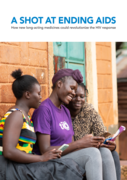
Breakthrough innovations have come to light that have proved to be more than 95% effective in preventing HIV infection with injections just twice a year. Once a year might even be possible. They could also be key for 40 million people living with HIV around the world who need better options for trea
...
tment. It’s not a cure or a vaccine, but it could be a game-changer if made accessible to all who could benefit.
more
