
Filter
3417
Text search:
Health,
Psychosocial
Featured
403
784
Language
3001
248
109
99
71
46
36
32
28
9
7
6
6
6
6
5
5
5
4
4
4
4
3
3
3
3
3
3
3
2
2
2
2
2
2
2
2
2
1
1
1
1
1
1
1
1
1
1
1
1
1
1
1
1
1
Document type
1821
498
413
223
148
104
84
68
28
19
4
3
2
1
1
Countries
142
103
93
93
76
75
73
70
64
62
61
59
57
48
47
45
44
43
42
41
37
35
34
34
32
31
30
30
29
28
27
26
23
21
20
20
19
19
18
18
18
17
17
17
16
16
16
12
11
11
11
11
10
10
10
10
9
9
9
9
8
7
7
7
7
6
6
6
6
6
5
5
5
5
5
4
4
4
4
4
4
4
4
4
4
3
3
3
3
3
3
3
3
2
2
2
2
2
2
2
2
2
2
2
2
2
2
2
2
2
2
1
1
1
1
1
1
1
1
1
1
1
1
1
1
1
1
1
1
1
1
1
1
1
1
1
Authors & Publishers
402
152
134
103
89
83
75
71
69
44
43
41
36
31
29
28
25
23
22
21
20
20
20
20
20
20
20
18
18
17
16
15
15
14
13
13
12
12
12
12
11
11
11
10
10
10
9
9
9
9
9
8
8
8
8
8
8
8
7
7
7
7
7
7
7
7
7
7
7
7
7
6
6
6
6
6
6
6
6
6
6
6
6
6
6
5
5
5
5
5
5
5
5
5
5
5
5
5
5
5
5
5
5
5
5
5
5
5
5
5
5
5
5
5
4
4
4
4
4
4
4
4
4
4
4
4
4
4
4
4
4
4
4
4
4
4
4
4
4
4
4
4
4
4
4
4
4
4
4
4
4
4
4
4
4
4
4
4
4
4
4
4
3
3
3
3
3
3
3
3
3
3
3
3
3
3
3
3
3
3
3
3
3
3
3
3
3
3
3
3
3
3
3
3
3
3
3
3
3
3
3
3
3
3
3
3
3
3
3
3
3
3
3
3
3
3
3
3
3
3
3
3
3
2
2
2
2
2
2
2
2
2
2
2
2
2
2
2
2
2
2
2
2
2
2
2
2
2
2
2
2
2
2
2
2
2
2
2
2
2
2
2
2
2
2
2
2
2
2
2
2
2
2
2
2
2
2
2
2
2
2
2
2
2
2
2
2
2
2
2
2
2
2
2
2
2
2
2
2
2
2
2
2
2
2
2
2
2
2
2
2
2
2
2
2
2
2
2
2
2
2
2
2
2
2
2
2
2
2
2
2
2
2
2
2
2
2
2
2
2
2
2
2
2
2
2
2
2
2
2
2
2
2
2
2
2
2
2
2
2
2
2
2
2
2
2
2
2
2
2
2
2
2
2
2
2
2
2
2
2
2
2
2
2
2
2
2
2
2
2
2
2
2
2
2
2
2
2
2
2
2
2
2
2
2
2
2
2
2
2
2
2
2
2
2
2
2
2
2
2
2
2
2
2
2
2
2
2
2
2
2
2
1
1
1
1
1
1
1
1
1
1
1
1
1
1
1
1
1
1
1
1
1
1
1
1
1
1
1
1
1
1
1
1
1
1
1
1
1
1
1
1
1
1
1
1
1
1
1
1
1
1
1
1
1
1
1
1
1
1
1
1
1
1
1
1
1
1
1
1
1
1
1
1
1
1
1
1
1
1
1
1
1
1
1
1
1
1
1
1
1
1
1
1
1
1
1
1
1
1
1
1
1
1
1
1
1
1
1
1
1
1
1
1
1
1
1
1
1
1
1
1
1
1
1
1
1
1
1
1
1
1
1
1
1
1
1
1
1
1
1
1
1
1
1
1
1
1
1
1
1
1
1
1
1
1
1
1
1
1
1
1
1
1
1
1
1
1
1
1
1
1
1
1
1
1
1
1
1
1
1
1
1
1
1
1
1
1
1
1
1
1
1
1
1
1
1
1
1
1
1
1
1
1
1
1
1
1
1
1
1
1
1
1
1
1
1
1
1
1
1
1
1
1
1
1
1
1
1
1
1
1
1
1
1
1
1
1
1
1
1
1
1
1
1
1
1
1
1
1
1
1
1
1
1
1
1
1
1
1
1
1
1
1
1
1
1
1
1
1
1
1
1
1
1
1
1
1
1
1
1
1
1
1
1
1
1
1
1
1
1
1
1
1
1
1
1
1
1
1
1
1
1
1
1
1
1
1
1
1
1
1
1
1
1
1
1
1
1
1
1
1
1
1
1
1
1
1
1
1
1
1
1
1
1
1
1
1
1
1
1
1
1
1
1
1
1
1
1
1
1
1
1
1
1
1
1
1
1
1
1
1
1
1
1
1
1
1
1
1
1
1
1
1
1
1
1
1
1
1
1
1
1
1
1
1
1
1
1
1
1
1
1
1
1
1
1
1
1
1
1
1
1
1
1
1
1
1
1
1
1
1
1
1
1
1
1
1
1
1
1
1
1
1
1
1
1
1
1
1
1
1
1
1
1
1
1
1
1
1
1
1
1
1
1
1
1
1
1
1
1
1
1
1
1
1
1
1
1
1
1
1
1
1
1
1
1
1
1
1
1
1
1
1
1
1
1
1
1
1
1
1
1
1
1
1
1
1
1
1
1
1
1
1
1
1
1
1
1
1
1
1
1
1
1
1
1
1
1
1
1
1
1
1
1
1
1
1
1
1
1
1
1
1
1
1
1
1
1
1
1
1
1
1
1
1
1
1
1
1
1
1
1
1
1
1
1
1
1
1
1
1
1
1
1
1
1
1
1
1
1
1
1
1
1
1
1
1
1
1
1
1
1
1
1
1
1
1
1
1
1
1
1
1
1
1
1
1
1
1
1
1
1
1
1
1
1
1
1
1
1
1
1
1
1
1
1
1
1
1
1
1
1
1
1
1
1
1
1
1
1
1
1
1
1
1
1
1
1
1
1
1
1
1
1
1
1
1
1
1
1
1
1
1
1
1
1
1
1
1
1
1
1
1
1
1
1
1
1
1
1
1
1
1
1
1
1
1
1
1
1
1
1
1
1
1
1
1
1
1
1
1
1
1
1
1
1
1
1
1
1
1
1
1
1
1
1
1
1
1
1
1
1
1
1
1
1
1
1
1
1
1
1
1
1
1
1
1
1
1
1
1
1
1
1
1
1
1
1
1
1
1
1
1
1
1
1
1
1
1
1
1
1
1
1
1
1
1
1
1
1
1
1
1
1
1
1
1
1
1
1
1
1
1
1
1
1
1
1
1
1
1
1
1
1
1
1
1
1
1
1
1
1
1
1
1
1
1
1
1
1
1
1
1
1
1
1
1
1
1
1
1
1
1
1
1
1
1
1
1
1
1
1
1
1
1
1
1
1
1
1
1
1
1
1
1
1
1
1
1
1
1
1
1
1
1
1
1
1
1
1
1
1
1
1
1
1
1
1
1
1
1
1
1
1
1
1
1
1
1
1
1
1
1
1
1
1
1
1
1
1
1
1
1
1
1
1
1
1
1
1
1
1
1
1
1
1
1
1
1
1
1
1
1
1
1
1
1
1
1
1
1
1
1
1
1
1
1
1
1
1
1
1
1
1
1
1
1
1
1
1
1
1
1
1
1
1
1
1
1
1
1
1
1
1
1
1
1
1
1
1
1
1
1
1
1
1
1
1
1
1
1
1
1
1
1
1
1
1
1
1
1
1
1
1
1
1
1
1
1
1
1
1
1
1
1
1
1
1
1
1
1
1
1
1
1
1
1
1
1
1
1
1
1
1
1
1
1
1
1
1
1
1
1
1
1
1
1
1
1
1
1
1
1
1
1
1
1
1
1
1
1
1
1
1
1
1
1
1
1
1
1
1
1
1
1
1
1
1
1
1
1
1
1
1
1
1
1
1
1
1
1
1
1
1
1
1
1
1
1
1
1
1
1
1
1
1
1
1
1
1
1
1
1
1
1
1
1
1
1
1
1
1
1
1
1
1
1
1
1
1
1
1
1
1
1
1
1
1
1
1
1
1
1
1
1
1
1
1
1
1
1
1
1
1
1
1
1
1
1
1
1
1
1
1
1
1
1
1
1
1
1
1
1
1
1
1
1
1
1
1
1
1
1
1
1
1
1
1
1
1
1
1
1
1
1
1
1
1
1
1
1
1
1
1
1
1
1
1
1
1
1
1
1
1
1
1
1
1
1
1
1
1
1
1
1
1
1
1
1
1
1
1
1
1
1
1
1
1
1
1
1
1
1
1
1
1
1
1
1
1
1
1
1
1
1
1
1
1
1
1
1
1
1
1
1
1
1
1
1
1
1
1
1
1
1
1
1
1
1
1
1
1
1
1
1
1
1
1
1
1
1
1
1
1
1
1
1
1
1
1
1
1
1
1
1
1
1
1
1
1
1
1
1
1
1
1
1
1
1
1
1
1
1
1
1
1
1
1
1
1
1
1
1
1
1
1
1
1
1
1
1
1
1
1
1
1
1
1
1
1
1
1
1
1
1
1
1
1
1
1
1
1
1
1
1
1
1
1
1
1
1
1
1
1
1
1
1
1
1
1
1
1
1
1
1
1
1
1
1
1
1
1
1
1
1
1
1
1
1
1
1
1
1
1
1
1
1
1
1
1
1
1
1
1
1
1
1
1
1
1
1
1
1
1
1
1
1
1
1
1
1
1
1
1
1
1
1
1
1
1
1
1
1
1
1
1
1
1
1
1
1
1
1
1
1
1
1
1
1
1
1
1
1
1
1
1
1
1
1
1
1
1
1
1
1
1
1
1
1
1
1
1
1
1
1
1
1
1
1
1
1
1
1
1
1
1
1
1
1
1
1
1
1
1
1
1
1
1
1
1
1
1
1
1
1
1
1
1
1
1
1
1
1
1
1
1
1
1
1
1
1
1
1
1
1
1
1
1
1
1
1
1
1
1
1
1
1
1
1
1
1
1
1
1
1
1
1
1
1
1
1
1
1
1
1
1
1
1
1
1
1
1
1
1
1
1
1
1
1
1
1
1
1
1
1
1
1
1
1
1
1
1
1
1
1
1
1
1
1
1
1
1
1
1
1
1
1
1
1
1
1
1
1
1
1
1
1
1
1
1
1
1
1
1
1
1
1
1
1
1
1
1
1
1
1
1
1
1
1
1
1
1
1
1
1
1
1
1
1
1
1
1
1
1
1
1
1
1
1
1
1
1
1
1
1
1
1
1
1
1
1
1
1
1
1
1
1
1
1
1
1
1
1
1
1
1
1
1
1
1
1
1
1
1
1
1
1
1
1
1
1
1
1
1
1
1
1
1
1
1
1
1
1
1
1
1
1
1
1
1
1
1
1
1
1
1
1
1
1
1
1
1
1
1
1
1
1
1
1
1
1
1
1
1
1
1
1
1
1
1
1
1
1
1
1
1
1
1
1
1
1
1
1
1
1
1
1
1
1
1
1
1
1
1
1
1
1
1
1
1
1
1
1
1
1
1
1
1
1
1
1
1
1
1
1
1
1
1
1
1
1
1
1
1
1
1
1
1
1
1
1
1
1
1
1
1
1
1
1
1
1
1
1
1
1
1
1
1
1
1
1
1
1
1
1
1
1
1
1
1
1
1
1
1
1
1
1
1
1
1
1
1
1
1
1
1
1
1
1
1
1
1
1
1
1
1
1
1
1
1
1
1
1
1
1
1
1
1
1
1
1
1
1
1
1
1
1
1
1
1
1
1
1
1
1
1
1
1
1
1
1
1
1
1
1
1
1
1
1
1
1
1
1
1
1
1
1
1
1
1
1
1
1
1
1
1
1
1
1
1
1
1
1
1
1
1
1
1
1
1
1
1
1
1
1
1
1
1
1
1
1
1
1
1
1
1
1
1
1
1
1
1
1
1
1
1
1
1
1
1
1
1
1
1
1
1
1
1
1
1
1
1
1
1
1
1
1
1
1
1
1
1
1
1
1
1
1
1
1
1
1
1
1
1
1
1
1
1
1
1
1
1
1
1
1
1
1
1
1
1
1
1
1
1
1
1
1
1
1
1
1
1
1
1
1
1
1
1
1
1
1
1
1
1
1
1
1
1
1
1
1
1
1
1
1
1
1
1
1
1
1
1
1
1
1
1
1
1
1
1
1
1
1
1
1
1
1
1
1
1
1
1
1
1
1
1
1
1
1
1
1
1
1
1
1
1
1
1
1
1
1
1
1
1
1
1
1
1
1
1
1
1
1
1
1
1
1
1
1
1
1
1
1
1
1
1
1
1
1
1
1
1
1
1
1
1
1
1
1
1
1
1
1
1
1
1
1
1
1
1
1
1
1
1
1
1
1
1
1
1
1
1
1
1
1
1
1
1
1
1
1
1
1
1
1
1
1
1
1
1
1
1
1
1
1
1
1
1
1
1
1
1
1
1
Publication Years
1141
2032
237
6
1
Category
1147
213
193
163
132
104
6
2
Toolboxes
765
392
211
203
152
145
140
99
90
89
48
48
40
34
34
30
22
13
11
8
5
5
4
3
3
3
1
CoPEH-Canada has generated a series of teaching and training resources over more than a decade. These resources began with the production of the CoPEH-Canada Teaching Manual (2012), which is dedicated to Bruce Hunter. Our training resources have expanded to include a range of resources including: Mo
...
dules (in pdf and online format), videos, Webalogue recordings, and other resources.
more
Lymphatic filariasis (LF) infection if untreated results in fluid accumulation in the limbs or breasts (lymphedema) or genitalia (hydrocele) that is painful and causes great discomfort. Morbidity management and disability prevention (MMDP) strategies such as surgery for hydrocele, treatment of acute
...
attacks and management of lymphedema are necessary for the management of the advanced stages of LF. However, very few countries including Zambia, have adequate information on the health beliefs and health seeking behavior of communities living in endemic areas towards MMDP services for LF. This study sought to explore community and health provider perspectives towards MMDP services for LF in a highly endemic region, Luangwa District, Zambia, between February and April 2019.
more

To enhance health co-benefits across urban policies which tackle air pollution and climate change, WHO, in cooperation with various international, national, and local partners, implemented the Urban Health
...
Initiative (UHI) pilot project in Accra, Ghana. The Initiative prompted the health sector to use its influential position to demonstrate to decision-makers and the public the full range of health, environmental and economic benefits that can be achieved from implementing local emission reduction and energy access policies and strategies. Policy tracking, although not always considered, is a fundamental component of this procedure. It assesses the planning, implementation and progress of a policy to refine or adjust policies with the final objective of increasing the likelihood of the policy being successful. This report is an outcome of the last component of the UHI model process, Policy tracking and monitoring outcomes. The report proposes a framework for tracking urban health policies, with a special focus on the impacts of air quality and energy access on human health and well-being in African countries, giving some examples from the pilot project in Accra. The report also provides resources to survey air quality in cities and other tools to assess public health and the environmental impacts of urban policies and monitor or track their effects.
more
Recovery from COVID-19 has been challenging in Guatemala. As a result of the prolonged socio-economic impact of the pandemic, the average poverty rate nationwide has increased by almost 5%. This rise in the poverty level further exacerbates preexisting vulnerabilities and erodes the limited safety n
...
ets available to vulnerable populations. Year after year, recurrent disasters and humanitarian crises aggravate the historic social gaps that result in high levels of vulnerability, multidimensional poverty, and overall deprivation of essential services among hundreds of thousands of Guatemalans. According to the World Risk Report 2020, Guatemala is the tenth country with the highest level of exposure to disaster worldwide. Globally, it ranks 28th regarding vulnerability according to the 2021 INFORM’s risk index and 62nd in the Global Climate Risk Index 2021.
In 2020, Guatemala faced a record-breaking and devastating hurricane season with extreme rainfall, catastrophic winds, and deadly landslides, from which the country has not yet recovered. Unfortunately, recurrent extreme weather events, such as Hurricane Julia that hit Central America in early October 2022, progressively but deeply eroded a weak health infrastructure and local health systems.
more
PAHO advocates for countries to comply with the international conventions they have signed and ratified on health-related issues, and in this specific case, to promote and protect the human rights of people with mental
...
health problems.
more

Obesity in all age groups, including children and adolescents, is a public health challenge across all settings. Obesity is now classified as a complex multifactorial chronic disease and not just a risk factor for other noncommunicable diseases and
...
comorbidities. Recognizing the significance of primary health care for an effective and efficient response to the obesity epidemic, the World Health Organization (WHO) has developed guidance on how to build capacity in the health system to deliver health services for prevention and management of obesity across the life course. This policy brief discusses the challenges and opportunities for preventing obesity in children and adolescents, and providing health services to treat and manage those already living with obesity. It outlines possible interventions through the primary health care approach.
more
This document presents a policy to guide and support Member States of the Pan American Health Organization (PAHO) and the Pan American Sanitary Bureau (PASB) in their technical cooperation to improve mental
...
health as a priority for advancing health, social, and economic development in the Region in the context of the COVID-19 pandemic and beyond.
more
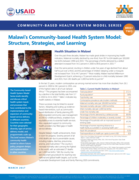
The Community-based Health System Model Series briefs identify and discuss critical health system inputs and processes that have contributed to the implementation and expansion of community-based se
...
rvice delivery in different countries.
Countries were selected for their geographic diversity, type of service delivery model, and programmatic scale-up.
This brief reviews Malawi’s community health model to inform future policy, program design, and implementation in other countries.
more

Care for persons with noncommunicable diseases (NCDs), such as cardiovascular disease, diabetes, cancer, and chronic obstructive pulmonary disease, is a major health priority for most countries worldwide, particularly for low-middle income countries
...
where the problem seems to be worsening. Globally, research demonstrates that the vast majority of people with NCDs receive suboptimal care. Many people living with chronic conditions remain undiagnosed and unaware of their condition, while many others remain untreated or with inadequate control. Meanwhile the premature mortality caused by NCDs remains high in many countries. In response to the global epidemic of NCDs, the World Health Organization (WHO) launched the Global Strategy for the Prevention and Control of Noncommunicable Diseases in 2012, which establishes 9 voluntary global targets and indicators to be considered by Member States when formu- lating national plans to combat NCDs.
more

An estimated 1.3 billion people globally experience significant disability. This figure has grown over the last decade and will continue to rise due to demographic and epidemiological changes. In 2022, the World Health Organization launched the Glob
...
al report on health equity for persons with disabilities. This report demonstrated that many persons with disabilities are still being left behind. Experiencing persistent health inequities, persons with disabilities die earlier, they have poorer health and functioning, and they are more affected by health emergencies than the general population. These differences are largely associated with unjust factors both inside and beyond the health sector and are avoidable. The Global Report called upon Member States to take actions to make health sector more inclusive for persons with disabilities through the primary health care approach. This will be essential for countries to make health coverage truly universal and to progress towards other health-related targets in the sustainable development goals.
more

Rwanda’s national health sector is focused on the equitable delivery of high-quality health services. The Government of Rwanda (GoR) recognizes that developing human resources in the
...
health sector is a critical factor to the well-being of the population. Development of the health workforce has been guided by the Human Resources for Health (HRH) Programme (2012-2019) and its successor, the National Strategy for Health Professions Development (NSHPD) (2020-2030). Rwanda has made significant progress in enhancing its skilled health workforce, with notable improvements in the health professional-to-population ratio over the past decade, attaining 13.4 doctors, nurses, midwives, pharmacists, and dentists per 10 000 people in 2022. Despite such progress, health workforce levels remain below national and global recommendations.
more
Areas for action include: increasing prioritisation and awareness of dementia; reducing the risk of dementia; diagnosis, treatment and care; support for dementia carers; strengthening information systems for dementia; and research and innovation.
Haiti, one of the poorest countries in the world, was devastated by an earthquake in 2010. The disaster uncovered the realities of a non-existent mental health care system with only ten psychiatrists nationwide. Attempts were made to assess the incr
...
eased prevalence of mental illness, likely due to the trauma to which many were exposed. Several interventions were carried out with aims to integrate mental health into primary health care services. The interplay between socio-cultural beliefs and health (both mental and physical) in Haiti has been widely commented upon by both foreign aid and local caregivers. Observations frequently highlight barriers to the willingness of patients to seek care and to their acceptance of biomedicine over traditional Vodou beliefs. The perception of Haitian beliefs as barriers to the availability and acceptance of mental health care has intensified the difficulty in providing effective recommendations and interventions both before and after the earthquake. Argued in this review is the importance of considering the interactions between socio-cultural beliefs and mental health when developing models for the prevention, screening, classification and management of mental illness in Haiti. These interactions, especially relevant in mental health care and post-disaster contexts, need to be acknowledged in any healthcare setting. The successes and failures of Haiti’s situation provide an example for global consideration.
more

This document adopts a health determinants framework for examining the evidence related to women’s poor mental health. From this perspective, public policy including economic policy, socio-cultura
...
l and environmental factors, community and social support, stressors and life events, personal behaviour and skills, and availability and access to health services, are all seen to exercise a role in determining women’s mental health status. Similarly, when considering the differences between women and men, a gender approach has been used. While this does not exclude biological or sex differences, it considers the critical roles that social and cultural factors and unequal power relations between men and women play in promoting or impeding mental health. Such inequalities create, maintain and exacerbate exposure to risk factors that endanger women’s mental health, and are most graphically illustrated in the significantly different rates of depression between men and women, poverty and its impact, and the phenomenal prevalence of violence against women.
more
The war in Ukraine will have direct and indirect health consequences on conflict affected people, including internally displaced people and refugees. Governments in countries receiving refugees are providing them with access to healthcare. This docu
...
ment aims to provide information to guide individual health assessment carried out by frontline health providers at border areas, reception centres, transit centres and individual clinics as well as national public health agencies/authorities in countries receiving refugees and third country nationals.
more
This joint publication by UNAIDS and WHO emphasizes the importance of integrating HIV prevention, testing, treatment and care and mental health services for people living with HIV. It provides a compilation of tools, best practices, recommendations
...
and guidelines that facilitate the integration of interventions and services to address the interlinked issues of mental health and HIV. This publication is intended for global, regional and national policy-makers; programme implementers including at subnational levels; organizations working in and providers of HIV and mental health services; civil society; and community-based and community-led organizations and advocates.
more

The 2026 appeal seeks nearly US$ 1 billion to respond to 36 emergencies worldwide, including 14 Grade 3 emergencies requiring the highest level of organizational response. These emergencies span sudden-onset and protracted humanitarian crises where health
...
needs are critical.
more

Psychosocial Interventions. A handbook
recommended
International Federation Reference Centre for Psychosocial Support
International Federation of Red Cross and Red Crescent
(2009)
C2


This guidance note is intended primarily for health actors working in emergency and disaster risk management (hereafter 'emergency risk management') at the local, national or international level, and in governmental or nongovernm
...
ental agencies. People with disabilities, those working in the disability sector and those working in other sectors that contribute to improved health outcomes related to emergency risk management, may also find this guidance note useful.
more
