
Filter
2135
Text search:
threats
to
public
health
Featured
207
523
Language
Document type
871
563
285
144
143
38
34
23
16
5
5
4
2
1
Countries
177
56
50
49
49
49
44
42
40
40
35
27
25
24
23
23
22
21
20
19
19
19
18
18
17
17
16
16
13
13
12
12
11
11
10
10
10
10
9
9
8
8
8
8
8
8
8
7
7
6
6
6
6
6
5
5
5
5
5
5
5
5
5
4
4
4
4
4
3
3
3
3
3
3
3
3
2
2
2
2
2
2
2
2
2
2
2
2
2
1
1
1
1
1
1
1
1
1
1
1
1
1
1
1
1
1
1
1
1
1
1
1
1
1
1
1
1
1
1
1
1
1
1
1
1
Authors & Publishers
Publication Years
Category
657
242
124
92
64
41
12
Toolboxes
202
193
145
132
122
104
74
71
65
60
52
47
47
45
36
34
33
33
29
26
18
12
11
8
7
2
1

The Global Task Force on Cholera Control (GTFCC) launched Ending Cholera: A Global
Roadmap to 2030 (Global Roadmap) (1), a strategy that aims to reduce global cholera
deaths by 90% and eliminate
...

Since 24 February 2022, the war in Ukraine has caused widespread suffering to its people and serious damage
to the country’s infrastructure. Attacks on the country’s
...

Overcoming barriers in low- and middle-income countries
For the first time, this year’s report includes information on hepatitis C diagnostics. With a focus on selected countries with diverse HCV epidemics, the report provides updates on the various dimensions of access
...

Validation of elimination of mother-to-child transmission, or vertical transmission, of HIV, syphilis and hepatitis B virus (HBV), is an attestation that a country has successfully met standard criteria for elimination, or for being at 1 of the 3 le
...
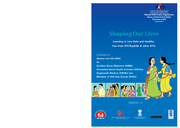
A Booklet on Women and HIV/AIDS for Auxiliary Nurse Midwives (ANMs) Accredited Social Health Activists (ASHAs) Anganwadi Workers (AWWs) and Members of Self-help Groups (SHGs)
Version 2
Version 2
13 May 2021
To avoid a reversal of progress from the adverse impacts of the COVID-19 pandemic, new knowledge and lessons from successful programmatic innovations are urgently needed to improve TB p
...

Climate change has important implications for the health and futures of children and young people, yet they have little power to limit its harm, making them vulnerable
...

The military offensive by the Russian Federation in Ukraine which began February 2022 has triggered one of the world’s fastest-growing displacement and humanitarian crisis, with geopolitical and economic ripples felt across the globe. The ongoing war has caused large-scale disruptions
...

This document, with a focus on the built environment and health care facilities, intends to guide the audience in preparing for and responding to S
...
Women, the elderly, adolescents, youth, and children,
persons with disabilities, indigenous populations, refugees,
migrants, and minorities experience the highest degree
of socio-economic marginalization. Marginalized people
become even more vulnerable in emergencies.1 This is due
...

As the Americas undergo profound demographic change and there are more persons aged 65 years or older than children younger than 5 years, it is crucial to recognize that national immunization programs must be redesigned
...
For biological agents, the publication covers 11 bacteria,
fungi and viruses listed by states parties to the Biological
Weapons Convention in declarations of past offensive
research and development programmes, or considered of
special concern fo
...
Health Evidence Network synthesis report 72

This Tailoring Antimicrobial Resistance Programmes (TAP) process assists Member States in initiating and undertaking projects to address the spread of antimicrobial resistance (AMR) in their countries. AMR is a complex problem requiring
...
Six months in, the indirect impacts of COVID-19 take a toll on health, social and economic outcomes.

National Operational Guidelines
This module should always be used together with the
mhGAP Intervention Guide for Mental, Neurological
and Substance Use Disorders in Non-specialized Health
Settings (WHO, 2010), which outlines relevant general
principles of care and management o
...
This report presents a WHO–PREZODE collaboration to develop and validate standardized indicators that assess the risk of zoonotic disease emergence by modeling pathogen circulation in animals and the risk of animal
...
