Filter
1445
Text search:
South-East
Asia
Featured
156
384
Language
Document type
657
334
206
83
63
30
24
16
16
7
4
3
1
1
Countries
119
104
76
65
37
36
34
31
19
18
16
15
15
14
14
13
13
12
12
11
10
10
10
8
8
8
7
7
7
7
6
6
6
6
5
5
5
4
4
4
4
4
3
3
3
3
3
3
3
2
2
2
2
2
2
2
2
2
1
1
1
1
1
1
1
1
1
1
1
1
1
1
1
1
1
1
1
1
1
1
1
1
1
1
1
1
1
1
1
1
1
1
1
1
1
1
Authors & Publishers
Publication Years
Category
382
166
125
112
83
44
24
Toolboxes
150
97
82
81
73
61
56
48
46
42
41
36
36
27
27
23
20
17
15
15
15
13
10
9
2
1
Early detection, assessment and response to acute public health events:
Advising principles. The purpose of this document is to support competent authorities in charge of IHR implementation to improve national capacities for the prevention, detection and control of events, by strengthening communications and coordination between points of entry and the national health s
...

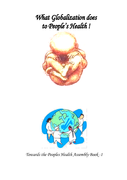
Towards the Peoples Health Assembly Book - 1
The report focuses on antibacterial resistance (ABR) in common bacterial pathogens. There is a major gap in knowledge about the magnitude of this problem. Antimicrobial resistance (AMR) threatens the effective revention and treatment of an ever-increasing range of infections caused by bacteria, para
...
WHO Technical Report Series, No. 961, 2011, Annex 8 - These guidelines are intended to provide a description of ways in which pharmacists can improve access to health care, health promotion and the use of medicines on behalf of the patients they serve. The role of FIP is to provide leadership for na
...
Update July 2019
The goal of this course is to provide participants with the foundational skills needed to begin the development, implementation and ongoing improvement of a congenital anomalies surveillance programme, in particular for countries with limited resources. It focuses on the methodology needed to devel
...
Third edition

This report reviews the current situation in relation to national capacity to address NCDs and the progress made at country level over the past decade. It highlights that, while progress is being made, there is still much work to be done to create the infrastructure, policies, surveillance and healt
...
Zika virus is primarily transmitted by the Aedes species of mosquito which is also responsible for the spread of dengue, Chikungunya and yellow fever viruses. In most areas, the primary vector of these viruses is Aedes aegypti, with Aedes albopictus a proven or potential vector in some settings. Wel
...

There are two sets of charts. One set (14 charts) can be used in settings where blood cholesterol can be measured. The other set (14 charts) is for settings in which blood cholesterol cannot be measured. Both sets are available in colour and shades of black on a compact disc. Each chart can only be
...