
Filter
1909
Text search:
Mitigation
Featured
173
467
Language
Document type
688
511
280
148
142
50
41
35
6
4
3
1
Countries
112
67
59
40
40
38
33
33
32
31
30
28
28
27
27
26
24
21
21
21
20
20
19
19
17
17
16
15
14
13
13
13
12
11
11
10
10
10
10
10
9
9
9
9
8
8
7
7
7
6
6
6
5
5
5
5
5
5
5
4
4
4
4
4
4
3
3
3
3
3
3
3
3
3
2
2
2
2
2
2
2
2
2
1
1
1
1
1
1
1
1
1
1
1
1
1
1
1
1
1
1
1
1
1
1
1
Authors & Publishers
Publication Years
Category
751
219
86
45
37
19
13
Toolboxes
346
274
100
77
76
55
49
48
46
43
38
36
32
29
27
24
23
23
21
19
15
13
10
8
2
2
1

Climate change and health vulnerability and adaptation assessment
In 2013 the World Health Organization (WHO) published the report Protecting health from climate change:
vulnerability and adaptation assessment. The aim was to provide basic and flexible guidance on conducting national or subnati
...
What near-term climate impacts should worry us most?
Supporting the most exposed and vulnerable societies to reduce
regional and global climate risks

national programmes for occupational health and safety for health workers: lessons learned from countries: summary report of the WHO online workshop, 15 July 2020
European Journal of Biomedical and Pharmaceutical Sciences, vol.3 (2016) 1, 192-206
This review shows that if all sub areas of pharmaceutical waste management can efficiently work back to back environmental pollution and dangers to human health can reduce significantly.
ournal of Public Health in Africa 2021; volume 12:2009
This policy brief explores the challenges faced in disaster risk governance in relation to the climate emergency.

Occupational health and safety programmes aim to prevent diseases and injuries arising out of, linked with or occurring in the course of work, while improving the quality and safety of care, safeguarding the health workforce and promoting environmental sustainability in the health sector.
This gu
...

access free courses in more than 60 languages

COVID-19 outbreak is associated with the generation of many types of infectious wastes, including infected masks, gloves and other protective equipment, together with a higher volume of general waste of the same nature.

Transforming Health Systems: Achieving Universal Health Coverage by 2022. The development of the Kenya Health Sector Strategic Plan 2018–2023 is guided by the Constitution of 2010, the Kenya Vision 2030 and the Kenya Health Policy 2014–2030.


A summary of health effects, resources, and adaptation examples from health departments funded by CDC’s Climate and Health Program

The Lancet Volume 397, ISSUE 10269, P129-170, January 09, 2021
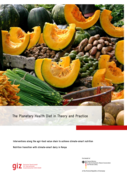
On the global scale, the impacts of the current food system on the environment are severe. The agro-industrial revolution has made it possible to increase food production at a price.


There is little doubt that 2019 was a defining year on many fronts for the environment. The repercussions of the climate emergency were experienced across the globe, with floods, devastating wildfires, and unprecedented melting of polar ice sheets and glaciers. While the new decade began with the Au
...

Working towards better COVID-19 outcomes in the WHO European Region.From the first COVID-19 cases in Europe reported on
24 January 2020, the pandemic reached 1 million cases
within 3 months, 10 million cases within 8 months, and
100 million cases in Europe alone within 2 years. Over
the course o
...
