
Filter
1165
Text search:
ART
centres
Featured
117
395
Language
Document type
775
141
117
64
31
14
12
5
3
2
1
Countries
109
44
39
36
35
32
30
29
28
27
26
20
19
19
18
18
18
17
16
15
14
14
13
13
11
11
10
10
10
8
8
7
7
7
6
6
5
5
5
5
5
5
5
4
4
4
4
4
3
3
3
2
2
2
2
2
2
2
2
2
2
2
2
1
1
1
1
1
1
1
1
1
1
1
1
1
1
1
1
1
1
1
1
1
1
1
1
1
1
1
1
Authors & Publishers
Publication Years
Category
619
71
60
49
41
13
11
Toolboxes
117
90
70
67
41
39
33
27
21
18
18
12
11
10
10
9
8
8
8
7
4
3
3
2
1
1
The objective of this brief is to consolidate WHO guidance to support the implementation of high-quality HIV services through approaches to policy, strategy and service delivery, to suggest considerations for selecting measures of high-quality services and to provide case examples of quality managem
...

The GHS Index is intended to be a key resource in the face of increasing risks of high-consequence and globally catastrophic biological events and in light of major gaps in international financing for preparedness. These risks are magnified by a rapidly changing and interconnected world; increasing
...
Accessed: 30.10.2019

WHO working group on HIV incidence assays meeting report
10–11 December 2015
Glion, Switzerland
UNAIDS/WHO working group on global HIV/AIDS and STI surveillance
WHO/HIV/2017.03

UNAIDS/WHO Working group
HIV/AIDS and STI surveillance 2015 / Reference

Thirty-three years after its discovery, the Human Immunodeficiency Virus (HIV), responsible for the AIDS pandemic, remains a major public health problem despite advanced researches providing better diagnostic and therapeutic tools. The virus targets especially CD4+ T cells, leading to deficiency of
...
Le gouvernement du Bénin a engagé le processus de mise en oeuvre du RAMU dans le but d’améliorer l’accessibilité fi nancière des populations à un paquet de base de soins de santé de qualité. Commencées en 2008, la réflexion, la préparation et la mise en oeuvre du RAMU au Bénin ont fa
...

Antimicrobial resistant (AMR) organisms are increasing globally, threatening to render existing treatments ineffective against many infectious diseases. In Africa, AMR has already been documented to be a problem for HIV and the pathogens that cause malaria, tuberculosis, typhoid, cholera, meningitis
...
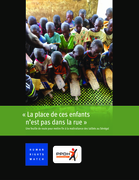
Depuis plus de dix ans, des journalistes sénégalais et internationaux, des défenseurs des droits de l’homme et des experts en protection de l’enfance ont documenté et dénoncé l’exploitation, la maltraitance et la négligence dont sont victimes des enfants qui vivent dans de nombreuses é
...
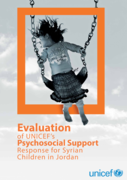
This evaluation report of UNICEF’s Psychosocial Support Response for Syrian Children in Jordan was conducted by
Antares Foundation team (Albertien van der Veen, Reem AbuKishk, Shadi Bushnaq, Orso Muneghina, Reem Rawdha
and Tineke van Pietersom) under the supervision of guidance Farhod Kamidov, M
...
This paper is an initial compilation of the promising practices on risk communication and community engagement that have developed in Europe during the COVID pandemic, in complementarity to the UNHCR’s Practical Recommendations and Good Practice to Address Protection Concerns in the Context of the
...

The Millennium Development Goals (MDGs) showed
that global commitment and collective action
could significantly reduce the disease burdens of
three deadly communicable diseases: HIV/AIDS,
tuberculosis (TB) and malaria. The MDGs helped
focus efforts on these three deadly diseases
and leveraged
...

Accessed 1 October 2020

Children in refugee situations face many potential dangers, such as violence, abuse, exploitation, discrimination, separation from their families, trafficking and military recruitment. The impact of these experiences can be devastating and long-lasting. Children have different needs from adults and
...
BMJ Global Health2020;5:e002014. doi:10.1136/bmjgh-2019-002014


A Situational Assessment and Five-YearAction Plan for the Africa CDC Strengthening Regional Public Health Institutions and Capacity for Surveillance and Response Program
28 May 2021
Contact tracing is a key component of a public health response to infectious disease outbreaks. The purpose of this guidance is to reinforce the place of community engagement and participation in the contact tracing process. The guidance and related products articulate best practice pri
...
