
Filter
4558
Text search:
Community
Infrastructure
Featured
Recommendations
375
New Publications
1352
Language
Document type
No document type
2514
Studies & Reports
877
Guidelines
490
Strategic & Response Plan
261
Manuals
260
Fact sheets
51
Situation Updates
47
Training Material
39
Resource Platforms
8
Infographics
6
Brochures
3
Online Courses
1
Videos
1
Countries / Regions
India
211
Global
209
Kenya
166
Myanmar / Burma
129
Sierra Leone
117
Ethiopia
108
Liberia
103
Nepal
101
Uganda
96
South Africa
89
Nigeria
82
Syria
82
Bangladesh
79
Malawi
76
Africa
75
Rwanda
71
Zambia
68
Tanzania
58
Ghana
56
Congo, Democratic Republic of
51
Western and Central Europe
51
South Sudan
47
Latin America and the Carribbean
47
Ukraine
44
Namibia
43
Guinea
37
Haiti
37
Cambodia
35
Mozambique
34
Zimbabwe
33
Yemen
33
Asia
32
Philippines
31
South–East Asia Region
31
Lesotho
30
West and Central Africa
30
East and Southern Africa
29
Indonesia
27
Pakistan
22
Afghanistan
21
Central African Republic
21
Venezuela
21
Botswana
20
Eastern Europe
20
Senegal
18
Middle East and North Africa
18
Burkina Faso
17
Colombia
16
Sudan
15
Cameroon
14
Somalia
14
Jordan
14
Lebanon
12
Eswatini/ Swaziland
11
Brazil
11
Western Pacific Region
11
Vietnam
11
Peru
10
Mali
9
Sri Lanka
9
Eastern Europe and Central Asia
9
Laos
9
Thailand
8
China
8
Moldova
8
Benin
7
USA
6
Iraq
6
Libya
6
Madagascar
6
Palestine
6
Albania
6
Côte d’Ivoire / Ivory Coast
5
Turkey
5
Papua New Guinea
5
Timor Leste/ East Timor
5
Tajikistan
5
Russia
5
Iran
5
Georgia
5
Burundi
4
Chile
4
Turkmenistan
4
Niger
3
Germany
3
Argentina
3
Croatia
3
Ecuador
3
El Salvador
3
Greece
3
Mexico
3
Bhutan
3
Poland
3
Southern Africa
3
Romania
3
Kazakhstan
3
Guinea-Bissau
2
Togo
2
Egypt
2
Chad
2
Malaysia
2
Singapore
2
Serbia
2
Hungary
2
Bolivia
2
Angola
2
Guatemala
2
Armenia
2
Lithuania
2
Kyrgyzstan
2
Japan
2
Guyana
2
Morocco
1
Saudi Arabia
1
Gambia
1
Mauritania
1
Vanuatu
1
North Macedonia
1
Other region
1
Paraguay
1
Fiji
1
Italy
1
Qatar
1
Bulgaria
1
Slovakia
1
Uzbekistan
1
North America
1
Mauritius
1
Tunisia
1
United Kingdom
1
Portugal
1
Spain
1
Azerbaijan
1
Belarus
1
Bosnia and Herzegovina
1
Authors & Publishers
Publication Years
Category
Countries
1893
Key Resources
403
Public Health
247
Clinical Guidelines
237
Women & Child Health
189
Capacity Building
56
Pharmacy & Technologies
31
Annual Report MEDBOX
1
Toolboxes
COVID-19
315
Planetary Health
271
HIV
253
Conflict
221
Disability
215
Mental Health
194
TB
185
Ebola & Marburg
145
Natural Hazards
124
AMR
115
Caregiver
115
Global Health Education
105
NTDs
93
Rapid Response
85
Health Financing Toolbox
72
Refugee
70
2.0 Rapid Response
63
NCDs
58
Malaria
56
Pharmacy
52
Cholera
40
Specific Hazards
29
Polio
27
Social Ethics
16
Zika
12
Typhoon
8
South Sudan
2

The World Health Organization recently redefined leprosy elimination as a phased process, with the first milestone being the
interruption of transmission, achieved when no new child cases (defined as younger than 15 years) are reported for five consecutive years.
In Pakistan, the well-functioning
...

Breastfeeding is a cornerstone of healthy infant nutrition, development and survival. It is critical for countries* to improve breastfeeding rates in order to achieve global targets for newborn and child health and survival, as well as economic growth and environmental sustainability

Noncommunicable diseases (NCDs) (e.g., cardiovascular diseases, cancers, diabetes, and chronic respiratory diseases) and mental health conditions (e.g., Alzheimer’s disease and related dementias, depression, anxiety, autism spectrum disorders) are the world’s leading cause of preventable illness
...
MEDBOX Annual Report 2024
recommended
The MEDBOX Annual Report provides an overview of the most important projects of the past year

The objective of this guideline is to present the complete set of all WHO recommendations and best practice statements relating to abortion. While legal, regulatory, policy and service-delivery contexts may vary from country to country, the recommendations and best practices described in this docume
...

Non-Communicable Diseases (NCDs) have emerged as conditions of great public health concern in Kenya accounting for 39% of deaths annually. The Ministry of Health through the Department of Non-Communicable Diseases has adopted the vision of achieving a nation free from preventable burden of NCDs. Fur
...

This resulting toolkit is a practical guide intended to assist users to become advocates for palliative care in a practical and effective
way. It is not necessarily a resource to read from cover to cover; rather, it can also be used selectively to each reader’s needs to engage audiences and
...

IDMC's Global Report on Internal Displacement (GRID) is the authoritative source for data and analysis on the state of internal displacement for the previous year.

WHO guideline on balanced national controlled medicines policies to ensure medical access and safety
Access to medicines is essential for attainment of universal health coverage, which is central to achievement of the health-related Sustainable Development Goals. Controlled medicines include those such as opioids, benzodiazepines, barbiturates, amphetamines and others with identified or emergent cl
...

WHO, as the coordinating authority on international health, supports countries in protecting public health through evidence-based policies and actions. Considering the significant health burden and the multiple potential benefits of interventions, the WHO Air Quality, Energy and Health Unit aims to
...
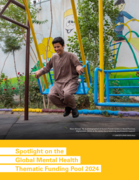
Promoting and protecting the mental health and psychosocial wellbeing of children, adolescents, and their caregivers remains undamental to achieving the Sustainable Development Goals (SDGs), with a direct contribution to SDG 3 (Good Health and Well- eing). In 2024, UNICEF accelerated the scale-up o
...

The health impacts of climate change are no longer a distant threat. They are being felt here and now and becoming more extreme.
To address these threats, the WHO Asia-Pacific Centre for Environment and Health in the Western Pacific Region (ACE) was established in 2019 through a partnership with
...

This Toolkit for ensuring rights-based and ethical use of digital technologies in HIV and health programmes is derived from the comprehensive UNDP Guidance on the rights-based and ethical use of digital technologies in HIV and health programmes document. The foundational UNDP Guidance document outli
...

This plan, approved by the Organization’s 62nd Directing Council, was shaped by extensive consultations with countries and stakeholders, and commits to transformative health outcomes over the next six years, tackling noncommunicable diseases (NCDs), mental health, health security, fragmented healt
...

Building on the WHO guidelines for disclosure to children up to age 12 in 2011, this implementation guidance provides evidence on existing interventions that support children and adolescents living with HIV in the process of disclosure. It includes interventions that focuses on safe disclosure, as w
...


The document provides a standardized protocol for evaluating the Early Warning Alert and Response Network (EWARN), a surveillance system used during humanitarian emergencies when regular national health surveillance may be disrupted. The purpose of EWARN is to detect outbreaks of communicable diseas
...

This report was developed by the WHO TB Vaccine Accelerator Finance and Access working group, co-led by WHO, Gavi and the Government of South Africa. It sets out the working group’s shared vision for equitable access to novel TB vaccines and will advance a shared understanding of the current lands
...

In an era of constrained resources and tightening budgets, strategic prioritization in tuberculosis (TB) programming is more critical than ever. Countries must make informed decisions to allocate limited resources effectively - maximizing impact, preventing avoidable deaths, and sustaining progress
...
Global tuberculosis report 2025
recommended
The WHO Global tuberculosis report 2025 provides a comprehensive and up-to-date assessment of the TB epidemic and of progress in prevention, diagnosis and treatment of the disease, at global, regional and country levels. This is done in the context of global TB commitments, strategies and targets.
...
