
Filter
1846
Filtered Results: 1846
Text search:
World
Health
Organization
(WHO),
Regional
Office
for
South-East
Asia
Featured
Recommendations
176
New Publications
478
Language
Document type
No document type
894
Studies & Reports
432
Guidelines
247
Manuals
109
Strategic & Response Plan
77
Training Material
26
Fact sheets
22
Situation Updates
19
Resource Platforms
11
Infographics
5
Brochures
2
Online Courses
2
Countries / Regions
Global
126
South–East Asia Region
73
India
71
Myanmar / Burma
71
Nepal
49
Asia
47
Bangladesh
36
Philippines
30
Western and Central Europe
29
Indonesia
29
Africa
25
Cambodia
22
Ethiopia
22
Kenya
17
Uganda
17
Thailand
14
Syria
14
Tanzania
14
Western Pacific Region
14
Middle East and North Africa
13
Liberia
13
South Africa
12
Pakistan
12
Eastern Europe
11
Ukraine
10
Ghana
10
Afghanistan
10
Zambia
10
Latin America and the Carribbean
9
West and Central Africa
9
Sierra Leone
8
Nigeria
8
Malawi
8
Mozambique
8
East and Southern Africa
8
Sri Lanka
8
China
7
Rwanda
7
Laos
7
Haiti
7
Yemen
7
Zimbabwe
6
Congo, Democratic Republic of
6
Russia
6
South Sudan
6
Somalia
6
Senegal
5
Eastern Europe and Central Asia
5
Vietnam
5
Papua New Guinea
5
Sudan
5
Timor Leste/ East Timor
4
Turkey
4
Iran
4
Venezuela
4
Moldova
4
North Macedonia
3
Burkina Faso
3
Guinea
3
Jordan
3
Georgia
3
Central African Republic
3
Iraq
3
Eswatini/ Swaziland
3
North Korea
2
Mexico
2
Kazakhstan
2
Cameroon
2
Albania
2
Malaysia
2
Belarus
2
Bosnia and Herzegovina
2
Lebanon
2
Namibia
2
Bhutan
2
Madagascar
2
Tajikistan
1
Colombia
1
Lesotho
1
Canada
1
Singapore
1
Kyrgyzstan
1
Peru
1
Vanuatu
1
Morocco
1
Mongolia
1
Qatar
1
Armenia
1
USA
1
Guinea-Bissau
1
Croatia
1
Hungary
1
Saudi Arabia
1
Paraguay
1
Gabon
1
Turkmenistan
1
Japan
1
Belgium
1
Maldives
1
Tunisia
1
Argentina
1
Brazil
1
Djibouti
1
Egypt
1
Romania
1
Greece
1
Palestine
1
Poland
1
Mali
1
Angola
1
Chad
1
Botswana
1
Ecuador
1
Solomon Islands
1
Authors & Publishers
Publication Years
Category
Countries
460
Clinical Guidelines
189
Key Resources
133
Public Health
132
Women & Child Health
132
Capacity Building
39
Pharmacy & Technologies
21
Toolboxes
HIV
187
Mental Health
144
COVID-19
128
Planetary Health
113
TB
89
NTDs
76
AMR
66
Global Health Education
59
Disability
56
Rapid Response
51
Refugee
46
Caregiver
45
NCDs
37
Natural Hazards
35
Health Financing Toolbox
34
Malaria
30
Conflict
30
2.0 Rapid Response
29
Pharmacy
22
Zika
20
Ebola & Marburg
16
Cholera
12
Polio
12
Specific Hazards
9
Typhoon
3
Social Ethics
1

Hepatitis B (HBV) infection is a major public health problem and cause of chronic liver disease.
The 2024 HBV guidelines provide updated evidence-informed recommendations on key priority topics. These include expanded and simplified treatment criteria for adults but now also for adolescents; expa...

10–11 May 2016, Catania, Italy

WHO Recommendations 2018 Update
The primary audience for these recommendations includes health professionals who are responsible for developing national and local health care guidelines and protocols (particularly those related to PPH prevention and treatment) and those involved in the provision of...

These guidelines deal specifically with water, sanitation and hygiene, and are designed to be used in schools in low-cost settings in low- and medium-resource countries to:
• assess prevailing situations and plan for required improvements;
• develop and reach essential safety standards as a f...
The purpose of this TPP is to communicate the minimum and ideal characteristics desired to meet the need for discriminating low levels of risk for transmission, i.e. targeted prevalence thresholds in the surveyed areas. An in vitro diagnostic test is needed for the detection of analyte(s) specific t...
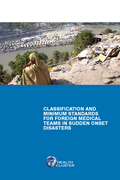
The document introduces a simple classification, minimums standards and a registration form for Foreign Medical Teams (FMTs) that may provide surgical and trauma care arriving within the aftermath of a sudden onset disaster. These can serve as tools to improve the coordination of the foreign medical...
There is a substantial and ever-increasing unmet need for rehabilitation worldwide, which is particularly profound in low- and middle
-income countries. The availability of accessible and affordable rehabilitation is necessary for many people with health conditions to remain as independent as possi...

Addressing comorbidities and risk factors for TB is a crucial component of Pillar one of the End TB Strategy, which focuses on integrated patient-centred care and prevention, including action on TB and comorbidities. The Framework for collaborative action on TB and comorbidities aims to support coun...
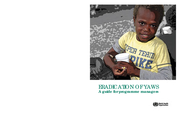
This document provides guidance for countries on how to implement activities to achieve the interruption of yaws transmission. It is intended for use by national yaws eradication programmes, partners involved in the implementation of yaws eradication activities and WHO technical staff who provide te...
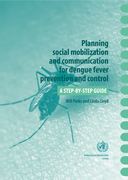
A Step-by-Step Guide.
It is intended for health planners, dengue or vector control programme managers and individuals, nongovernmental organizations (NGOs) and other agencies with interests and/or expertise in developing biological, chemical, environmental and communication interventions to prevent...


Terminology used to describe the transmission of pathogens through the air varies across scientific disciplines, organizations and the general public. While this has been the case for decades, during the coronavirus disease (COVID-19) pandemic, the terms ‘airborne’, ‘airborne transmission’ a...

Offering additional pre-exposure prophylaxis (PrEP) choices has the potential to increase uptake and effective use of PrEP, and of HIV prevention overall, as it allows people to choose a method that they prefer.
In this guideline, WHO recommends an offering long-acting injectable lenacapavir (LEN...

Relapsing malaria caused by Plasmodium vivax parasites poses a significant challenge to global malaria elimination efforts. About one third of the population remains at risk of contracting P. vivax malaria, and 85% of P. vivax infections stem from reactivated latent parasites, leading to chronic ana...
Operational guide: use of referral laboratories for the analysis of foodborne hazards in the Pacific
The Operational guide: use of referral laboratories for the analysis of foodborne hazards in the Pacific aims to strengthen the food analysis capacity of Pacific Island countries and areas by identifying national and reference laboratories capable of testing for priority foodborne hazards. The Pacif...

2016 Update
Key population

Cholera is a major health risk in many parts of the world, affecting millions of people every year. Since mid-2021, the world has been facing an acute upsurge of the 7th cholera pandemic, which is characterized by the number, size and concurrence of multiple outbreaks, the spread to areas that had b...
