
Filter
3310
Text search:
mental
health
problems
Featured
335
709
Language
3149
92
91
75
41
27
17
16
13
9
7
6
6
5
5
4
4
4
4
3
3
3
3
3
3
3
2
2
2
2
2
2
2
2
2
2
2
2
2
2
2
2
2
1
1
1
1
1
1
1
1
1
1
1
1
1
1
1
1
1
1
1
1
1
1
1
1
Document type
2018
477
351
211
91
73
47
15
11
9
2
2
1
Countries
169
141
91
90
77
64
61
61
50
49
46
43
41
41
40
38
37
37
36
36
35
34
27
27
21
18
18
17
17
17
16
14
14
14
13
12
12
11
10
10
10
9
9
9
8
8
8
8
7
7
7
6
6
6
6
6
5
5
5
5
5
4
4
4
4
4
4
4
4
4
4
3
3
3
3
3
3
3
3
3
3
2
2
2
2
2
2
2
2
2
2
2
2
2
2
2
2
2
2
2
1
1
1
1
1
1
1
1
1
1
1
1
1
1
1
1
1
1
1
1
Authors & Publishers
359
154
115
105
88
87
66
52
32
31
29
28
28
24
23
22
21
21
17
17
16
15
15
14
14
12
12
12
11
11
10
10
10
10
10
10
10
10
10
10
9
9
9
9
9
9
9
9
8
8
8
8
8
8
8
7
7
7
7
7
7
7
7
7
7
7
7
7
7
6
6
6
6
6
6
6
6
6
6
6
5
5
5
5
5
5
5
5
5
5
5
5
5
5
5
5
5
5
5
5
5
4
4
4
4
4
4
4
4
4
4
4
4
4
4
4
4
4
4
4
4
4
4
4
4
4
4
4
4
4
4
4
4
4
4
4
4
4
4
4
4
4
4
3
3
3
3
3
3
3
3
3
3
3
3
3
3
3
3
3
3
3
3
3
3
3
3
3
3
3
3
3
3
3
3
3
3
3
3
3
3
3
3
3
3
3
3
3
3
3
3
3
3
3
3
3
3
3
3
3
3
3
3
3
3
3
3
3
3
3
3
3
3
3
3
3
3
2
2
2
2
2
2
2
2
2
2
2
2
2
2
2
2
2
2
2
2
2
2
2
2
2
2
2
2
2
2
2
2
2
2
2
2
2
2
2
2
2
2
2
2
2
2
2
2
2
2
2
2
2
2
2
2
2
2
2
2
2
2
2
2
2
2
2
2
2
2
2
2
2
2
2
2
2
2
2
2
2
2
2
2
2
2
2
2
2
2
2
2
2
2
2
2
2
2
2
2
2
2
2
2
2
2
2
2
2
2
2
2
2
2
2
2
2
2
2
2
2
2
2
2
2
2
2
2
2
2
2
2
2
2
2
2
2
2
2
2
2
2
2
2
2
2
2
2
2
2
2
2
2
2
2
2
2
2
2
2
2
2
2
2
2
2
2
2
2
2
2
2
2
2
2
2
2
2
2
2
2
2
2
2
2
2
2
2
2
2
2
2
2
2
2
2
2
2
2
2
2
2
2
2
2
2
2
2
2
2
2
2
2
2
2
2
1
1
1
1
1
1
1
1
1
1
1
1
1
1
1
1
1
1
1
1
1
1
1
1
1
1
1
1
1
1
1
1
1
1
1
1
1
1
1
1
1
1
1
1
1
1
1
1
1
1
1
1
1
1
1
1
1
1
1
1
1
1
1
1
1
1
1
1
1
1
1
1
1
1
1
1
1
1
1
1
1
1
1
1
1
1
1
1
1
1
1
1
1
1
1
1
1
1
1
1
1
1
1
1
1
1
1
1
1
1
1
1
1
1
1
1
1
1
1
1
1
1
1
1
1
1
1
1
1
1
1
1
1
1
1
1
1
1
1
1
1
1
1
1
1
1
1
1
1
1
1
1
1
1
1
1
1
1
1
1
1
1
1
1
1
1
1
1
1
1
1
1
1
1
1
1
1
1
1
1
1
1
1
1
1
1
1
1
1
1
1
1
1
1
1
1
1
1
1
1
1
1
1
1
1
1
1
1
1
1
1
1
1
1
1
1
1
1
1
1
1
1
1
1
1
1
1
1
1
1
1
1
1
1
1
1
1
1
1
1
1
1
1
1
1
1
1
1
1
1
1
1
1
1
1
1
1
1
1
1
1
1
1
1
1
1
1
1
1
1
1
1
1
1
1
1
1
1
1
1
1
1
1
1
1
1
1
1
1
1
1
1
1
1
1
1
1
1
1
1
1
1
1
1
1
1
1
1
1
1
1
1
1
1
1
1
1
1
1
1
1
1
1
1
1
1
1
1
1
1
1
1
1
1
1
1
1
1
1
1
1
1
1
1
1
1
1
1
1
1
1
1
1
1
1
1
1
1
1
1
1
1
1
1
1
1
1
1
1
1
1
1
1
1
1
1
1
1
1
1
1
1
1
1
1
1
1
1
1
1
1
1
1
1
1
1
1
1
1
1
1
1
1
1
1
1
1
1
1
1
1
1
1
1
1
1
1
1
1
1
1
1
1
1
1
1
1
1
1
1
1
1
1
1
1
1
1
1
1
1
1
1
1
1
1
1
1
1
1
1
1
1
1
1
1
1
1
1
1
1
1
1
1
1
1
1
1
1
1
1
1
1
1
1
1
1
1
1
1
1
1
1
1
1
1
1
1
1
1
1
1
1
1
1
1
1
1
1
1
1
1
1
1
1
1
1
1
1
1
1
1
1
1
1
1
1
1
1
1
1
1
1
1
1
1
1
1
1
1
1
1
1
1
1
1
1
1
1
1
1
1
1
1
1
1
1
1
1
1
1
1
1
1
1
1
1
1
1
1
1
1
1
1
1
1
1
1
1
1
1
1
1
1
1
1
1
1
1
1
1
1
1
1
1
1
1
1
1
1
1
1
1
1
1
1
1
1
1
1
1
1
1
1
1
1
1
1
1
1
1
1
1
1
1
1
1
1
1
1
1
1
1
1
1
1
1
1
1
1
1
1
1
1
1
1
1
1
1
1
1
1
1
1
1
1
1
1
1
1
1
1
1
1
1
1
1
1
1
1
1
1
1
1
1
1
1
1
1
1
1
1
1
1
1
1
1
1
1
1
1
1
1
1
1
1
1
1
1
1
1
1
1
1
1
1
1
1
1
1
1
1
1
1
1
1
1
1
1
1
1
1
1
1
1
1
1
1
1
1
1
1
1
1
1
1
1
1
1
1
1
1
1
1
1
1
1
1
1
1
1
1
1
1
1
1
1
1
1
1
1
1
1
1
1
1
1
1
1
1
1
1
1
1
1
1
1
1
1
1
1
1
1
1
1
1
1
1
1
1
1
1
1
1
1
1
1
1
1
1
1
1
1
1
1
1
1
1
1
1
1
1
1
1
1
1
1
1
1
1
1
1
1
1
1
1
1
1
1
1
1
1
1
1
1
1
1
1
1
1
1
1
1
1
1
1
1
1
1
1
1
1
1
1
1
1
1
1
1
1
1
1
1
1
1
1
1
1
1
1
1
1
1
1
1
1
1
1
1
1
1
1
1
1
1
1
1
1
1
1
1
1
1
1
1
1
1
1
1
1
1
1
1
1
1
1
1
1
1
1
1
1
1
1
1
1
1
1
1
1
1
1
1
1
1
1
1
1
1
1
1
1
1
1
1
1
1
1
1
1
1
1
1
1
1
1
1
1
1
1
1
1
1
1
1
1
1
1
1
1
1
1
1
1
1
1
1
1
1
1
1
1
1
1
1
1
1
1
1
1
1
1
1
1
1
1
1
1
1
1
1
1
1
1
1
1
1
1
1
1
1
1
1
1
1
1
1
1
1
1
1
1
1
1
1
1
1
1
1
1
1
1
1
1
1
1
1
1
1
1
1
1
1
1
1
1
1
1
1
1
1
1
1
1
1
1
1
1
1
1
1
1
1
1
1
1
1
1
1
1
1
1
1
1
1
1
1
1
1
1
1
1
1
1
1
1
1
1
1
1
1
1
1
1
1
1
1
1
1
1
1
1
1
1
1
1
1
1
1
1
1
1
1
1
1
1
1
1
1
1
1
1
1
1
1
1
1
1
1
1
1
1
1
1
1
1
1
1
1
1
1
1
1
1
1
1
1
1
1
1
1
1
1
1
1
1
1
1
1
1
1
1
1
1
1
1
1
1
1
1
1
1
1
1
1
1
1
1
1
1
1
1
1
1
1
1
1
1
1
1
1
1
1
1
1
1
1
1
1
1
1
1
1
1
1
1
1
1
1
1
1
1
1
1
1
1
1
1
1
1
1
1
1
1
1
1
1
1
1
1
1
1
1
1
1
1
1
1
1
1
1
1
1
1
1
1
1
1
1
1
1
1
1
1
1
1
1
1
1
1
1
1
1
1
1
1
1
1
1
1
1
1
1
1
1
1
1
1
1
1
1
1
1
1
1
1
1
1
1
1
1
1
1
1
1
1
1
1
1
1
1
1
1
1
1
1
1
1
1
1
1
1
1
1
1
1
1
1
1
1
1
1
1
1
1
1
1
1
1
1
1
1
1
1
1
1
1
1
1
1
1
1
1
1
1
1
1
1
1
1
1
1
1
1
1
1
1
1
1
1
1
1
1
1
1
1
1
1
1
1
1
1
1
1
1
1
1
1
1
1
1
1
1
1
1
1
1
1
1
1
1
1
1
1
1
1
1
1
1
1
1
1
1
1
1
1
1
1
1
1
1
1
1
1
1
1
1
1
1
1
1
1
1
1
1
1
1
1
1
1
1
1
1
1
1
1
1
1
1
1
1
1
1
1
1
1
1
1
1
1
1
1
1
1
1
1
1
1
1
1
1
1
1
1
1
1
1
1
1
1
1
1
1
1
1
1
1
1
1
1
1
1
1
1
1
1
1
1
1
1
1
1
1
1
1
1
1
1
1
1
1
1
1
1
1
1
1
1
1
1
1
1
1
1
1
1
1
1
1
1
1
1
1
1
1
1
1
1
1
1
1
1
1
1
1
1
1
1
1
1
1
1
1
1
1
1
1
1
1
1
1
1
1
1
1
1
1
1
1
1
1
1
1
1
1
1
1
1
1
1
1
1
1
1
1
1
1
1
1
1
1
1
1
1
1
1
1
1
1
1
1
1
1
1
1
1
1
1
1
1
1
1
1
1
1
1
1
1
1
1
1
1
1
1
1
1
1
1
1
1
1
1
1
1
1
1
1
1
1
1
1
1
1
1
1
1
1
1
1
1
1
1
1
1
1
1
1
1
1
1
1
1
1
1
1
1
1
1
1
1
1
1
1
1
1
1
1
1
1
1
1
1
1
1
1
1
1
1
1
1
1
1
1
1
1
1
1
1
1
1
1
1
1
1
1
1
1
1
1
1
1
1
1
1
1
1
1
1
1
1
1
1
1
1
1
1
1
1
1
1
1
1
1
1
1
1
1
1
1
1
1
1
1
1
1
1
1
1
1
1
1
1
1
1
1
1
1
1
1
1
1
1
1
1
1
1
1
1
1
1
1
1
1
1
1
1
1
1
1
1
1
1
1
1
1
1
1
1
1
1
1
1
1
1
1
1
1
1
1
1
1
1
1
1
1
1
1
1
1
1
1
1
1
1
1
1
1
1
1
1
1
1
1
1
1
1
1
1
1
1
1
1
1
1
1
1
1
1
1
1
1
1
1
1
1
1
1
1
1
1
1
1
1
1
1
1
1
1
1
1
1
1
1
1
1
1
1
1
1
1
1
1
1
1
1
1
1
1
1
1
1
1
1
1
1
1
1
1
1
1
1
1
1
1
1
1
1
1
1
1
1
1
1
1
1
1
1
1
1
1
1
1
1
1
1
1
1
1
1
1
1
1
1
1
1
1
1
1
1
1
1
1
1
1
1
1
1
1
1
1
1
1
1
1
1
1
1
1
1
1
1
1
1
1
1
1
1
1
1
1
1
1
1
1
1
1
1
1
1
1
1
1
1
1
1
1
1
1
1
1
1
1
1
1
1
1
1
1
1
1
1
1
1
1
1
1
1
1
1
1
1
1
1
1
1
1
1
1
1
1
1
1
1
1
1
1
1
1
1
1
1
1
1
1
1
1
1
1
1
1
1
1
1
1
1
1
1
1
1
1
1
1
1
1
1
1
1
1
1
1
1
1
1
1
1
1
1
1
1
1
1
1
1
1
1
1
1
1
1
1
1
1
1
1
1
1
1
1
1
1
1
1
1
1
1
1
1
1
1
1
1
1
1
1
1
1
1
1
1
1
1
1
1
1
1
1
1
1
1
1
1
1
1
1
1
1
1
1
1
1
1
1
1
1
1
1
1
1
1
1
1
1
1
1
1
1
1
1
1
1
1
1
1
1
1
1
1
1
1
1
1
1
1
1
1
1
1
1
1
1
1
1
1
1
1
1
1
1
1
1
1
1
1
1
1
1
1
1
1
1
1
1
1
1
1
1
1
1
1
1
1
1
1
1
1
1
1
1
1
1
1
1
1
1
1
1
1
1
1
1
1
1
1
1
1
1
1
1
1
1
1
1
1
1
1
1
1
1
1
1
1
1
1
1
1
1
1
1
1
1
1
1
1
1
1
1
1
1
1
1
1
1
1
1
1
1
1
1
1
1
1
1
1
1
1
1
1
1
1
1
1
1
1
1
1
1
1
1
1
1
1
1
1
1
1
1
1
1
1
1
1
1
1
1
1
1
1
1
1
1
1
1
1
1
1
1
1
1
1
1
1
1
1
1
1
1
1
1
1
1
1
1
1
1
1
1
1
1
1
1
1
1
1
1
1
1
1
1
1
1
1
1
1
1
1
1
1
1
1
1
1
1
1
1
1
1
1
1
1
1
1
1
1
1
1
1
1
1
1
1
1
1
1
1
1
1
1
1
1
1
1
1
1
1
1
1
1
1
1
1
1
1
1
1
1
1
1
1
1
1
1
1
1
1
1
1
1
1
1
1
1
1
1
1
1
1
1
1
1
1
1
1
1
1
1
1
1
1
1
1
1
1
1
1
1
1
1
1
1
1
1
1
1
1
1
1
1
1
1
1
1
1
1
1
1
1
1
1
1
1
1
1
1
1
1
1
1
1
1
1
1
1
1
1
1
1
1
1
1
1
1
Publication Years
802
2096
388
23
1
Category
1050
220
181
173
155
106
7
3
Toolboxes
867
263
188
117
111
111
103
80
74
72
48
45
38
37
24
22
19
17
17
15
11
8
6
4
3
1

mhGAP Humanitarian Intervention Guide (mhGAP-HIG) training of health-care providers. Training manual
recommended
The mhGAP Humanitarian Intervention Guide (mhGAP-HIG) Training of Health-Care Providers manual is designed to guide facilitators in training non-specialist health care providers to manage
...
mental, neurological and substance use conditions in humanitarian emergency settings.
The manual covers suggested training schedules, learning objectives, and tips for planning and facilitating the training. It also includes step-by-step training modules for different conditions covered in the mhGAP Humanitarian Intervention Guide (mhGAP-HIG).
more

Where Women Have No Doctor - Chapter 31 - Use of Medicines in Women’s Health
recommended
A. August Burns, Sandy Nieman, Elena Metcalf, Ronnie Lovich, Jane Maxwell, Katharine Shapiro
Hesperian Health Guides
(2014)
C1
This chapter talks about how to safely use the medicines mentioned in the book to treat women’s health problems. It also provides information to help decide when to use medicines to improve womenâ
...
€™s health.
more
Information booklet on Post Traumatic Stress Disorder. What is Post-Traumatic Stress Disorder (PTSD)? Who develops PTSD? What are the symptoms of PTSD? Why do some people develop PTSD and other people do not? How is PTSD Treated? How can I hep a friend or relative who has PTSD? How can I help mysel
...
f? Where can I go for help? What if I know someone in crisis? Next Steps for PTSD Research.
more
Evidence shows that FGM can cause several physical, mental and sexual health complications in girls and women, and in newborns. Health-care provide
...
rs play an important role in supporting girls and women living with FGM, and improving their health and well-being. They are in a unique position to influence and change the attitudes of their patients about FGM.
WHO is committed to scaling up the health-sector response to address FGM prevention and care. One aspect is to strengthen the quality of FGM prevention and care services by building the capacity of health-care providers. Several guidance materials have been produced to target health-care providers. These include FGM content for training curricula, clinical guidelines and a clinical handbook.
This training manual complements previous publications by building person-centred communication skills specifically for FGM prevention.
more

Primary Health-Care Services
recommended
In health emergencies as in periods of stability, restoring access to primary health-care services is a priority in so far as many health
...
problems can be dealt with by means of preventive care and
conventional therapy. Depending on the context, the ICRC must often take action in this area, taking into account the level of emergency, the involvement of other actors, the possible evolution of the situation and the organization's operational strategies.
more

Challenging disadvantage in Zambia: People with psychosocial and intellectual disabilities in the criminal justice system
The PAN, the Mental Health Users Network Zambia (MHUNZA), the Prisons Care and Counselling Association (PRISCCA), et al.
Open Society Initiative for Southern Africa (OSISA)
(2015)
C1

This manual summarizes the methodology used to develop WHODAS 2.0 and the findings obtained when the schedule was applied to certain areas of general health, including mental and neurological disord
...
ers.
The manual will be useful to any researcher or clinician wishing to use WHODAS 2.0 in their practice. It includes the seven versions of WHODAS 2.0, which differ in length and intended mode of administration. It also provides general population norms; these allow WHODAS 2.0 values for certain subpopulations to be compared with those for the general population.
more
Making the Case for Alcohol as a Public Health Threat in the Region. The purpose of this document is to explain the need for making alcohol a top public health priority in the region and the need fo
...
r national and regional action. Current evidence-based research shows that alcohol consumption and drinking patterns in the Americas are at damaging levels, with the region surpassing global averages for many alcohol related problems.
more
A range of individuals and institutions have important roles in promoting healthy development in adolescents, and in preventing and responding to health problems challenging this population group.
...
Health-care providers (HCP) have important contributions to make in both these areas.
However, situation analyses and needs assessment exercises carried out in different parts of the world point to shortcomings in their professional capabilities and in their 'human qualities' as a result of which they are unable and oftentimes unwilling to deal with adolescents in an effective and sensitive manner.
more
Planetary Health 101 Information and Resources
recommended
The Panorama Perspectives: Conversations on Planetary Health report series aims to inspire new thinking, conversations, and engagement with planetary health and other integrated concepts. Collaborat
...
ion and open knowledge sharing across sectors are necessary to solve the complex global health and development problems of today. These reports are intended as practical tools, presenting actionable opportunities to advance planetary health.Each report expands on knowledge gathered from many sources, including analysis of publicly available reports and data; forums and events; group discussions; and individual conversations
more

Traditionally, understanding of the psychiatric and psychological effects of trauma have been developed from studies with adults and then applied to trauma-exposed children with some modifications. While this is an important step to understanding the sequelae of trauma in children and adolescents, t
...
he adverse developmental effects of traumatic exposures on the rapidly evolving neurological, physical, social and psychological capacities of children calls for a developmentally sensitive framework for understanding, assessing and treating trauma-exposed children.
ournal of Child and Adolescent Mental Health 2013: 1-14
more
The report focuses on several key areas where health outcomes are falling short, and provides insight into ways in which countries can improve the situation for their children and adolescents. Areas in focus include
...
mental health, overweight/obesity and adolescent risk-taking behaviour.
The report shows, for example, that:
- mental health remains a neglected subject – only one quarter of countries are collecting data on the number of children treated by a mental health professional;
- half of countries do not regulate the marketing of food to children, despite the fact that childhood obesity rates are high across the Region and physical activity rates are low;
- almost half of countries have no policy that affects the availability of unhealthy foods at school;
- 2 in 5 girls and 1 in 3 boys who are having sex do not protect themselves; and
one third of countries do not offer legal access to contraception without parental consent for those under 18 years of age.
more
Petersenet al.International Journal of Mental Health Systems2011,5:8http://www.ijmhs.com/content/5/1/8
Training aids
Evidence shows that FGM can cause several physical, mental and sexual health complications in girls and women, and in newborns. Health
...
-care providers play an important role in supporting girls and women living with FGM, and improving their health and well-being. They are in a unique position to influence and change the attitudes of their patients about FGM.
more
Healthcare 2020, 8(1), 26; https://doi.org/10.3390/healthcare8010026
The current article is an integrative and analytical literature review on the concept and meaning of empathy in health and social care professionals. Empat
...
hy, i.e., the ability to understand the personal experience of the patient without bonding with them, constitutes an important communication skill for a health professional, one that includes three dimensions: the emotional, cognitive, and behavioral. It has been proven that health professionals with high levels of empathy operate more efficiently as to the fulfillment of their role in eliciting therapeutic change.The empathetic professional comprehends the needs of the health care users, as the latter feel safe to express the thoughts and problems that concern them. Although the importance of empathy is undeniable, a significantly high percentage of health professionals seem to find it difficult to adopt a model of empathetic communication in their everyday practice. Some of the factors that negatively influence the development of empathy are the high number of patients that professionals have to manage, the lack of adequate time, the focus on therapy within the existing academic culture, but also the lack of education in empathy. Developing empathetic skills should not only be the underlying objective in the teaching process of health and social care undergraduate students, but also the subject of the lifelong and continuous education of professionals
more
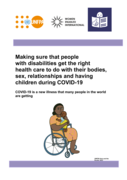
Making sure that people with disabilities get the right health care to do with their bodies, sex, relationships and having children during COVID-19
About this information
This information is about he
...
alth care for people with disabilities to do with their bodies, sex, relationships and having children.
For example, the health care might help people to give birth or have safer sex and relationships.
This information is about making sure that people with disabilities can get this health care during COVID-19.
And when other big problems happen in the world.
People with disabilities have a right to get this healthcare like everyone else.
But they are often left out.
And COVID-19 has made things worse.
This information is about what countries and organizations should do now for people with disabilities.
We found out what many people with disabilities thought first.
People in this document means women and girls, men, and boys with disabilities.
It also means people with disabilities who are not the gender that people said they were when they were born.
For example, someone may be told they are a boy because of how their body looks.
But that is not who they really are. They might be a girl. Or they might not be a boy or girl.
more

The World Health Organization (WHO) is releasing the second edition of its Global Accelerated Action for the Health of Adolescents (AA-HA!) guidance. The document aims to equip governments to respon
...
d to the health and well-being challenges, opportunities and needs of adolescents.
The guidance provides the latest available data on adolescent health and well-being. It also outlines an updated list of core indicators that data should be collected on. Globally, road injury was the top cause of death for adolescent males in 2019. Among female adolescents, the leading causes of death were diarrhoeal diseases among the younger group (10-14 years) and tuberculosis (TB) in the older group (15-19 years).
Over the last 20 years, mortality rates have declined among adolescents globally, with the largest decline in older (15–19 years) adolescent girls. For non-fatal diseases, the burden has not improved over the past two decades, with the main causes of ill health in this category being: mental health conditions (depressive and anxiety disorders, childhood behavioural disorders), iron deficiency anaemia, skin diseases and migraine.
Adolescent well-being depends on a range of factors, including healthy food, education, life skills and employability, connectedness, feeling valued by society, safe and supportive environments, resilience, and the freedom to make choices. To take an appropriately holistic approach, the guidance outlines how to take crosscutting action to support adolescent health and well-being, with mutually reinforcing interventions across sectors, such as health, education, social protection, and telecommunications. Targeted efforts are also required to engage adolescents, as they trust health systems less than adults do and are especially vulnerable to modern-day trends, like online bullying and gaming.
more
J Depress Anxiety S3:004. doi:10.4172/2167-1044.S3-004
This paper is therefore designed to review public knowledge and belief about mental disorders (mental
...
health literacy) in developing countries with particular emphasis on the public knowledge and beliefs about causes and symptoms of mental disorders, public attitude and perception towards people with mental illness and help seeking behaviors. The review will provide important evidences from developing countries which are relevant to introduce the concept of mental health literacy in Ethiopia as there has been no systemic review of evidences on mental health literacy and to guide the development and implementation of a mental health policy in Ethiopia where mental health policy is absent
more
Hidden cities: unmasking and overcoming health inequities in urban settings
WHO, UN-HABITAT
(2010)
C_WHO
The World Health Organization (WHO) and United NationsHuman Settlements Programme (UN-HABITAT) joint globalreport, Hidden cities: unmasking and overcoming healthinequities in urban settings, exposes the extent to whichcertain city dwellers suffer di
...
sproportionately from a wide range of diseases and health problems. This report provides information and tools to helpgovernments and local leaders reduce health inequities in their cities. The objective of the report is not tocompare rural and urban health inequities. Urban healthinequities need to be addressed specifically for they aredifferent in their magnitude and in their distribution.
more
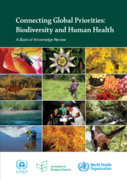
Healthy communities rely on well-functioning ecosystems. They provide clean air, fresh water, medicines and food security. They also limit disease and stabilize the climate. But biodiversity loss is happening at unprecedented rates, impacting human health
...
worldwide, according to a new state of knowledge review of the Convention on Biological Diversity (CBD) and WHO.
The report synthesizes the available information on the most important inter-linkages between biodiversity, ecosystem stability, and epidemic infectious diseases such as the Ebola virus; and the connection between biodiversity, nutritional diversity and health. It also covers the potential benefits of closer partnerships between conservation and health, from improved surveillance of infectious diseases in wildlife and human populations, to promoting access to green spaces to promote physical activity and mental health. It also highlights the many areas in which further research is needed.
The Joint report hopes to provide a useful reference for the Sustainable Development Goals and post-2015 development agenda, which represents an unique opportunity to promote integrated approaches to biodiversity and health by highlighting that biodiversity contributes to human well-being, and highlighting that biodiversity needs protection for development to be sustainable.
more
