
Filter
1846
Filtered Results: 1846
Text search:
World
Health
Organization
(WHO),
Regional
Office
for
South-East
Asia
Featured
Recommendations
176
New Publications
478
Language
Document type
No document type
894
Studies & Reports
432
Guidelines
247
Manuals
109
Strategic & Response Plan
77
Training Material
26
Fact sheets
22
Situation Updates
19
Resource Platforms
11
Infographics
5
Brochures
2
Online Courses
2
Countries / Regions
Global
126
South–East Asia Region
73
India
71
Myanmar / Burma
71
Nepal
49
Asia
47
Bangladesh
36
Philippines
30
Western and Central Europe
29
Indonesia
29
Africa
25
Cambodia
22
Ethiopia
22
Kenya
17
Uganda
17
Thailand
14
Syria
14
Tanzania
14
Western Pacific Region
14
Middle East and North Africa
13
Liberia
13
South Africa
12
Pakistan
12
Eastern Europe
11
Ukraine
10
Ghana
10
Afghanistan
10
Zambia
10
Latin America and the Carribbean
9
West and Central Africa
9
Sierra Leone
8
Nigeria
8
Malawi
8
Mozambique
8
East and Southern Africa
8
Sri Lanka
8
China
7
Rwanda
7
Laos
7
Haiti
7
Yemen
7
Zimbabwe
6
Congo, Democratic Republic of
6
Russia
6
South Sudan
6
Somalia
6
Senegal
5
Eastern Europe and Central Asia
5
Vietnam
5
Papua New Guinea
5
Sudan
5
Timor Leste/ East Timor
4
Turkey
4
Iran
4
Venezuela
4
Moldova
4
North Macedonia
3
Burkina Faso
3
Guinea
3
Jordan
3
Georgia
3
Central African Republic
3
Iraq
3
Eswatini/ Swaziland
3
North Korea
2
Mexico
2
Kazakhstan
2
Cameroon
2
Albania
2
Malaysia
2
Belarus
2
Bosnia and Herzegovina
2
Lebanon
2
Namibia
2
Bhutan
2
Madagascar
2
Tajikistan
1
Colombia
1
Lesotho
1
Canada
1
Singapore
1
Kyrgyzstan
1
Peru
1
Vanuatu
1
Morocco
1
Mongolia
1
Qatar
1
Armenia
1
USA
1
Guinea-Bissau
1
Croatia
1
Hungary
1
Saudi Arabia
1
Paraguay
1
Gabon
1
Turkmenistan
1
Japan
1
Belgium
1
Maldives
1
Tunisia
1
Argentina
1
Brazil
1
Djibouti
1
Egypt
1
Romania
1
Greece
1
Palestine
1
Poland
1
Mali
1
Angola
1
Chad
1
Botswana
1
Ecuador
1
Solomon Islands
1
Authors & Publishers
Publication Years
Category
Countries
460
Clinical Guidelines
189
Key Resources
133
Public Health
132
Women & Child Health
132
Capacity Building
39
Pharmacy & Technologies
21
Toolboxes
HIV
186
Mental Health
144
COVID-19
128
Planetary Health
113
TB
89
NTDs
76
AMR
66
Global Health Education
59
Disability
56
Rapid Response
51
Refugee
46
Caregiver
45
NCDs
37
Natural Hazards
35
Health Financing Toolbox
34
Malaria
30
Conflict
30
2.0 Rapid Response
29
Pharmacy
22
Zika
20
Ebola & Marburg
16
Cholera
12
Polio
12
Specific Hazards
9
Typhoon
3
Social Ethics
1

This training module on malaria case management has been developed to support the staff involved in malaria control and elimination programmes in the effective organization of malaria diagnosis and case management services
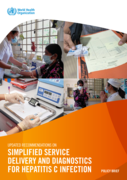
Updated recommendations on simplified service delivery and diagnostics for hepatitis C infection
recommended
Policy Brief. 24 June 2022. This policy brief, one of two on the updated hepatitis C (HCV) guidelines, focuses on the new recommendations on simplified service delivery for a public health approach to HCV testing, care and treatment. These recommendations include decentralization, integration and ta...

The "Assessing National Capacity for the Prevention and Control of Noncommunicable Diseases: Report of the 2021 Global Survey" by WHO examines the global state of readiness and infrastructure for managing noncommunicable diseases (NCDs) across countries. Based on the 2021 survey, it analyzes nationa...
Rreport of a WHO Consultative Meeting Kolkata India 2012

Men lag behind women regarding use of HIV services and represent the majority of individuals living with uncontrolled HIV, advanced HIV, and who experience HIV-related mortality. Men (15+) globally are less likely than women (15+) to know their HIV status (83% for men vs 91% for women), be on antire...
The recommendations cover the level of blood pressure to start medication, what type of medicine or combination of medicines to use, the target blood pressure level, and how often to have follow-up checks on blood pressure. In addition, the guideline provides the basis for how physicians and other h...
The global cholera statistics for 2024, showing an increase in both the number of people who fell sick and died from the disease.
Reported cholera cases rose by 5% and deaths by 50% in 2024 compared to 2023, with more than 6000 people dying from a disease that is both preventable and treatable. Whi...
This document sets out the criteria and procedures to be followed by countries in verifying the interruption of yaws transmission. It is intended for use by international verification teams, national yaws eradication programmes and WHO technical staff involved in the eradication of yaws.
The document provides guidance on the tools, activities and strategies required to achieve malaria elimination and prevent re-establishment of transmission in countries, regardless of where they lie across the spectrum of transmission intensity. It is intended to inform national malaria elimination ...
These guidelines provide a recommendation on iodine thyroid blocking (ITB), via oral administration of stable iodine, as an urgent protective action in responding to a nuclear accident. This recommendation aims to support emergency planners, policy makers, public health specialists, clinicians and o...

The objectives of these WHO guidelines are to provide updated evidence- based recommendations for the treatment of persons with hepatitis C infection using, where possible, all DAA-only combinations. The guidelines also provide recommendations on the preferred regimens based on a patient’s HCV gen...
WHO’s total revenue in 2020 was US$ 4299 million and total expenses were US$ 3561 million, resulting in a surplus of US$ 824 million, which includes finance revenue (e.g. interest and investment income) of US$ 86 million, representing increases of 38% and 15% in revenue and expenses respectively. ...

Laboratory manual for yellow fever
recommended
This WHO laboratory manual provides the most up to date methods and procedures for the laboratory identification of yellow fever virus infection in humans. It provides guidance on the establishment and maintenance of an effective laboratory providing routine surveillance testing for yellow fever, wh...

This guide provides strategic direction for host countries, event organizers, health authorities, and key stakeholders to effectively plan and conduct Simulation Exercises (SimEx) and After Action Reviews (AARs) for mass gathering events. Packed with practical tools, it empowers users to seamlessly ...

This document is an output of a WHO cross-programme initiative aiming to improve the prevention, diagnosis and management of anaemia and thereby accelerate reduction in its prevalence. It comes at an important time, midway through the era of the Sustainable Development Goals, when progress in reduci...
July 2018
This fourth edition of the Unitaid/WHO market and technology landscape: HIV rapid diagnostic tests for self-testing report summarizes the current HIV testing gap; the challenges facing efforts to scale up; and the potential role HIV self-testing (HIVST) could play to achieve the United...

Due to the heterogeneous distribution of malaria transmission and its determinants, subnational tailoring (SNT) provides an analytical framework to facilitate the targeting of each population with appropriate intervention packages for maximum impact to inform national strategic planning and prioriti...

This document is for public health specialists, health emergency responders, clinicians, health facility managers, health and care workers and IPC practitioners including but not limited to those working in primary care clinics, sexual health clinics, emergency departments, dental practices, infecti...
WHO has developed this manual in order to strengthen the laboratory diagnosis and virological surveillance of influenza infection.
