
Filter
4332
Text search:
emergency
safety
Featured
490
1160
Language
4100
121
91
73
71
51
49
30
14
12
10
9
7
7
4
4
4
4
4
4
4
4
4
4
4
4
4
3
3
3
3
3
3
3
2
2
2
2
2
2
2
2
2
2
2
2
2
2
2
2
1
1
1
1
1
1
1
1
Document type
2073
740
673
333
233
106
75
61
11
11
7
4
4
1
Countries
199
145
122
112
107
102
92
92
89
80
77
76
72
67
67
60
55
54
51
47
45
42
41
40
39
36
35
35
33
32
30
28
27
24
24
22
22
21
20
20
18
17
16
16
15
15
14
14
14
13
13
13
13
12
11
11
11
11
10
10
10
10
9
9
9
8
8
7
7
6
6
6
6
5
5
5
5
4
4
4
4
4
4
4
4
4
4
3
3
3
3
3
3
3
3
3
2
2
2
2
2
2
2
2
2
2
2
2
2
2
2
1
1
1
1
1
1
1
1
1
1
1
1
1
1
1
1
1
1
1
1
1
1
1
1
1
1
1
Authors & Publishers
641
172
119
106
92
91
74
49
42
42
42
40
37
33
29
26
26
26
26
25
23
23
22
22
22
21
20
19
18
18
17
16
16
16
16
15
15
14
14
14
14
14
14
13
13
12
12
12
11
11
11
11
11
10
10
10
10
9
9
9
9
9
9
9
9
9
9
9
9
9
9
9
8
8
8
8
8
8
8
8
8
8
7
7
7
7
7
7
7
7
7
7
7
7
7
6
6
6
6
6
6
6
6
6
6
6
6
6
6
6
6
6
6
5
5
5
5
5
5
5
5
5
5
5
5
5
5
5
5
5
5
5
5
5
5
5
5
5
5
5
5
5
5
5
4
4
4
4
4
4
4
4
4
4
4
4
4
4
4
4
4
4
4
4
4
4
4
4
4
4
4
4
4
4
4
4
4
4
4
4
4
4
4
4
4
4
4
4
4
4
4
4
3
3
3
3
3
3
3
3
3
3
3
3
3
3
3
3
3
3
3
3
3
3
3
3
3
3
3
3
3
3
3
3
3
3
3
3
3
3
3
3
3
3
3
3
3
3
3
3
3
3
3
3
3
3
3
3
3
3
3
3
3
3
3
3
3
3
3
3
3
3
3
3
3
3
3
3
3
3
3
2
2
2
2
2
2
2
2
2
2
2
2
2
2
2
2
2
2
2
2
2
2
2
2
2
2
2
2
2
2
2
2
2
2
2
2
2
2
2
2
2
2
2
2
2
2
2
2
2
2
2
2
2
2
2
2
2
2
2
2
2
2
2
2
2
2
2
2
2
2
2
2
2
2
2
2
2
2
2
2
2
2
2
2
2
2
2
2
2
2
2
2
2
2
2
2
2
2
2
2
2
2
2
2
2
2
2
2
2
2
2
2
2
2
2
2
2
2
2
2
2
2
2
2
2
2
2
2
2
2
2
2
2
2
2
2
2
2
2
2
2
2
2
2
2
2
2
2
2
2
2
2
2
2
2
2
2
2
2
2
2
2
2
2
2
2
2
2
2
2
2
2
2
2
2
2
2
2
2
2
2
2
2
2
2
2
2
2
2
2
2
2
2
2
2
2
2
2
2
2
2
2
2
2
2
2
2
2
2
2
2
2
2
2
2
2
2
2
2
2
2
2
2
2
2
2
2
2
2
2
2
2
2
2
2
2
2
1
1
1
1
1
1
1
1
1
1
1
1
1
1
1
1
1
1
1
1
1
1
1
1
1
1
1
1
1
1
1
1
1
1
1
1
1
1
1
1
1
1
1
1
1
1
1
1
1
1
1
1
1
1
1
1
1
1
1
1
1
1
1
1
1
1
1
1
1
1
1
1
1
1
1
1
1
1
1
1
1
1
1
1
1
1
1
1
1
1
1
1
1
1
1
1
1
1
1
1
1
1
1
1
1
1
1
1
1
1
1
1
1
1
1
1
1
1
1
1
1
1
1
1
1
1
1
1
1
1
1
1
1
1
1
1
1
1
1
1
1
1
1
1
1
1
1
1
1
1
1
1
1
1
1
1
1
1
1
1
1
1
1
1
1
1
1
1
1
1
1
1
1
1
1
1
1
1
1
1
1
1
1
1
1
1
1
1
1
1
1
1
1
1
1
1
1
1
1
1
1
1
1
1
1
1
1
1
1
1
1
1
1
1
1
1
1
1
1
1
1
1
1
1
1
1
1
1
1
1
1
1
1
1
1
1
1
1
1
1
1
1
1
1
1
1
1
1
1
1
1
1
1
1
1
1
1
1
1
1
1
1
1
1
1
1
1
1
1
1
1
1
1
1
1
1
1
1
1
1
1
1
1
1
1
1
1
1
1
1
1
1
1
1
1
1
1
1
1
1
1
1
1
1
1
1
1
1
1
1
1
1
1
1
1
1
1
1
1
1
1
1
1
1
1
1
1
1
1
1
1
1
1
1
1
1
1
1
1
1
1
1
1
1
1
1
1
1
1
1
1
1
1
1
1
1
1
1
1
1
1
1
1
1
1
1
1
1
1
1
1
1
1
1
1
1
1
1
1
1
1
1
1
1
1
1
1
1
1
1
1
1
1
1
1
1
1
1
1
1
1
1
1
1
1
1
1
1
1
1
1
1
1
1
1
1
1
1
1
1
1
1
1
1
1
1
1
1
1
1
1
1
1
1
1
1
1
1
1
1
1
1
1
1
1
1
1
1
1
1
1
1
1
1
1
1
1
1
1
1
1
1
1
1
1
1
1
1
1
1
1
1
1
1
1
1
1
1
1
1
1
1
1
1
1
1
1
1
1
1
1
1
1
1
1
1
1
1
1
1
1
1
1
1
1
1
1
1
1
1
1
1
1
1
1
1
1
1
1
1
1
1
1
1
1
1
1
1
1
1
1
1
1
1
1
1
1
1
1
1
1
1
1
1
1
1
1
1
1
1
1
1
1
1
1
1
1
1
1
1
1
1
1
1
1
1
1
1
1
1
1
1
1
1
1
1
1
1
1
1
1
1
1
1
1
1
1
1
1
1
1
1
1
1
1
1
1
1
1
1
1
1
1
1
1
1
1
1
1
1
1
1
1
1
1
1
1
1
1
1
1
1
1
1
1
1
1
1
1
1
1
1
1
1
1
1
1
1
1
1
1
1
1
1
1
1
1
1
1
1
1
1
1
1
1
1
1
1
1
1
1
1
1
1
1
1
1
1
1
1
1
1
1
1
1
1
1
1
1
1
1
1
1
1
1
1
1
1
1
1
1
1
1
1
1
1
1
1
1
1
1
1
1
1
1
1
1
1
1
1
1
1
1
1
1
1
1
1
1
1
1
1
1
1
1
1
1
1
1
1
1
1
1
1
1
1
1
1
1
1
1
1
1
1
1
1
1
1
1
1
1
1
1
1
1
1
1
1
1
1
1
1
1
1
1
1
1
1
1
1
1
1
1
1
1
1
1
1
1
1
1
1
1
1
1
1
1
1
1
1
1
1
1
1
1
1
1
1
1
1
1
1
1
1
1
1
1
1
1
1
1
1
1
1
1
1
1
1
1
1
1
1
1
1
1
1
1
1
1
1
1
1
1
1
1
1
1
1
1
1
1
1
1
1
1
1
1
1
1
1
1
1
1
1
1
1
1
1
1
1
1
1
1
1
1
1
1
1
1
1
1
1
1
1
1
1
1
1
1
1
1
1
1
1
1
1
1
1
1
1
1
1
1
1
1
1
1
1
1
1
1
1
1
1
1
1
1
1
1
1
1
1
1
1
1
1
1
1
1
1
1
1
1
1
1
1
1
1
1
1
1
1
1
1
1
1
1
1
1
1
1
1
1
1
1
1
1
1
1
1
1
1
1
1
1
1
1
1
1
1
1
1
1
1
1
1
1
1
1
1
1
1
1
1
1
1
1
1
1
1
1
1
1
1
1
1
1
1
1
1
1
1
1
1
1
1
1
1
1
1
1
1
1
1
1
1
1
1
1
1
1
1
1
1
1
1
1
1
1
1
1
1
1
1
1
1
1
1
1
1
1
1
1
1
1
1
1
1
1
1
1
1
1
1
1
1
1
1
1
1
1
1
1
1
1
1
1
1
1
1
1
1
1
1
1
1
1
1
1
1
1
1
1
1
1
1
1
1
1
1
1
1
1
1
1
1
1
1
1
1
1
1
1
1
1
1
1
1
1
1
1
1
1
1
1
1
1
1
1
1
1
1
1
1
1
1
1
1
1
1
1
1
1
1
1
1
1
1
1
1
1
1
1
1
1
1
1
1
1
1
1
1
1
1
1
1
1
1
1
1
1
1
1
1
1
1
1
1
1
1
1
1
1
1
1
1
1
1
1
1
1
1
1
1
1
1
1
1
1
1
1
1
1
1
1
1
1
1
1
1
1
1
1
1
1
1
1
1
1
1
1
1
1
1
1
1
1
1
1
1
1
1
1
1
1
1
1
1
1
1
1
1
1
1
1
1
1
1
1
1
1
1
1
1
1
1
1
1
1
1
1
1
1
1
1
1
1
1
1
1
1
1
1
1
1
1
1
1
1
1
1
1
1
1
1
1
1
1
1
1
1
1
1
1
1
1
1
1
1
1
1
1
1
1
1
1
1
1
1
1
1
1
1
1
1
1
1
1
1
1
1
1
1
1
1
1
1
1
1
1
1
1
1
1
1
1
1
1
1
1
1
1
1
1
1
1
1
1
1
1
1
1
1
1
1
1
1
1
1
1
1
1
1
1
1
1
1
1
1
1
1
1
1
1
1
1
1
1
1
1
1
1
1
1
1
1
1
1
1
1
1
1
1
1
1
1
1
1
1
1
1
1
1
1
1
1
1
1
1
1
1
1
1
1
1
1
1
1
1
1
1
1
1
1
1
1
1
1
1
1
1
1
1
1
1
1
1
1
1
1
1
1
1
1
1
1
1
1
1
1
1
1
1
1
1
1
1
1
1
1
1
1
1
1
1
1
1
1
1
1
1
1
1
1
1
1
1
1
1
1
1
1
1
1
1
1
1
1
1
1
1
1
1
1
1
1
1
1
1
1
1
1
1
1
1
1
1
1
1
1
1
1
1
1
1
1
1
1
1
1
1
1
1
1
1
1
1
1
1
1
1
1
1
1
1
1
1
1
1
1
1
1
1
1
1
1
1
1
1
1
1
1
1
1
1
1
1
1
1
1
1
1
1
1
1
1
1
1
1
1
1
1
1
1
1
1
1
1
1
1
1
1
1
1
1
1
1
1
1
1
1
1
1
1
1
1
1
1
1
1
1
1
1
1
1
1
1
1
1
1
1
1
1
1
1
1
1
1
1
1
1
1
1
1
1
1
1
1
1
1
1
1
1
1
1
1
1
1
1
1
1
1
1
1
1
1
1
1
1
1
1
1
1
1
1
1
1
1
1
1
1
1
1
1
1
1
1
1
1
1
1
1
1
1
1
1
1
1
1
1
1
1
1
1
1
1
1
1
1
1
1
1
1
1
1
1
1
1
1
1
1
1
1
1
1
1
1
1
1
1
1
1
1
1
1
1
1
1
1
1
1
1
1
1
1
1
1
1
1
1
1
1
1
1
1
1
1
1
1
1
1
1
1
1
1
1
1
1
1
1
1
1
1
1
1
1
1
1
1
1
1
1
1
1
1
1
1
1
1
1
1
1
1
1
1
1
1
1
1
1
1
1
1
1
1
1
1
1
1
1
1
1
1
1
1
1
1
1
1
1
1
1
1
1
1
1
1
1
1
1
1
1
1
1
1
1
1
1
1
1
1
1
1
1
1
1
1
1
1
1
1
1
1
1
1
1
1
1
1
1
1
1
1
1
1
1
1
1
1
1
1
1
1
1
1
1
1
1
1
1
1
1
1
1
1
1
1
1
1
1
1
1
1
1
1
1
1
1
1
1
1
1
1
1
1
1
1
1
1
1
1
1
1
1
1
1
1
1
1
1
1
1
1
1
1
1
1
1
1
1
1
1
1
1
1
1
1
1
1
1
1
1
1
1
1
1
1
1
1
1
1
1
1
1
1
1
1
1
1
1
1
1
1
1
1
1
1
1
1
1
1
1
1
1
1
1
1
1
1
1
1
1
1
1
1
1
1
1
1
1
1
1
1
1
1
1
1
1
1
1
1
1
1
1
1
1
1
1
1
1
1
1
1
1
1
1
1
1
1
1
1
1
1
1
1
1
1
1
1
1
1
1
1
1
1
1
1
1
1
1
1
1
1
1
1
1
1
1
1
1
1
1
1
1
1
1
1
1
1
1
1
1
1
1
1
1
1
1
1
1
1
1
1
1
1
1
1
1
1
1
1
1
1
1
1
1
1
1
1
1
1
1
1
1
1
1
1
1
1
1
1
1
1
1
1
1
1
1
1
1
1
1
1
1
1
1
1
1
1
1
1
1
1
1
1
1
1
1
1
1
1
1
1
1
1
1
1
1
1
1
1
1
1
1
1
1
1
1
1
1
1
1
1
1
1
1
1
1
1
1
1
1
1
1
1
1
1
1
1
1
1
1
1
1
1
1
1
1
1
1
1
1
1
1
1
1
1
1
1
1
1
1
1
1
1
1
1
1
1
1
1
1
1
1
1
1
1
1
1
1
1
1
1
1
1
1
1
1
1
1
1
1
1
1
1
1
1
1
1
1
1
1
1
1
1
1
1
1
1
1
1
1
1
1
1
1
1
1
1
1
1
1
1
1
1
1
1
1
1
1
1
1
1
1
1
1
1
1
1
1
1
1
1
1
1
1
1
1
1
1
1
1
1
1
1
1
1
1
1
1
1
1
1
1
1
1
1
1
1
1
1
1
1
1
1
1
1
1
1
1
1
1
1
1
1
1
1
1
1
1
1
1
1
1
1
1
1
1
1
1
1
1
1
1
1
1
1
1
1
1
1
1
1
1
1
1
1
1
1
1
1
1
1
1
1
1
1
1
1
1
1
1
1
1
1
1
1
1
1
1
1
1
1
1
1
1
1
1
1
1
1
1
1
1
1
1
1
1
1
1
1
1
1
1
1
1
1
1
1
1
1
1
1
1
1
1
1
1
1
1
1
1
1
Publication Years
1578
2385
348
19
1
1
Category
1581
461
282
265
217
81
42
Toolboxes
641
297
237
208
148
146
138
135
131
111
106
94
92
89
80
64
60
51
47
42
37
29
25
25
5
3
2

What are the FP and CAC competencies?
Through the clear articulation of the family planning and comprehensive abortion care (FP and CAC) competencies for the primary health care workforce, the aim is to advance improvements in FP and CAC service delivery by aligning health worker education approach
...
es with population health needs and health system demands.
This document, which describes these competencies in detail, is intended to:
be a foundational tool to be adopted and adapted by educators and regulators for FP and CAC providers (students) with a pre-service training pathway of at least 12 months;
describe competencies that are relevant to current and future health practice;
enable widespread use of the competencies not only for curriculum development for pre-service education, but also for in-service education, regulation, qualifications, quality assurance, personal development, performance evaluation, recruitment, management and career progression;
focus on the core functions of FP and CAC providers within broader efforts towards achieving universal health coverage
more

This manual provides a framework for morbidity management and disability prevention of patients affected by NIDs and gives specific guidance for the proper care of patients suffering from chronic conditions caused by lymphatic filariasis, leprosy, trachoma, and Chagas disease. It is intended to be u
...
sed mainly by health care workers at the primary health care level, but health workers at more complex and specialized levels may also find it useful.
more
Los coronavirus son un grupo de virus ARN altamente diversos de la familia Coronaviridae que se dividen en
4 géneros: alfa, beta, gamma y delta, y que causan enfermedades de leves a graves en humanos y animales
(1-3). Existen coronavirus humanos endémicos como los alfacoronavirus 229E y NL63 y l
...
os betacoronavirus
OC43 y HKU1 que pueden causar enfermedades de tipo influenza o neumonía en humanos. Sin embargo,
tres betacoronavirus zoonóticos que pueden causar enfermedad severa en humanos han emergido: el
coronavirus del Síndrome respiratorio agudo grave (SARS-CoV), el coronavirus del Síndrome respiratorio de
Oriente Medio (MERS-CoV) y el virus de COVID-19 (SARS-CoV-2).
more

This Guidance Note is meant to help protection cluster coordinators apply nexus approaches in a practical way by, providing concrete steps and means to address prevalent or longstanding protection issues, risk patterns, trends and chronic vulnerabilities. The guidance calls for a practical, problem-
...
solving approach that seeks opportunities to identify and collaborate with actors beyond the humanitarian sphere to address deep-rooted protection issues
more

The HHFA Comprehensive guide serves as the main reference document for planning and implementing a country HHFA. This guide will promote understanding of:
What the HHFA is and the information it can and cannot provide.
The HHFA modules, questionnaires and CSPro electronic data collection tool.
Th
...
e HHFA indicators, indices and their organization within the HHFA indicator inventory platform.
The HHFA data analysis platform.
The HHFA sampling and data collection methodologies.
The detailed steps involved in planning and implementing an HHFA.
Key concepts in review, interpretation and communication of HHFA findings.
more

The Strategic Advisory Group of Experts (SAGE) on Immunization held a meeting on 3-6 October 2022. This report summarizes the discussions, conclusions and recommendations.
It covers the following items:
Global Reports
Immunization Agenda 2030 and Regional reports
Monkeypox
RSV
COVID-19 vacci
...
nes
Polio vaccination
Ebola (Sudan ebolavirus outbreak update)
more

The sixteenth meeting of the Strategic and Technical Advisory Group for Neglected Tropical Diseases (STAG-NTD) was held as a hybrid meeting, 27–28 September 2022.
Dr Ren Minghui, Assistant Director-General, Universal Health Coverage/Communicable and Noncommunicable Diseases, welcomed participan
...
ts to the meeting. He said the World Health Organization’s Department of Control of Neglected Tropical Diseases (WHO/NTD) was in a state of transition. Following the death of the late esteemed Director Dr Mwelecele Ntuli Malecela earlier in the year, Dr Gautam Biswas had taken over as Acting Director but would soon retire; the appointment of a new Director was under way. Owing to rotation of STAG-NTD members, this would be the last meeting for some and the first meeting for several new participants. The work however would continue with the same commitment. Discussions over the next two days would focus on critical issues regarding recovery of NTD services following the disruptions caused by coronavirus disease (COVID-19), which had impacted many health services worldwide. He looked forward to receiving the advice and guidance of STAG-N
more

The World Health Organization (WHO) and the global community of countries, partners, donors, technical experts, scientists and field implementation teams continue to work towards the ultimate goal of a world free of the burden of neglected tropical diseases (NTDs).

The Return Counselling Toolkit is a capacity-building instrument aimed at providing a harmonized and coherent approach to return counselling, based on key migrant-centred principles while protecting migrants’ rights. Mindful of the specific needs and rights pertaining to children, this additional
...
module on counselling children and families further complements the first five modules of the Return Counselling Toolkit. It provides specialized guidance on how to prepare and deliver return counselling to accompanied, unaccompanied and separated children while upholding child rights and safeguards.
more

States have committed and assumed obligations to address multiple and intersecting forms of discrimination against refugees, internally displaced persons, asylum seekers, returnees and stateless persons. The Global Compact on Refugees places ending discrimination of any kind based on the grounds of
...
race, colour, sex, language, religion, political or other opinion, national or social origin, property, birth, disability, age, or other status at the centre of action to prevent displacement and to ensure peaceful coexistence between refugee and host communities. Narratives about cultural diversity and inclusion are important, but there is also a pressing need in many societies for conversations and action to address racism, racial discrimination, xenophobia and related intolerance.
more

This thematic brief accompanies the Working for Health 2022–2030 Action Plan, serving as a rationale to the related actions of the Working for Health progression model (see Annex). The brief aims to inform Member States, non-state actors and other users of the Action Plan to guide action on inves
...
tments on strengthening protection and performance of the health and care workforce, including the relevant policy landscape, key challenges and future directions.
In doing so, it provides an expanded exploration of the themes beyond what is provided in the Action Plan itself and reflects the topical issues and considerations that shaped its design, including those issues identified in the World Health Assembly Resolution WHA74.14 to protect, safeguard and invest in the health and care workforce (1). The importance of these themes was again emphasized at the Seventy-fifth World Health Assembly, when Resolution WHA75.17: Human resources for health was co-sponsored by over 100 Member States, calling for the adoption and implementation of the Working for Health 2022–2030 Action Plan and utilization of the related Global Health and Care Worker Compact
more
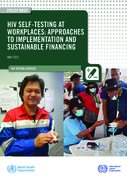
Countries are making progress toward the global goal of 95% of people living with HIV knowing their status by 2025. However, considerable gaps remain in achieving these goals globally. Men in high HIV burden settings and men from key populations in all settings are consistently less likely to know t
...
heir HIV status than women. Globally, 78% of men ages 15 years and older who are living with HIV are aware of their HIV status, compared with 86% of women with HIV of these ages.
Offering HIV testing services, including HIV self-testing, at formal and informal workplaces has emerged as an effective, acceptable and feasible approach for reaching men. A 2018 World Health Organization (WHO) and International Labour Organization (ILO) policy brief provides key guiding principles for HIVST implementation at workplaces. Building on the 2018 policy brief, this brief captures early experience with HIVST implementation at workplaces and discusses emerging approaches of sustainable financing that can be adapted for HIV self-testing at workplaces.
The primary audiences for this policy brief are ministries of health and labour, national HIV programmes, employers’ organizations, workers’ organizations (labour unions), enterprises, implementing partners, including civil society organizations, and health insurance agencies.
more
Leptospirosis is a zoonotic disease with epidemic potential, especially after a heavy rainfall,
caused by a bacterium called Leptospira. Leptospira interrogans is pathogenic to humans and
animals, with more than 200 serologic variants or serovars. Humans usually acquire
leptospirosis through dire
...
ct contact with the urine of infected animals or a urine-contaminated
environment. Human-to-human transmission occurs only very rarely. Leptospirosis may present
with a wide variety of clinical manifestations, from a mild illness that may progress to a serious
and sometimes fatal disease. Its symptoms may mimic many diseases, such as influenza,
dengue and other viral haemorrhagic diseases; making the correct diagnosis (clinical and
laboratory) at the onset of symptoms is important to prevent severe cases and save lives,
primarily in outbreak situations.
more
Sexual exploitation, sexual abuse and sexual harassment (SEAH) violate the rights and wellbeing of the people we serve and the people with whom we serve. Such behaviours are directly in opposition to WHO’s values and our abiding responsibility to do no harm. WHO uses the umbrella term “sexual mi
...
sconduct” to encompass the full spectrum of prohibited and unwanted behaviour of a sexual nature (including rape and sexual assault) as described in WHO’s 2023 Policy for preventing and addressing sexual misconduct (1). This is because all such acts are prohibited – whether perpetrated by WHO’s own personnel or by implementing partners – and therefore constitute misconduct. The term sexual misconduct is also easier to communicate and translate, as
victims and survivors do not always understand the complicated acronyms and definitions used by the United Nations (UN) and the humanitarian sector. However, we use the terms sexual misconduct and SEAH interchangeably as required when we interact with UN and other stakeholders.
more

The WHO continuously reviews available data on SARS-CoV-2 variants of concern. For this version, the global epidemiological
situation of the COVID-19 pandemic as of 21 January 2022 – at a time when the Omicron VOC had been identified in 171
countries across all six WHO Regions and was rapidly re
...
placing Delta worldwide – was considered Omicron has a substantial growth advantage, higher secondary attack rates and a higher observed reproduction number than Delta.
There is now significant evidence that immune evasion contributes to the rapid spread of Omicron. Other factors may be a shorter
serial interval (by about 0.8 to 1.2 days compared to Delta) and potential increased intrinsic transmission fitness . There is
growing evidence that with Omicron, there is lower vaccine effectiveness (VE) against infection and symptomatic disease soon after vaccination compared to Delta. There is also evidence of accelerated waning of VE over time of the primary series against infection and symptomatic disease for the studied vaccines. Further studies are required to better understand the drivers of transmission and declining incidence in various settings. These factors include the intrinsic transmission fitness properties of the virus, degree of immune evasion, vaccination coverage and level of vaccine-derived and post-infection immunity, levels of social mixing and degree of application of public health and social measures (PHSM).
more

Rabies is fatal, vaccine-preventable disease responsible for an estimated 59,000 human deaths each year. Most cases are transmitted by dogs, and most deaths occur in underserved populations in Africa and Asia. Approximately 40% of deaths occur in children.

Compendium of Animal Rabies Prevention and Control, 2016
Brown C.M., Slavinski S., Ettestad P. et al
National Association of State Public Health Veterinarians Compendium of Animal Rabies Prevention and Control Committee
(2016)
C2
Rabies is a fatal viral zoonosis and serious public health problem.1 All mammals are believed to be susceptible to the disease, and for the purposes of this document, use of the term animal refers to mammals. The disease is an acute, progressive encephalitis caused by viruses in the genus Lyssavirus
...
.
2 Rabies virus is the most important lyssavirus globally. In the
United States, multiple rabies virus variants are maintained in wild mammalian reservoir populations such as raccoons, skunks, foxes, and bats. Although the United States has been declared free from transmission of canine rabies virus variants, there is always a risk of reintroduction of these variants.The rabies virus is usually transmitted from animal to animal through bites. The incubation period is
highly variable. In domestic animals, it is generally 3 to 12 weeks, but can range from several days to months, exceeding 6 months.8 Rabies is communicable during the period of salivary shedding of rabies virus. Experimental and historic evidence documents that dogs, cats, and ferrets shed the virus for a few days prior to the onset of clinical signs and during illness. Clinical signs of rabies are variable and include inappetance, dysphagia, cranial nerve deficits, abnormal behavior, ataxia, paralysis, altered vocalization, and seizures. Progression to death is rapid. There are currently no known effective rabies antiviral drugs.
more
Guide for the Medical, Veterinary and allied Professions
Bishop, G.; Durrheim, D.; Kloeck, P.
Department: Agriculture, Foresty and Fisheries - Republic of South Africa
(2010)
CC
Rabies is a disease of animals but too often the outcome is gauged in terms of human suffering and
death. Despite this, in areas of the world where rabies is endemic there is often a lack of communication between veterinary and medical professionals, to the extent that the disease continues to thri
...
ve and potential victims are not treated. The problem is partly
exacerbated by a lack of awareness and experience of the disease and of what to do when confronted by suspect cases. In these technologically advanced days, although it is possible to learn “all there is to know” about almost any subject, it is sometimes difficult to distil the essence.
more

More than 700 000 people lose their life to suicide every year. A core foundation of suicide prevention is the timely registration and regular monitoring of suicide and self-harm. Surveillance data can be used to show important progress towards reaching global targets, such as reducing the suicide r
...
ate by one third by 2030 as articulated in the UN SDGs and in the WHO Mental Health Action Plan 2013-2030. However, there are considerable discrepancies in the quality of data on suicide and self-harm globally. The aim of this training manual is to equip fieldworkers and supervisors with the skills to collect and manage data on suicide and self-harm in the community via key informants, health-care facilities and police records. In doing so, the value and overall goal is to strengthen the surveillance of suicide and self-harm in communities, particularly in LMICs and hard-to-reach communities where CRVS systems are weak or absent.
more

Violence against women and girls is widespread in the Region of the Americas, resulting in enormous consequences for the health and wellbeing of women and girls, their families and communities. These costs are unacceptable and they can be prevented through evidence-based action, including the health
...
sector through its policies and protocols, as well as in collaboration with other sectors. This report remains the first of its kind and is a major milestone for the Region. It is specifically informed by the commitments of Member States in the regional Strategy and Plan of Action on Strengthening the Health System to Address Violence against Women. The report provides an analysis of efforts to advance the prevention of violence against women through health policies, clinical protocols, multisectoral plans and related approaches across the Americas. Attention to this topic is timely, as the COVID-19 pandemic has created new visibility for this area of work. This report offers critical information on efforts in the Region that can be learned from and used to build upon in the future to prevent and respond to violence against all women and girls everywhere.
more
