
Filter
5560
Text search:
public
health
authorities
Featured
567
1392
Language
5441
158
121
80
73
51
39
20
10
9
8
7
7
6
6
6
6
5
5
5
5
4
4
4
4
4
4
4
4
4
4
4
3
3
3
3
3
3
3
3
3
2
2
2
2
2
2
2
2
2
2
2
1
1
1
1
1
1
1
1
1
Document type
2541
1045
889
422
308
127
96
87
14
11
9
9
1
1
Countries
299
181
153
114
110
109
95
92
92
84
81
77
71
70
70
70
69
64
62
57
57
52
51
51
50
43
40
37
37
36
36
33
32
30
29
29
29
29
29
28
28
28
24
24
23
23
20
20
18
18
17
17
17
17
16
16
15
14
14
14
14
13
13
12
11
11
11
10
10
10
9
9
9
9
9
8
8
8
7
7
7
6
6
6
6
6
5
5
5
5
5
5
5
5
5
4
4
4
4
4
4
4
4
4
4
4
4
4
4
3
3
3
3
3
3
3
3
3
3
2
2
2
2
2
2
2
2
2
2
2
2
2
2
2
1
1
1
1
1
1
1
1
1
1
1
1
1
1
1
1
1
1
1
1
1
1
1
1
1
Authors & Publishers
1150
328
198
193
116
113
110
84
55
49
48
43
42
41
41
26
26
25
24
23
23
22
22
22
22
21
21
21
20
20
20
19
19
19
19
17
17
16
16
15
15
15
15
14
14
14
14
14
13
13
13
13
12
12
11
11
11
10
10
10
10
10
10
10
10
10
10
10
9
9
9
9
9
9
8
8
8
8
8
8
8
8
8
7
7
7
7
7
7
7
7
7
7
7
7
7
7
7
7
7
7
7
6
6
6
6
6
6
6
6
6
6
6
6
6
6
6
6
6
6
6
6
5
5
5
5
5
5
5
5
5
5
5
5
5
5
5
5
5
5
5
5
5
5
5
4
4
4
4
4
4
4
4
4
4
4
4
4
4
4
4
4
4
4
4
4
4
4
4
4
4
4
4
4
4
4
4
4
4
4
4
4
4
4
4
4
4
4
4
4
4
4
4
4
4
3
3
3
3
3
3
3
3
3
3
3
3
3
3
3
3
3
3
3
3
3
3
3
3
3
3
3
3
3
3
3
3
3
3
3
3
3
3
3
3
3
3
3
3
3
3
3
3
3
3
3
3
3
3
3
3
3
3
3
3
3
3
3
3
3
3
3
3
3
3
3
3
3
3
3
3
3
3
3
3
3
3
3
3
3
3
3
3
2
2
2
2
2
2
2
2
2
2
2
2
2
2
2
2
2
2
2
2
2
2
2
2
2
2
2
2
2
2
2
2
2
2
2
2
2
2
2
2
2
2
2
2
2
2
2
2
2
2
2
2
2
2
2
2
2
2
2
2
2
2
2
2
2
2
2
2
2
2
2
2
2
2
2
2
2
2
2
2
2
2
2
2
2
2
2
2
2
2
2
2
2
2
2
2
2
2
2
2
2
2
2
2
2
2
2
2
2
2
2
2
2
2
2
2
2
2
2
2
2
2
2
2
2
2
2
2
2
2
2
2
2
2
2
2
2
2
2
2
2
2
2
2
2
2
2
2
2
2
2
2
2
2
2
2
2
2
2
2
2
2
2
2
2
2
2
2
2
2
2
2
2
2
2
2
2
2
2
2
2
2
2
2
2
2
2
2
2
2
2
2
2
2
2
2
2
2
2
2
2
2
2
2
2
2
2
2
2
2
2
2
2
2
2
2
2
2
2
2
2
2
2
2
2
2
2
2
2
2
2
2
2
2
2
2
2
2
2
2
2
2
2
2
2
2
2
2
2
1
1
1
1
1
1
1
1
1
1
1
1
1
1
1
1
1
1
1
1
1
1
1
1
1
1
1
1
1
1
1
1
1
1
1
1
1
1
1
1
1
1
1
1
1
1
1
1
1
1
1
1
1
1
1
1
1
1
1
1
1
1
1
1
1
1
1
1
1
1
1
1
1
1
1
1
1
1
1
1
1
1
1
1
1
1
1
1
1
1
1
1
1
1
1
1
1
1
1
1
1
1
1
1
1
1
1
1
1
1
1
1
1
1
1
1
1
1
1
1
1
1
1
1
1
1
1
1
1
1
1
1
1
1
1
1
1
1
1
1
1
1
1
1
1
1
1
1
1
1
1
1
1
1
1
1
1
1
1
1
1
1
1
1
1
1
1
1
1
1
1
1
1
1
1
1
1
1
1
1
1
1
1
1
1
1
1
1
1
1
1
1
1
1
1
1
1
1
1
1
1
1
1
1
1
1
1
1
1
1
1
1
1
1
1
1
1
1
1
1
1
1
1
1
1
1
1
1
1
1
1
1
1
1
1
1
1
1
1
1
1
1
1
1
1
1
1
1
1
1
1
1
1
1
1
1
1
1
1
1
1
1
1
1
1
1
1
1
1
1
1
1
1
1
1
1
1
1
1
1
1
1
1
1
1
1
1
1
1
1
1
1
1
1
1
1
1
1
1
1
1
1
1
1
1
1
1
1
1
1
1
1
1
1
1
1
1
1
1
1
1
1
1
1
1
1
1
1
1
1
1
1
1
1
1
1
1
1
1
1
1
1
1
1
1
1
1
1
1
1
1
1
1
1
1
1
1
1
1
1
1
1
1
1
1
1
1
1
1
1
1
1
1
1
1
1
1
1
1
1
1
1
1
1
1
1
1
1
1
1
1
1
1
1
1
1
1
1
1
1
1
1
1
1
1
1
1
1
1
1
1
1
1
1
1
1
1
1
1
1
1
1
1
1
1
1
1
1
1
1
1
1
1
1
1
1
1
1
1
1
1
1
1
1
1
1
1
1
1
1
1
1
1
1
1
1
1
1
1
1
1
1
1
1
1
1
1
1
1
1
1
1
1
1
1
1
1
1
1
1
1
1
1
1
1
1
1
1
1
1
1
1
1
1
1
1
1
1
1
1
1
1
1
1
1
1
1
1
1
1
1
1
1
1
1
1
1
1
1
1
1
1
1
1
1
1
1
1
1
1
1
1
1
1
1
1
1
1
1
1
1
1
1
1
1
1
1
1
1
1
1
1
1
1
1
1
1
1
1
1
1
1
1
1
1
1
1
1
1
1
1
1
1
1
1
1
1
1
1
1
1
1
1
1
1
1
1
1
1
1
1
1
1
1
1
1
1
1
1
1
1
1
1
1
1
1
1
1
1
1
1
1
1
1
1
1
1
1
1
1
1
1
1
1
1
1
1
1
1
1
1
1
1
1
1
1
1
1
1
1
1
1
1
1
1
1
1
1
1
1
1
1
1
1
1
1
1
1
1
1
1
1
1
1
1
1
1
1
1
1
1
1
1
1
1
1
1
1
1
1
1
1
1
1
1
1
1
1
1
1
1
1
1
1
1
1
1
1
1
1
1
1
1
1
1
1
1
1
1
1
1
1
1
1
1
1
1
1
1
1
1
1
1
1
1
1
1
1
1
1
1
1
1
1
1
1
1
1
1
1
1
1
1
1
1
1
1
1
1
1
1
1
1
1
1
1
1
1
1
1
1
1
1
1
1
1
1
1
1
1
1
1
1
1
1
1
1
1
1
1
1
1
1
1
1
1
1
1
1
1
1
1
1
1
1
1
1
1
1
1
1
1
1
1
1
1
1
1
1
1
1
1
1
1
1
1
1
1
1
1
1
1
1
1
1
1
1
1
1
1
1
1
1
1
1
1
1
1
1
1
1
1
1
1
1
1
1
1
1
1
1
1
1
1
1
1
1
1
1
1
1
1
1
1
1
1
1
1
1
1
1
1
1
1
1
1
1
1
1
1
1
1
1
1
1
1
1
1
1
1
1
1
1
1
1
1
1
1
1
1
1
1
1
1
1
1
1
1
1
1
1
1
1
1
1
1
1
1
1
1
1
1
1
1
1
1
1
1
1
1
1
1
1
1
1
1
1
1
1
1
1
1
1
1
1
1
1
1
1
1
1
1
1
1
1
1
1
1
1
1
1
1
1
1
1
1
1
1
1
1
1
1
1
1
1
1
1
1
1
1
1
1
1
1
1
1
1
1
1
1
1
1
1
1
1
1
1
1
1
1
1
1
1
1
1
1
1
1
1
1
1
1
1
1
1
1
1
1
1
1
1
1
1
1
1
1
1
1
1
1
1
1
1
1
1
1
1
1
1
1
1
1
1
1
1
1
1
1
1
1
1
1
1
1
1
1
1
1
1
1
1
1
1
1
1
1
1
1
1
1
1
1
1
1
1
1
1
1
1
1
1
1
1
1
1
1
1
1
1
1
1
1
1
1
1
1
1
1
1
1
1
1
1
1
1
1
1
1
1
1
1
1
1
1
1
1
1
1
1
1
1
1
1
1
1
1
1
1
1
1
1
1
1
1
1
1
1
1
1
1
1
1
1
1
1
1
1
1
1
1
1
1
1
1
1
1
1
1
1
1
1
1
1
1
1
1
1
1
1
1
1
1
1
1
1
1
1
1
1
1
1
1
1
1
1
1
1
1
1
1
1
1
1
1
1
1
1
1
1
1
1
1
1
1
1
1
1
1
1
1
1
1
1
1
1
1
1
1
1
1
1
1
1
1
1
1
1
1
1
1
1
1
1
1
1
1
1
1
1
1
1
1
1
1
1
1
1
1
1
1
1
1
1
1
1
1
1
1
1
1
1
1
1
1
1
1
1
1
1
1
1
1
1
1
1
1
1
1
1
1
1
1
1
1
1
1
1
1
1
1
1
1
1
1
1
1
1
1
1
1
1
1
1
1
1
1
1
1
1
1
1
1
1
1
1
1
1
1
1
1
1
1
1
1
1
1
1
1
1
1
1
1
1
1
1
1
1
1
1
1
1
1
1
1
1
1
1
1
1
1
1
1
1
1
1
1
1
1
1
1
1
1
1
1
1
1
1
1
1
1
1
1
1
1
1
1
1
1
1
1
1
1
1
1
1
1
1
1
1
1
1
1
1
1
1
1
1
1
1
1
1
1
1
1
1
1
1
1
1
1
1
1
1
1
1
1
1
1
1
1
1
1
1
1
1
1
1
1
1
1
1
1
1
1
1
1
1
1
1
1
1
1
1
1
1
1
1
1
1
1
1
1
1
1
1
1
1
1
1
1
1
1
1
1
1
1
1
1
1
1
1
1
1
1
1
1
1
1
1
1
1
1
1
1
1
1
1
1
1
1
1
1
1
1
1
1
1
1
1
1
1
1
1
1
1
1
1
1
1
1
1
1
1
1
1
1
1
1
1
1
1
1
1
1
1
1
1
1
1
1
1
1
1
1
1
1
1
1
1
1
1
1
1
1
1
1
1
1
1
1
1
1
1
1
1
1
1
1
1
1
1
1
1
1
1
1
1
1
1
1
1
1
1
1
1
1
1
1
1
1
1
1
1
1
1
1
1
1
1
1
1
1
1
1
1
1
1
1
1
1
1
1
1
1
1
1
1
1
1
1
1
1
1
1
1
1
1
1
1
1
1
1
1
1
1
1
1
1
1
1
1
1
1
1
1
1
1
1
1
1
1
1
1
1
1
1
1
1
1
1
1
1
1
1
1
1
1
1
1
1
1
1
1
1
1
1
1
1
1
1
1
1
1
1
1
1
1
1
1
1
1
1
1
1
1
1
1
1
1
1
1
1
1
1
1
1
1
1
1
1
1
1
1
1
1
1
1
1
1
1
1
1
1
1
1
1
1
1
1
1
1
1
1
1
1
1
1
1
1
1
1
1
1
1
1
1
1
1
1
1
1
1
1
1
1
1
1
1
1
1
1
1
1
1
1
1
1
1
1
1
1
1
1
1
1
1
1
1
1
1
1
1
1
1
1
1
1
1
1
1
1
1
1
1
1
1
1
1
1
1
1
1
1
1
1
1
1
1
1
1
1
1
1
1
1
1
1
1
1
1
1
1
1
1
1
1
1
1
1
1
1
1
1
1
1
1
1
1
1
1
1
1
1
1
1
1
1
1
1
1
1
1
1
1
1
1
1
1
1
1
1
1
1
1
1
1
1
1
1
1
1
1
1
1
1
1
1
1
1
1
1
1
1
1
1
1
1
1
1
1
1
1
1
1
1
1
1
1
1
1
1
1
1
1
1
1
1
1
1
1
1
1
1
1
1
1
1
1
1
1
1
1
1
1
1
1
1
1
1
1
1
1
1
1
1
1
1
1
1
1
1
1
1
1
1
1
1
1
1
1
1
1
1
1
1
1
1
1
1
1
1
1
1
1
1
1
1
1
1
1
1
1
1
1
1
1
1
1
1
1
1
1
1
1
1
1
1
1
1
1
1
1
1
1
1
1
1
1
1
1
1
1
1
1
1
1
1
1
1
1
1
1
1
1
1
1
1
1
1
1
1
1
1
1
1
1
1
1
1
1
1
1
1
1
1
1
1
1
1
1
1
1
1
1
1
1
1
1
1
1
1
1
1
1
1
1
1
1
1
1
1
1
1
1
1
1
1
1
1
1
1
1
1
1
1
1
1
1
1
1
1
1
1
1
1
1
1
1
1
1
1
1
1
1
1
1
1
1
1
1
1
1
1
1
1
1
1
1
1
1
1
1
1
1
1
1
1
1
1
1
1
1
1
1
1
1
1
1
1
1
1
1
1
1
1
1
1
1
1
1
1
1
1
1
1
1
1
1
1
1
1
1
1
1
1
1
1
1
1
1
1
1
1
1
1
1
1
1
1
1
1
1
1
1
1
1
1
1
1
1
1
1
1
1
1
1
1
1
1
1
1
1
1
1
1
1
1
1
1
1
1
1
1
1
1
1
1
1
1
1
1
1
1
1
1
1
1
1
1
1
1
1
1
1
1
1
1
1
1
1
1
1
1
1
1
1
1
1
1
1
1
1
1
1
1
1
1
1
1
1
1
1
1
1
1
1
1
1
1
1
1
1
1
1
1
1
1
1
1
1
1
1
1
1
1
1
1
1
1
1
1
1
1
1
1
1
1
1
1
1
1
1
1
1
1
1
1
1
1
1
1
1
1
1
1
1
1
1
1
1
1
1
1
1
1
1
1
1
1
1
1
1
1
1
1
1
1
1
1
1
1
1
1
1
1
1
1
1
1
1
1
1
1
1
1
1
1
1
1
1
1
1
1
1
1
1
1
1
1
1
1
1
1
1
1
1
1
1
1
1
1
1
1
1
1
1
1
1
1
1
1
1
1
1
1
1
1
1
1
1
1
1
1
1
1
1
1
1
1
1
1
1
1
1
1
1
1
1
1
1
1
1
1
1
1
1
1
1
1
1
1
1
1
1
1
1
1
1
1
1
1
1
1
1
1
1
1
1
1
1
1
1
1
1
1
1
1
1
1
1
1
1
1
1
1
1
1
1
1
1
1
1
1
1
1
1
1
1
1
1
1
1
1
1
1
1
1
1
1
1
1
1
1
1
1
1
1
1
1
1
1
1
1
1
1
1
1
1
1
1
1
1
1
1
1
1
1
1
1
1
1
1
1
1
1
1
1
1
1
1
1
1
1
1
1
1
1
1
1
1
1
1
1
1
1
1
1
1
1
1
1
1
1
1
1
1
1
1
1
1
1
1
1
1
1
1
1
1
1
1
1
1
1
1
1
1
1
1
1
1
1
1
1
1
1
1
1
1
1
1
1
1
1
1
1
1
1
1
1
1
1
1
1
1
1
1
1
1
1
1
1
1
1
1
1
1
1
1
1
1
1
1
1
1
1
1
1
1
1
1
1
1
1
1
1
1
1
1
1
1
1
1
1
1
1
1
1
1
1
1
1
1
1
1
1
1
1
1
1
1
1
1
1
1
1
1
1
1
1
1
1
1
1
1
1
1
1
1
1
1
1
1
1
1
1
1
1
1
1
1
1
1
1
1
1
1
1
1
1
1
1
1
1
1
1
1
1
1
1
1
1
1
1
1
1
1
1
1
1
1
1
1
1
1
1
1
1
1
1
1
1
1
1
1
1
1
1
1
1
1
1
1
1
1
1
1
1
1
1
1
1
1
1
1
1
1
1
1
1
1
1
1
1
1
1
1
1
1
1
1
1
1
1
1
1
1
1
1
1
1
1
1
1
1
1
1
1
1
1
1
1
1
1
1
1
1
1
1
1
1
1
1
1
1
1
1
1
1
1
1
1
1
1
1
1
1
1
1
1
1
1
1
1
1
1
1
1
1
1
1
1
1
1
1
1
1
1
1
1
1
1
1
1
1
1
1
1
1
1
1
1
1
1
1
1
1
1
1
1
1
1
1
1
1
1
1
1
1
1
1
1
1
1
1
1
1
1
1
1
1
1
1
1
1
1
1
1
1
1
1
1
1
1
1
1
1
Publication Years
1
2089
3004
430
31
4
1
Category
1734
464
433
365
304
102
82
1
Toolboxes
660
376
280
226
225
221
200
194
175
161
155
137
125
118
113
112
111
84
75
67
61
59
53
41
9
5
The Ministry of Health has developed the first version of the Service Standards and Service Delivery Standards for the health sector in Uganda. The main objective is to provide a common understandin
...
g of what is expected by the public, service users and service providers in ensuring provision of consistently high quality service delivery. These standards also provide a roadmap for improving the quality, safety and reliability of healthcare in Uganda.
The application of these standards is expected to improve transparency and accountability in service delivery; fairness and equity in service provision; building a culture of quality management; regulation, management and control of public and private providers; and management of expectations of service recipients. more
The application of these standards is expected to improve transparency and accountability in service delivery; fairness and equity in service provision; building a culture of quality management; regulation, management and control of public and private providers; and management of expectations of service recipients. more

This handbook is an adaptation from the WHO Clinical Handbook Health care for women subjected to intimate partner violence or sexual violence developed by the World Health Organization (WHO), UN Wom
...
en and United Nations Population Fund. The handbook draws on the work from professionals who are dedicated to preventing and responding to Gender Based Violence.
The Handbook guides health care service providers to provide comprehensive services to survivors of intimate partner violence and/or sexual violence. It also guides health professionals with respect to relevant stakeholders for referral purposes. The purpose is to ensure that relevant authorities are informed timeously in order act and ensure that those affected by violence receive speedy service as required.
more
To guide One Health capacity building efforts in the Republic of Guinea in the wake of the 2014–2016 Ebola virus disease (EVD) outbreak, we sought to identify and assess the existing systems and structures for zoonotic disease detection and contro
...
l. We partnered with the government ministries responsible for human, animal, and environmental health to identify a list of zoonotic diseases – rabies, anthrax, brucellosis, viral hemorrhagic fevers, trypanosomiasis and highly pathogenic avian influenza – as the country's top priorities. We used each priority disease as a case study to identify existing processes for prevention, surveillance, diagnosis, laboratory confirmation, reporting and response across the three ministries. Results were used to produce disease-specific systems “maps” emphasizing linkages across the systems, as well as opportunities for improvement. We identified brucellosis as a particularly neglected condition. Past efforts to build avian influenza capabilities, which had degraded substantially in less than a decade, highlighted the challenge of sustainability. We observed a keen interest across sectors to reinvigorate national rabies control, and given the regional and global support for One Health approaches to rabies elimination, rabies could serve as an ideal disease to test incipient One Health coordination mechanisms and procedures. Overall, we identified five major categories of gaps and challenges: (1) Coordination; (2) Training; (3) Infrastructure; (4) Public Awareness; and (5) Research. We developed and prioritized recommendations to address the gaps, estimated the level of resource investment needed, and estimated a timeline for implementation. These prioritized recommendations can be used by the Government of Guinea to plan strategically for future One Health efforts, ideally under the auspices of the national One Health Platform. This work demonstrates an effective methodology for mapping systems and structures for zoonotic diseases, and the benefit of conducting a baseline review of systemic capabilities prior to embarking on capacity building efforts.
more
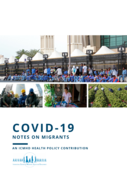
Migration continues to be an essential ingredient of socioeconomic development everywhere.
Whether it is a case of people moving from the countryside to cities to find work, or people crossing seas and borders to meet host country demands for new labour, migrants are an integral part of the modern
...
world. They bring with them new skills and talents, and a willingness to take on jobs that host societies have difficulty filling. Despite this, migrants tend to be overlooked by many health and social service systems. They are also vulnerable to exclusion, stigma and discrimination, particularly if “undocumented” or irregular. Today, in the context of COVID-19, a neglect of migrants will make it impossible to stem the pandemic.
These Notes are designed to remind national and local authorities that the war against COVID-19 cannot be won if migrants are forgotten; unus pro omnibus, omnes pro uno”, or one for all, and all for one, must guide the fight against COVID-19.
more
In an environment of stagnant donor funding and increasing private sector investment in low- and middle-income countries, actors in both the public and private sectors are increasingly interested in using blended finance approaches to catalyze new f
...
unding for global health and achieve health outcomes. As USAID moves towards greater engagement with the private sector, blended finance will be an important component to help achieve development objectives.
Accessed 19th May 2019.
more
BMC Medicine201210:107
https://doi.org/10.1186/1741-7015-10-107© Katchanov and Birbeck; licensee BioMed Central Ltd. 2012
Received: 10 July 2012Accepted: 24 September 2012Published: 24 September 2012
In 2011, the World Health Organization’s
...
(WHO) mental health Gap Action Programme (mhGAP) released evidence-based epilepsy-care guidelines for use in low and middle income countries (LAMICs). From a
geographical, sociocultural, and political perspective, LAMICs represent a heterogenous group with significant differences in the epidemiology, etiology, and perceptions of epilepsy. Successful implementation of
the guidelines requires local adaptation for use within individual countries. For effective implementation and sustainability, the sense of ownership and empowerment must be transferred from the global health authorities to the local people. Sociocultural and financial barriers that impede the implementation of the guidelines should be
identified and ameliorated. Impact assessment and program revisions should be planned and a budget allocated to them. If effectively implemented, as intended, at the primary-care level, the mhGAP
guidelines have the potential to facilitate a substantial reduction in the epilepsy treatment gap and improve the quality of epilepsy care in resource-limited settings.
more
The Government of Malawi, in fulfilling its primary role of protecting the lives of its vulnerable citizens during disasters and reducing their exposure to risk through preparedness, led the development of a National Coronavirus Disease (COVID-19) Preparedness and Response Plan.
This publication offers practical advice on implementing HIV and STI programmes for transgender people, with a focus on transgender women, aligned with the 2011 Recommendations and the 2014 Key Populations Consolidated Guidelines. It contains examples of good practice from around the world that may
...
support efforts in planning programmes and services, and describes issues that should be considered and how to overcome challenges.
This tool describes how services can be designed and implemented to be acceptable and accessible to transgender women. To accomplish this, respectful and ongoing engagement with them is essential.
This tool gives particular attention to programmes run by transgender people themselves, in contexts where this is possible. more
This tool describes how services can be designed and implemented to be acceptable and accessible to transgender women. To accomplish this, respectful and ongoing engagement with them is essential.
This tool gives particular attention to programmes run by transgender people themselves, in contexts where this is possible. more

Infectious disease outbreaks are frequently characterized by scientific uncertainty, social and institutional disruption, and an overall climate of fear and distrust. Policy makers and public health
...
professionals may be forced to weigh and prioritize potentially competing ethical values in the face of severe time and resource constraints. This document seeks to assist policy-makers, health care providers, researchers, and others prepare for outbreak situations by anticipating and preparing for the critical ethical issues likely to arise.
more
This 2011 update of Guidelines for the programmatic management of drug-resistant tuberculosis is intended as a tool for use by public health professionals working in response
to the Sixty-second Wo
...
rld Health Assembly’s resolution on prevention and control of multidrug-resistant tuberculosis and extensively drug-resistant tuberculosis.
more
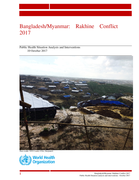
Public Health Situation Analysis and Interventions 10 October 2017
Pathogen genomic surveillance has become a priority for public health systems in recent years. Genomic sequencing is increasingly being used to characterize pathogens and monitor important
...
public health priorities (e.g. poliovirus, influenza virus, Mycobacterium tuberculosis and Vibrio cholerae, antimicrobial resistance (AMR)). The decrease in cost and time of sequencing and the exponential development of bioinformatic pipelines have played a critical role in integrating pathogen genomics into routine public health surveillance. The coronavirus disease 2019 (COVID-19) pandemic has highlighted the role that sequencing plays in the surveillance of infectious diseases. Sequencing facilitates earlier detection, more accurate investigation of outbreaks, closer real-time monitoring of pathogen evolution and tailored development and evaluation of interventions to inform local to global public health decision-making and action. However, there remains a need to coordinate efforts, leverage and link existing surveillance and laboratory networks and capabilities, and systematically integrate genetic sequence data (GSD) with clinical and epidemiological data to strengthen its utility.
more
The aim of the Annual Inspection Report is to present findings of public sector health establishments inspected by the OHSC to monitor compliance with the National Core Standards (NCS) during the 20
...
16/2017 financial year in South Africa.
The NCS define fundamentals for quality of care based on six dimensions of quality: Acceptability,Safety, Reliability, Equity, Accessibility, and Efficiency.
The NCS structured assessment tools were used to collect data during inspections across the seven domains namely: Patient Rights; Patient Safety, Clinical Governance and Clinical Care; Clinical Support Services; Public Health; Leadership and Governance; Operational Management and Facilities and Infrastructure. A total of 851 routine inspections were conducted with 201 of these facilities re-inspected. Inspection data was captured on District Health Information System (DHIS) data entry forms and exported for analysis to Statistical Analysis Software (SAS) version 9.4.
more
Responding to community spread of COVID-19
recommended
Interim Guidance 7 March 2020
This document provides technical guidance for government authorities, health workers, and other key stakeholders to guide response to community spread. It will be upda
...
ted as new information or technical guidance become available. For countries that are already preparing or responding, this document can also serve as a checklist to identify any remaining gaps.
more
The socioeconomic factors and public health inadequacies that facilitated the rapid spread of this infection continue to exist. As it is a new and emerging disease it has not received sufficient cov
...
erage yet in the medical curricula of Member States. Specific treatment is not available, and there is no vaccine for the prevention of chikungunya fever. It has therefore become imperative to develop guidelines, based on the limited clinical experience gathered from managing patients so far, for appropriate management of patients in communities and in health facilities. Experts engaged in managing patients with chikungunya fever in the Region were brought together by the WHO Regional Office for South-East Asia to outline guidelines for managing various situations and stages of the disease.
The socioeconomic factors and public health inadequacies that facilitated the rapid spread of this infection continue to exist. As it is a new and emerging disease it has not received sufficient coverage yet in the medical curricula of Member States. Specific treatment is not available, and there is no vaccine for the prevention of chikungunya fever. It has therefore become imperative to develop guidelines, based on the limited clinical experience gathered from managing patients so far, for appropriate management of patients in communities and in health facilities. Experts engaged in managing patients with chikungunya fever in the Region were brought together by the WHO Regional Office for South-East Asia to outline guidelines for managing various situations and stages of the disease. This publication is the end result of that exercise and is intended to assist health-care providers in planning and implementing appropriate care to patients with chikungunya fever according to their actual clinical conditions
more
Best practices for communicating with the public during an outbreak
Early detection, assessment and response to acute public health events:

This document is to support local authorities, leaders and policy-makers in cities and other urban settlements in identifying effective approaches and implementing recommended actions that enhance the prevention, preparedness and readiness for COVID
...
-19 in urban settings, to ensure a robust response and eventual recovery. It covers factors unique to cities and urban settings, considerations in urban preparedness, key areas of focus and preparing for future emergencies.
more
Reporting system for the general public - This document aims to provide practical guidelines on how to set up national systems for consumers to report adverse reactions to medicines. The purpose is to help countries set up a well-organized and effec
...
tive consumer reporting system within their pharmacovigilance centre. Throughout this document, the phrase “consumer reporting” is used to refer to reporting of adverse drug reactions (ADRs) by the general public.
more
Best practices” are exemplary public health practices that have achieved results, and which need to be scaled up so as to benefit more people. The expansion and institutionalization of successfull
...
y tested best practices requires strategic planning. There are several creative and constructive actions by people and organizations in the health sector to improve the health outcomes of people.
more
