
Filter
3574
Text search:
preparedness
Featured
393
892
Language
3207
200
149
97
74
70
56
33
26
21
14
9
7
7
7
7
6
5
4
3
3
2
2
2
2
2
2
2
2
1
1
1
1
1
1
1
1
1
1
1
1
1
1
1
1
1
1
1
1
1
1
1
1
1
1
1
1
1
Document type
1497
597
565
273
269
125
78
65
48
29
11
9
6
1
Countries
228
114
110
95
93
75
73
68
66
64
63
63
62
59
55
50
49
48
46
39
36
35
32
32
30
29
29
28
28
28
27
27
27
25
24
24
23
20
19
19
19
17
17
16
15
14
13
11
11
11
10
10
10
10
9
9
8
8
8
8
8
8
7
7
7
7
7
7
7
6
6
6
5
5
5
5
5
5
5
4
4
4
4
4
4
4
4
4
4
3
3
3
3
2
2
2
2
2
2
2
2
2
2
2
2
2
2
2
2
2
2
2
2
1
1
1
1
1
1
1
1
1
1
1
1
1
1
1
1
1
1
1
1
Authors & Publishers
619
126
96
92
92
65
47
42
42
40
40
39
30
28
25
25
25
23
23
22
21
20
19
17
17
17
16
16
16
15
15
15
14
14
13
13
12
12
12
12
12
12
11
11
11
11
11
11
11
10
10
10
9
9
9
9
9
9
9
9
9
8
8
8
8
8
8
8
8
8
8
8
7
7
7
7
7
7
7
7
7
7
7
6
6
6
6
6
6
6
6
6
6
6
5
5
5
5
5
5
5
5
5
5
5
5
5
5
5
5
5
5
5
5
5
5
5
5
4
4
4
4
4
4
4
4
4
4
4
4
4
4
4
4
4
4
4
4
4
4
4
4
4
4
4
4
4
4
4
4
4
4
4
4
4
4
4
3
3
3
3
3
3
3
3
3
3
3
3
3
3
3
3
3
3
3
3
3
3
3
3
3
3
3
3
3
3
3
3
3
3
3
3
3
3
3
3
3
3
3
3
3
3
3
3
3
3
3
3
3
3
3
3
3
3
3
3
3
3
3
3
3
3
3
3
2
2
2
2
2
2
2
2
2
2
2
2
2
2
2
2
2
2
2
2
2
2
2
2
2
2
2
2
2
2
2
2
2
2
2
2
2
2
2
2
2
2
2
2
2
2
2
2
2
2
2
2
2
2
2
2
2
2
2
2
2
2
2
2
2
2
2
2
2
2
2
2
2
2
2
2
2
2
2
2
2
2
2
2
2
2
2
2
2
2
2
2
2
2
2
2
2
2
2
2
2
2
2
2
2
2
2
2
2
2
2
2
2
2
2
2
2
2
2
2
2
2
2
2
2
2
2
2
2
2
2
2
2
2
2
2
2
2
2
2
2
2
2
2
2
2
2
2
2
2
2
2
2
2
2
2
2
2
2
2
2
2
2
2
2
2
2
2
2
2
2
2
2
2
2
2
2
2
2
2
2
2
2
2
2
2
2
2
2
2
1
1
1
1
1
1
1
1
1
1
1
1
1
1
1
1
1
1
1
1
1
1
1
1
1
1
1
1
1
1
1
1
1
1
1
1
1
1
1
1
1
1
1
1
1
1
1
1
1
1
1
1
1
1
1
1
1
1
1
1
1
1
1
1
1
1
1
1
1
1
1
1
1
1
1
1
1
1
1
1
1
1
1
1
1
1
1
1
1
1
1
1
1
1
1
1
1
1
1
1
1
1
1
1
1
1
1
1
1
1
1
1
1
1
1
1
1
1
1
1
1
1
1
1
1
1
1
1
1
1
1
1
1
1
1
1
1
1
1
1
1
1
1
1
1
1
1
1
1
1
1
1
1
1
1
1
1
1
1
1
1
1
1
1
1
1
1
1
1
1
1
1
1
1
1
1
1
1
1
1
1
1
1
1
1
1
1
1
1
1
1
1
1
1
1
1
1
1
1
1
1
1
1
1
1
1
1
1
1
1
1
1
1
1
1
1
1
1
1
1
1
1
1
1
1
1
1
1
1
1
1
1
1
1
1
1
1
1
1
1
1
1
1
1
1
1
1
1
1
1
1
1
1
1
1
1
1
1
1
1
1
1
1
1
1
1
1
1
1
1
1
1
1
1
1
1
1
1
1
1
1
1
1
1
1
1
1
1
1
1
1
1
1
1
1
1
1
1
1
1
1
1
1
1
1
1
1
1
1
1
1
1
1
1
1
1
1
1
1
1
1
1
1
1
1
1
1
1
1
1
1
1
1
1
1
1
1
1
1
1
1
1
1
1
1
1
1
1
1
1
1
1
1
1
1
1
1
1
1
1
1
1
1
1
1
1
1
1
1
1
1
1
1
1
1
1
1
1
1
1
1
1
1
1
1
1
1
1
1
1
1
1
1
1
1
1
1
1
1
1
1
1
1
1
1
1
1
1
1
1
1
1
1
1
1
1
1
1
1
1
1
1
1
1
1
1
1
1
1
1
1
1
1
1
1
1
1
1
1
1
1
1
1
1
1
1
1
1
1
1
1
1
1
1
1
1
1
1
1
1
1
1
1
1
1
1
1
1
1
1
1
1
1
1
1
1
1
1
1
1
1
1
1
1
1
1
1
1
1
1
1
1
1
1
1
1
1
1
1
1
1
1
1
1
1
1
1
1
1
1
1
1
1
1
1
1
1
1
1
1
1
1
1
1
1
1
1
1
1
1
1
1
1
1
1
1
1
1
1
1
1
1
1
1
1
1
1
1
1
1
1
1
1
1
1
1
1
1
1
1
1
1
1
1
1
1
1
1
1
1
1
1
1
1
1
1
1
1
1
1
1
1
1
1
1
1
1
1
1
1
1
1
1
1
1
1
1
1
1
1
1
1
1
1
1
1
1
1
1
1
1
1
1
1
1
1
1
1
1
1
1
1
1
1
1
1
1
1
1
1
1
1
1
1
1
1
1
1
1
1
1
1
1
1
1
1
1
1
1
1
1
1
1
1
1
1
1
1
1
1
1
1
1
1
1
1
1
1
1
1
1
1
1
1
1
1
1
1
1
1
1
1
1
1
1
1
1
1
1
1
1
1
1
1
1
1
1
1
1
1
1
1
1
1
1
1
1
1
1
1
1
1
1
1
1
1
1
1
1
1
1
1
1
1
1
1
1
1
1
1
1
1
1
1
1
1
1
1
1
1
1
1
1
1
1
1
1
1
1
1
1
1
1
1
1
1
1
1
1
1
1
1
1
1
1
1
1
1
1
1
1
1
1
1
1
1
1
1
1
1
1
1
1
1
1
1
1
1
1
1
1
1
1
1
1
1
1
1
1
1
1
1
1
1
1
1
1
1
1
1
1
1
1
1
1
1
1
1
1
1
1
1
1
1
1
1
1
1
1
1
1
1
1
1
1
1
1
1
1
1
1
1
1
1
1
1
1
1
1
1
1
1
1
1
1
1
1
1
1
1
1
1
1
1
1
1
1
1
1
1
1
1
1
1
1
1
1
1
1
1
1
1
1
1
1
1
1
1
1
1
1
1
1
1
1
1
1
1
1
1
1
1
1
1
1
1
1
1
1
1
1
1
1
1
1
1
1
1
1
1
1
1
1
1
1
1
1
1
1
1
1
1
1
1
1
1
1
1
1
1
1
1
1
1
1
1
1
1
1
1
1
1
1
1
1
1
1
1
1
1
1
1
1
1
1
1
1
1
1
1
1
1
1
1
1
1
1
1
1
1
1
1
1
1
1
1
1
1
1
1
1
1
1
1
1
1
1
1
1
1
1
1
1
1
1
1
1
1
1
1
1
1
1
1
1
1
1
1
1
1
1
1
1
1
1
1
1
1
1
1
1
1
1
1
1
1
1
1
1
1
1
1
1
1
1
1
1
1
1
1
1
1
1
1
1
1
1
1
1
1
1
1
1
1
1
1
1
1
1
1
1
1
1
1
1
1
1
1
1
1
1
1
1
1
1
1
1
1
1
1
1
1
1
1
1
1
1
1
1
1
1
1
1
1
1
1
1
1
1
1
1
1
1
1
1
1
1
1
1
1
1
1
1
1
1
1
1
1
1
1
1
1
1
1
1
1
1
1
1
1
1
1
1
1
1
1
1
1
1
1
1
1
1
1
1
1
1
1
1
1
1
1
1
1
1
1
1
1
1
1
1
1
1
1
1
1
1
1
1
1
1
1
1
1
1
1
1
1
1
1
1
1
1
1
1
1
1
1
1
1
1
1
1
1
1
1
1
1
1
1
1
1
1
1
1
1
1
1
1
1
1
1
1
1
1
1
1
1
1
1
1
1
1
1
1
1
1
1
1
1
1
1
1
1
1
1
1
1
1
1
1
1
1
1
1
1
1
1
1
1
1
1
1
1
1
1
1
1
1
1
1
1
1
1
1
1
1
1
1
1
1
1
1
1
1
1
1
1
1
1
1
1
1
1
1
1
1
1
1
1
1
1
1
1
1
1
1
1
1
1
1
1
1
1
1
1
1
1
1
1
1
1
1
1
1
1
1
1
1
1
1
1
1
1
1
1
1
1
1
1
1
1
1
1
1
1
1
1
1
1
1
1
1
1
1
1
1
1
1
1
1
1
1
1
1
1
1
1
1
1
1
1
1
1
1
1
1
1
1
1
1
1
1
1
1
1
1
1
1
1
1
1
1
1
1
1
1
1
1
1
1
1
1
1
1
1
1
1
1
1
1
1
1
1
1
1
1
1
1
1
1
1
1
1
1
1
1
1
1
1
1
1
1
1
1
1
1
1
1
1
1
1
1
1
1
1
1
1
1
1
1
1
1
1
1
1
1
1
1
1
1
1
1
1
1
1
1
1
1
1
1
1
1
1
1
1
1
1
1
1
1
1
1
1
1
1
1
1
1
1
1
1
1
1
1
1
1
1
1
1
1
1
1
1
1
1
1
1
1
1
1
1
1
1
1
1
1
1
1
1
1
1
1
1
1
1
1
1
1
1
1
1
1
1
1
1
1
1
1
1
1
1
1
1
1
1
1
1
1
1
1
1
1
1
1
1
1
1
1
1
1
1
1
1
1
1
1
1
1
1
1
1
1
1
1
1
1
1
1
1
1
1
1
1
1
1
1
1
1
1
1
1
1
1
1
1
1
1
1
1
1
1
1
1
1
1
1
1
1
1
1
1
1
1
1
1
1
1
1
1
1
1
1
1
1
1
1
1
1
1
1
1
1
1
1
1
1
1
1
1
1
1
1
1
1
1
1
1
1
1
1
1
1
1
1
1
1
1
1
1
1
1
1
1
1
1
1
1
1
1
1
1
1
1
1
1
1
1
1
1
1
1
1
1
1
1
1
1
1
1
1
1
1
1
1
1
1
1
1
1
1
1
1
1
1
1
1
1
1
1
1
1
1
1
1
1
1
1
1
1
1
1
1
1
1
1
1
1
1
1
1
1
1
1
1
1
1
1
1
1
1
1
1
1
1
1
1
1
1
1
1
1
1
1
1
1
1
1
1
1
1
1
1
1
1
1
1
1
1
1
1
1
1
1
1
1
1
1
1
1
1
1
1
Publication Years
1640
1695
225
13
1
Category
1280
415
154
143
126
80
30
Toolboxes
688
255
244
156
154
151
145
106
86
79
77
71
71
70
63
62
57
57
42
38
36
23
19
19
7
4
1

This course is an introduction to Simulation Exercises and their value as part of wider Emergency Preparedness to raise awareness among a non-technical audience. The goal of this course is to support the development and management of an effective fi
...
t-for-purpose exercise programme, by providing consistent practical guidance and tools on exercise design and implementation.
more

Global Health Security (GHS) Index
Nuclear Threat Initiative (NTI) and the Johns Hopkins Center for Health Security (JHU)
The Economist Intelligence Unit (EIU)
(2019)
CC
The GHS Index is intended to be a key resource in the face of increasing risks of high-consequence and globally catastrophic biological events and in light of major gaps in international financing for preparedness. These risks are magnified by a rap
...
idly changing and interconnected world; increasing political instability; urbanization; climate change; and rapid technology advances that make it easier, cheaper, and faster to create and engineer pathogens.
Key findings from the study of 195 countries:
• Out of a possible 100 points, the average GHS Index score across 195 countries was 40.2.
• The majority of high- and middle-income countries do not score above 50.
• Action is urgently needed to improve countries’ readiness for high-consequence infectious disease outbreaks.
more
Coronavirus disease (COVID-19) outbreak, technical guidance - in Russian
Here you can download different guidelines and prevention & control preparedness documents
Здесь вы можете скачать различные руководящи
...
е принципы и документы по предупреждению и контролю готовности
more
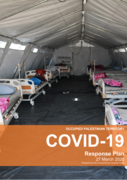
The primary focus of the plan continues to be prevention, preparedness and treatment of the the Novel Coronavirus (COVID-19) outbreak. Central to the plan are the following overall objectives:
To prevent further transmission of COVID-19 in the
...
oPt;
To provide adequate care for patients affected by COVID-19 and to support their families and close contacts; and
To mitigate the worst effects of the pandemic.
more

Human rights must be at the centre of all prevention, preparedness, containment and treatment efforts from the start, in order to best protect public health and support the groups and people who are most at risk. States have an obligation to protect
...
and guarantee everyone the right to the highest attainable standard of health.
All European states have committed to fulfilling the right to health and have signed international and regional human rights treaties to that purpose. In the context of the current pandemic, authorities should engage all available resources to counter the pandemic while fulfilling the right to health.
more

Pandemics and outbreaks have differential impacts on women and men. From risk of exposure and biological susceptibility to infection to the social and economic implications, individuals’ experiences are likely to vary according to their biological and gender characteristics and
...
their interaction with other social determinants. Because of this, global and national strategic plans for COVID-19 preparedness and response must be grounded in strong gender analysis and must ensure meaningful participation of affected groups, including women and girls, in decision-making and implementation.
more
Risk communications
recommended
For public health emergencies, risk communication includes the range of communication capacities required through the preparedness, response and recovery phases of a serious public health event to encourage informed decision making, positive behavio
...
ur change and the maintenance of trust.
Risk communication used to be viewed primarily as the dissemination of information to the public about health risks and events, such as outbreaks of disease and instructions on how to change behaviour to mitigate those risks. Thinking on this has now evolved dramatically as social science evidence and new communication and media technologies and practices have evolved in the 21st century.
more
The purpose of this guide is to provide practical advice for health staff undertaking infectious disease preparedness and response activities to ensure that access to safe abortion care (SAC) is maintained when an infectious disease outbreak occurs.
...
It is an operational guide which can serve to support health actors to maintain SAC services during outbreaks and ensure that necessary SAC considerations are integrated within outbreak responses; it is not a clinical guide. The locational focus of this document is humanitarian and fragile settings; however, recommendations may apply to infectious disease outbreaks in all low-resource populations. This guide is intended to complement Sexual and Reproductive Health and Rights During Infectious Disease Outbreaks: Operational Guidance for Humanitarian and Fragile Settings.
more

Multiple pandemics, numerous outbreaks, thousands of lives lost and billions of dollars of national income wiped out—all since the turn of this century, in barely 17 years—and yet the world’s investments in pandemic preparedness and response r
...
emain woefully inadequate. We know by now that the world will see another pandemic in the not-too-distant future; that random mutations occur often enough in microbes that help them survive and adapt; that new pathogens will inevitably find a way to break through our defenses; and that there is the increased potential for intentional or accidental release of a synthesized agent. Every expert commentary and every analysis in recent years tells us that the costs of inaction are immense. And yet, as
the havoc caused by the last outbreak turns into a fading memory, we become complacent and relegate the case for investing in preparedness on a back burner, only to bring it to the forefront when the next outbreak occurs. The result is that the world remains scarily vulnerable.
more
World Health Organization’s (WHO) presence in Sierra Leone throughout 2023 has been fulfilling. Out attention has been focused on advancing Universal Health Coverage and strengthening emergency preparedness and response. Collaborating closely with
...
the Ministry of Health, our donor partners, and various stakeholders, WHO supported capacities for Health Systems strengthening and delivery of impactful interventions, particularly towards improving maternal and child health outcomes, as well as the overall well-being of the population.
more
The document “Strategic Framework for Strengthening Cross-Border Surveillance and Information Sharing in Africa” outlines a coordinated strategy developed by Africa CDC to improve public health surveillance and collaboration across national borders in Africa. It addresses the challenge that infe
...
ctious diseases often spread across borders due to population movement, trade, and migration, while surveillance systems and data-sharing mechanisms frequently remain nationally focused and fragmented.
The framework proposes strengthening regional coordination, harmonizing surveillance systems, enhancing information sharing between countries, and building laboratory and workforce capacity. It also emphasizes timely detection of cross-border health threats, joint outbreak investigations, and improved communication among Member States. Overall, the document aims to enhance preparedness, early warning systems, and collective response to public health threats across the African continent.
more

It provides comprehensive guidance for logistics planners in humanitarian responses to pandemics, covering preparedness, response strategies, assessment methodologies, and operational planning.
This document provides information for WHO Member States, particularly low-income and middle-income countries, to strengthen preparedness and response plans with regard to the social and mental health consequences of biological and chemical attacks.
...
more

The Haiti & Dominican Republic Cholera Operation Plan of Action outlines the Red Cross's strategy to combat cholera on the island of Hispaniola following the 2010 outbreak in Haiti. As part of a 10-year national strategy, the plan includes an initial two-year emergency response (2014-2016) with a bu
...
dget of 9.9 million Swiss francs. The approach focuses on three key areas: improving water and sanitation by repairing and expanding water systems and constructing sanitation facilities, prevention and hygiene promotion through community education and hygiene training, and preparedness and response by strengthening disease monitoring, training Red Cross volunteers, and prepositioning medical supplies. This initiative, led by the Haitian and Dominican Red Cross in collaboration with international partners and local governments, aims to reduce cholera infections and improve public health on the island.
more

This helpdesk report seeks to establish what lessons have been learnt from the current and previous Ebola outbreaks. It recommends good practice and makes suggestions based on the evidence for good practice and preparedness to reduce transmission an
...
d prevent further risk and exposure in affected countries.
more

This Roadmap is structured around a results-based framework of outcomes, outputs and deliveraebles, to ensure that WHO maintains appropriate levels of organizational readiness, supports country-level capacity building and preparedness, deploys effic
...
iently and effectively to respond to outbreaks and emergencies at national and subnational levels, and engages effectively with partners and stakeholders throughout
more
Executive summary of case studies in 10 hospitals and 10 Health Centers in 10 Districts with targets indicators year of 2016 in preparing for disaster preparedness in Indonesia
This tool provides a quick and simple way to calculate and subsequently order the new cholera kits and modules.
The tool is best suited to estimate needs relating to cholera preparedness.
The tool uses pre-defined scenarios based on available po
...
pulation data, pre-defined attack rates as well as the number of health care facilities available. It will help to calculate the number of mandatory essential kits for a cholera response; the number of complementary modules if necessary, including the number of cholera beds as well as estimations on costs for goods and freight from supplier till the port of entry in a particular country.
more
On this homepage of the ATSDR you'll find learning material for webinars on chemical exposure assessment focused on the US, including:
- Webinar on ATSDR Assessment of Chemical Exposures (ACE) Program
-ATSDR National Toxic Substance Incidents Program (NTSIP) and the CDC Public Health Emergency
...
Preparedness (PHEP) Program Capabilities Webinar
- State Partners Webinar - State Surveillance of Chemical Incidents
- ACE Webinar - NTSIP Assessment of Chemical Exposures (ACE) - Your Partner In Chemical Incident Response
- National Toxic Substance Incidents Database
accessed on 03.16.2018
more

"National Disaster Management Guidelines: Management
of Chemical (Terrorism) Disasters (are intended to
focus on all aspects of the disaster management
cycle, including prevention measures such as
surveillance and intelligence, mitigation of direct
and indirect risks,
...
preparedness in terms of
capacity development of human resources and
infrastructure development, as well as relief,
rehabilitation and reconstruction/recovery."
more
