Filter
692
Text search:
leprosy
control
Featured
Recommendations
93
New Publications
253
Language
Document type
No document type
463
Studies & Reports
80
Guidelines
63
Strategic & Response Plan
38
Manuals
26
Training Material
10
Situation Updates
5
Resource Platforms
3
Fact sheets
2
Brochures
1
Infographics
1
Countries / Regions
India
54
Kenya
38
Tanzania
35
Uganda
27
Nepal
27
Liberia
22
Ethiopia
22
Nigeria
20
Sierra Leone
19
Bangladesh
19
Namibia
19
Global
18
Cambodia
15
Myanmar / Burma
13
Rwanda
12
Zambia
10
Indonesia
7
Malawi
7
Africa
7
Pakistan
5
Lesotho
5
Latin America and the Carribbean
5
Zimbabwe
4
Philippines
4
Paraguay
4
Guinea
3
Ghana
3
Afghanistan
3
Mozambique
3
Sudan
3
Congo, Democratic Republic of
2
Saudi Arabia
2
Somalia
2
South Sudan
2
Iraq
2
Jordan
2
Lebanon
2
Syria
2
South Africa
2
Benin
2
Botswana
2
South–East Asia Region
2
Iran
2
Morocco
1
Cameroon
1
Haiti
1
Egypt
1
Gambia
1
Papua New Guinea
1
Brazil
1
Colombia
1
Ecuador
1
Greece
1
Libya
1
Madagascar
1
Sri Lanka
1
Yemen
1
Middle East and North Africa
1
Western Pacific Region
1
Eastern Europe and Central Asia
1
Western and Central Europe
1
Asia
1
Bhutan
1
Palestine
1
Albania
1
Djibouti
1
Southern Africa
1
Timor Leste/ East Timor
1
Russia
1
Qatar
1
Georgia
1
Vietnam
1
Tunisia
1
Authors & Publishers
Publication Years
Category
Countries
380
Clinical Guidelines
66
Public Health
36
Key Resources
14
Women & Child Health
10
Capacity Building
9
Pharmacy & Technologies
9
Annual Report MEDBOX
2
Toolboxes
TB
121
NTDs
114
Disability
35
AMR
20
HIV
18
Pharmacy
9
Ebola & Marburg
8
Rapid Response
7
Caregiver
6
Mental Health
5
NCDs
5
Polio
4
Natural Hazards
4
COVID-19
4
Health Financing Toolbox
4
2.0 Rapid Response
4
Conflict
3
Cholera
2
Global Health Education
2
Social Ethics
2
Planetary Health
2
Refugee
1
Zika
1
Specific Hazards
1
Malaria
1
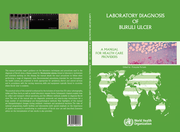
Buruli ulcer (BU), a neglected tropical disease (NTD), is an infection of the skin and subcutaneous tissue caused by Mycobacterium ulcerans. The disease has been documented in many South American, Asian, and Western Pacific countries and is widespread throughout much of Africa, especially in West
...
n October 2019, WHO convened the first meeting of the Buruli ulcer laboratory network (BU-LABNET) in Yaoundé, Cameroon, bringing together 11 laboratories from nine countries at the Pasteur Centre of Cameroon (CPC), the network’s Coordinating Centre. The network was formally established at th
...
The aim of the people-centred framework is to help countries to develop fully prioritized and budgeted NSPs based on a culture of making full use of the available data, which are aligned with national planning cycles and which provide the basis for a robust national response that can accelerate prog
...
The second edition of the Women and Trachoma: Achieving Gender Equity in the Implementation of SAFE manual provides an updated resource for realistically increasing, improving, and supporting gender representation within trachoma elimination efforts at all levels. From the trachoma workforce to the
...
Intégrer les activités communautaires de lutte contre la tuberculose dans le travail des ONG et des autres organisations de la société civile
Guide de l’animateur
Infographics and data
Despite being a preventable and curable infectious disease, tuberculosis (TB) has continued to elude global controll efforts. In 2023, 8.2 milion people with TB were diagnosed and notified to the WHO, the hightest number ever reported since WHO began tracking.
Bull World Health Organ 2022;100:50–59 | doi: http://dx.doi.org/10.2471/BLT.21.286689
Policy statement.
Available in: English, French, Chinese, Spanish, Russian, Arabic, Thai, Korean, Tajik, Vietnamese, Uzbek
http://www.who.int/disabilities/cbr/guidelines/en/
Notable progress has also been made on other key health indicators such as reducing maternal, infant and child deaths and malnutrition, increasing immunization coverage, eliminating infectious diseases such as polio and reducing the incidence of malaria, tuberculosis and diarrhoeal diseases.
But
...
The Updated guidelines on Management of tuberculosis in children and adolescents include new recommendations that cover diagnostic approaches for TB, shorter treatment for children with non-severe drug-susceptible TB, a new option for the treatment of TB meningitis, the use of bedaquiline and delama
...
About one fourth of the world’s population is estimated to have been infected with the tuberculosis (TB) bacilli, and about 5–10% of those infected develop TB disease in their lifetime. The risk for TB disease after infection depends on several factors, the most important being the person’s im
...