Filter
516
Text search:
International
Association
of
National
Public
Health
Institutes
Featured
41
154
Language
Document type
295
101
57
29
17
6
5
4
2
Countries
50
25
18
14
13
12
11
11
9
9
8
7
7
7
7
7
6
5
5
4
4
4
4
4
4
4
3
3
3
3
3
3
3
3
3
3
3
3
3
2
2
2
2
2
2
2
2
2
2
2
1
1
1
1
1
1
1
1
1
1
1
1
1
1
1
1
1
1
1
1
1
1
1
1
1
1
1
1
1
1
1
Authors & Publishers
Publication Years
Category
187
49
40
26
19
7
7
Toolboxes
51
30
28
24
24
23
18
18
17
14
13
12
10
10
9
8
7
6
5
5
2
2
2
1
1
1
Results and Lessons Learned from CapacityPlus 2009-2015


Report of a WHO technical consultation meeting
Ouagadougou, Burkina Faso

High levels of storage iron may increase malaria susceptibility. This risk has not been investigated in semi-immune adolescents. We investigated whether baseline iron status of nonpregnant adolescen
...

Approximately 80% of the 463 million adults worldwide with diabetes live in low-income and middle-income countries (LMICs). A major obstacle to designing evidence-based policies to improve diabetes outcomes in LMICs is the scarce availability
...

Program Report for Collaborative Agreement: DFD-A-00-08-00309-00 September 30, 2008 -December 31, 2015
BMC Medicine201614:112 DOI: 10.1186/s12916-016-0660-0
PLOSONE| https://doi.org/10.1371/journal.pone.0204882October17,2018

Health Systems in Transition. Vol. 5 No.3 2015

This guide presents a basis for understanding how diarrhoeal diseases are currently influenced by climate and weather, and may be further exacerbated by climate change. It is a technical guide on how to conduct a Vulnerability & Adaptation assessment for diarrhoeal diseases and climate change, and p
...
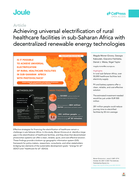
Joule 5, 2687–2714 October 20, 2021 Cell Press


Child friendly spaces (CFS) are safe spaces where
communities create nurturing environments in which
children can access free and structured play and
learning activities. CFS, also commonly referred to
as Child Centred Spaces or Safe Spaces for Children,
may provide educational and psychosocial
...

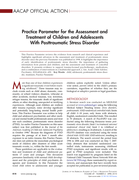
This Practice Parameter reviews the evidence from research and clinical experience and highlights significant advances in the assessment and treatment of posttraumatic stress disorder since the previous Parameter was published in 1998. It highlights
...