
Filter
448
Text search:
chikungunya
Featured
54
187
Language
Document type
222
60
57
31
26
16
11
8
6
6
3
1
1
Countries
31
24
21
16
11
10
10
9
9
6
5
5
4
4
4
3
3
3
2
2
2
2
2
2
2
1
1
1
1
1
1
1
1
1
1
1
1
1
1
1
1
1
1
1
1
1
1
1
1
1
1
1
1
1
1
1
1
1
1
1
1
Authors & Publishers
Publication Years
Category
107
40
33
11
11
4
1
Toolboxes
145
93
33
27
24
17
17
7
6
5
5
4
2
1
1
1
1
1
1
1

Chikungunya was first identified in Tanzania in 1952. Since 2004, there has been a rapid spread of the chikungunya virus, which has been detected in over 60 countries.

Website last accessed on 31.03.2023
El chikungunya se identificó por primera vez en Tanzania en 1952. Desde 2004, se ha producido una rápida propagación del virus chikungunya, que se ha detec
...

Chikungunya virus (CHIKV) is a re-emerging mosquito borne alphavirus responsible
for the recent outbreak in the Americas. Immunologically naïve population in the Americas favors the spread of epidemics.
...
Aide-mémoire - Chikungunya
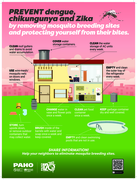
Prevention recommendations at home. PREVENT dengue, chikungunya and Zika by eliminating mosquito breeding sites and protecting yourself from mosquito bites.
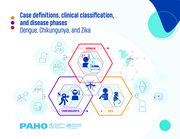
Case definitions, clinical classification, and disease phases Dengue, Chikungunya, and Zika
recommended
A person who lives in or has traveled in the previous 14 days to areas with dengue transmission, and presents with acute fever that has typically lasted 2 to 7 days, and two or more of the following clinical manifestations: nausea or vomiting, exanthema, headache or retro-orbital pain, myalgia or ar
...
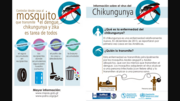
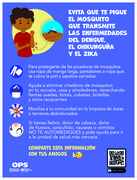
Para protegerte de las picaduras de moquitos usa ropa de manga larga, pantalones o ropa que te cubra la piel y zapatos cerrados
Chikungunya is a viral disease transmitted by Aedes mosquitoes to humans. The word ‘chikungunya’ means 'that which bends up', an allusion to the posture of the suffering patients. The most commo
...
Video about all you need to know about Chikungunya virus
Presentation on chikungunya a and chikungunya vaccines
Chikungunya virus (CHIKV) has expanded its geographical reach in recent decades and is an emerging global health threat. CHIKV can cause significant morbidity and lead to chronic, debilitating arthritis/arthralgia in up to 40% of infected individual
...
La Enfermedad por el Virus de la Chikungunya – EVCH fue descrita por primera vez durante un brote ocurrido en 1952 al sur de Tanzania, su nombre es de origen makonde, grupo étnico que vive en esa región, que significa “aquel que se encorva”
...
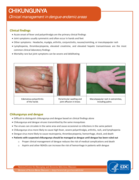
Clinical Management in dengue-endemic areas

WHO guidelines for clinical management of arboviral diseases: dengue, chikungunya, Zika and yellow fever
recommended
The new WHO guidelines provide clinical management recommendations for four of the most widespread arboviruses affecting humans: dengue, chikungunya, Zika, and yellow fever.
An integrated approach is vital, as these four diseases often present wi
...
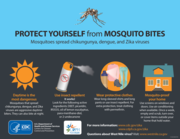
The poster is a public health communication tool designed to prevent the transmission of diseases such as chikungunya, dengue and Zika. The poster emphasises that Aedes mosquitoes bite aggressively during the day and sometimes at night, and recommen
...


In the battle against diseases like Zika and dengue, knowledge is power. Climate change is shifting the
distribution of mosquitoes and to new areas. Empowering communities is essential in reaching and pro-
tecting the most vulnerable individuals and households. Vector control programmes, community
...
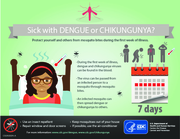
Information for the General Public
