
Filter
220
Text search:
Ministry
of
Health
Ethiopia,
WHO
Regional
Office
for
Africa
Featured
Recommendations
16
New Publications
55
Language
Document type
No document type
107
Studies & Reports
57
Guidelines
18
Manuals
15
Strategic & Response Plan
15
Training Material
3
Situation Updates
3
Resource Platforms
1
Fact sheets
1
Countries / Regions
Ethiopia
31
Kenya
14
Global
13
Africa
11
Uganda
5
Guinea
4
Sierra Leone
4
Liberia
4
South Sudan
4
East and Southern Africa
4
Western and Central Europe
4
Tanzania
3
Sudan
3
West and Central Africa
3
Somalia
2
South Africa
2
Madagascar
2
Middle East and North Africa
2
Latin America and the Carribbean
2
Nigeria
1
Senegal
1
Congo, Democratic Republic of
1
Togo
1
Zimbabwe
1
Philippines
1
Pakistan
1
Zambia
1
Chad
1
Cambodia
1
Thailand
1
China
1
Malawi
1
Namibia
1
Peru
1
Brazil
1
North Macedonia
1
Colombia
1
Botswana
1
Yemen
1
Eastern Europe
1
Gabon
1
Authors & Publishers
Publication Years
Category
Countries
68
Public Health
21
Clinical Guidelines
17
Key Resources
17
Women & Child Health
14
Pharmacy & Technologies
2
Capacity Building
1
Toolboxes
HIV
24
COVID-19
13
Mental Health
12
AMR
11
Planetary Health
11
TB
9
Disability
8
Conflict
8
Refugee
7
Caregiver
7
Pharmacy
7
2.0 Rapid Response
7
Rapid Response
6
Ebola & Marburg
5
Global Health Education
5
NTDs
5
Health Financing Toolbox
4
Natural Hazards
2
NCDs
2
Cholera
1
Polio
1
This strategy defines the World Health Organization (WHO) vision and framework for supporting Member States to accelerate the development, implemen
...

While there has been real progress in addressing the burden of disease in the WHO African region, the COVID-19 pandemic has highlighted the link between h
...

he refugee flow to Ethiopia continued during 2018, with 36,1351 persons seeking safety and protection within the country’s borders. At the start of 2019, the nation hosted 905,8312 thousand refuge
...
An interdisciplinary approach to address global health challenges such as the Covid-19 pandemic, climate change, loss of biodiversity, human migration has been framed by the One
...
This brief update on tuberculosis (TB) in the African region covers the state of TB in the WHO African region, strategic priorities and targets and the impact
...

The Ethiopia Multi-Sectorial Cholera Elimination Plan (2022-2028) outlines a national strategy to eliminate cholera in Ethiopia by 2028. The plan follows the Global Roadmap to End Cholera by 2030 an
...

Every day in 2020, approximately 800 women died from preventable causes related to pregnancy and childbirth - meaning that a woman dies around every two minutes.
Sustainable Development Goal (SDG) target 3.1 is to reduce maternal mortality to less than 70 maternal deaths per 100 000 live births by
...
This working paper was conceived to offer practical tips and suggestions on how to establish and sustain the multisectoral coordination needed to develop and implement National Action Plans on AMR (NAPs). It is intended for anyone with responsibilit
...

The Polio Transition1
Monitoring and Evaluation (M&E) Framework was designed to monitor progress towards achieving the strategic and operational outcomes of the post-2023 Strategic Action Plan on Polio Transition (2018– 2023), as outlined in the
...
This working paper was conceived to offer practical tips and suggestions on how to establish and sustain the multisectoral coordination needed to develop and implement National Action Plans on AMR (NAPs). It is intended for anyone with responsibilit
...
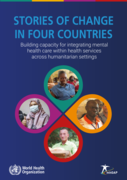
The world is facing an unprecedented range of emergencies. In reaction to these complex adversities, many people experience considerable distress and impairment, and a minority may even go on to develop mental
...

The Millennium Development Goals (MDGs) showed
that global commitment and collective action
could significantly reduce the disease burdens of
three deadly communicable diseases: HIV/AIDS,
tuberculosis (TB) and malaria. The MDGs helped
focus eff
...
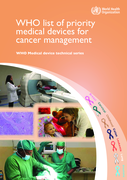
This publication is based on the list of clinical interventions selected from clinical guidelines on prevention, screening, diagnosis, treatment, palliative care, monitoring and end of life care. Th
...
2nd edition
WASH FIT is a risk-based, continuous improvement framework with a set of tools for undertaking water, sanitation and hygiene (WASH) improvements as part
...

Empowering Health Workers to Improve Service Delivery. This training program is designed to build the capacity of program managers and health provi
...
The objectives of these WHO guidelines are to provide updated evidence- based recommendations for the treatment
...

People with mental disorders in low-income countries are at risk of being left behind during efforts to expand universal health coverage. Aim is to propose context-relevant strategies
...
